Best Miter Saw Finish Blades for Precise Cuts and Smooth Edges
Choosing the right finish blade for a miter saw can dramatically improve cut quality on both hardwoods and softwoods. The right blade delivers cleaner crosscuts, less tear-out, and longer life under demanding workloads. This guide highlights top finish blades from reputable brands, comparing tooth counts, kerf width, arbor size, and performance features to help American woodworkers select blades that align with their project needs and saws.
| Product | Diameter | Teeth | Arbor | Notable Feature |
|---|---|---|---|---|
| WEN BL1080 | 10 inch | 80 | 5/8 inch | Ultra-thin kerf for clean cuts |
| WEN BL1060 | 10 inch | 60 | 5/8 inch | Fine finish performance |
| WEN BL1200 | 12 inch | 100 | 1 inch | Ultra-fine finish kerf |
| WEN BL1280 | 12 inch | 80 | 1 inch | Fine finish capability |
| DEWALT DWA112100 | 12 inch | 100 | 1 inch | Low vibration, improved life |
WEN BL1080 10-Inch 80-Tooth Finish Blade

The WEN BL1080 is a 10-inch, 80-tooth carbide-tipped blade designed for ultra-fine finish work on miter and table saws. Featuring a 5/8-inch arbor and a maximum RPM rating up to 6000, it excels for precise crosscuts in both hard and softwoods. Its ultra-thin 1/10-inch kerf (2.4 mm) reduces material waste while delivering smooth, clean cuts with minimal tear-out. This blade is well-suited for cabinetry, trim, and fine furniture where edge quality matters.
WEN BL1060 10-Inch 60-Tooth Finish Blade
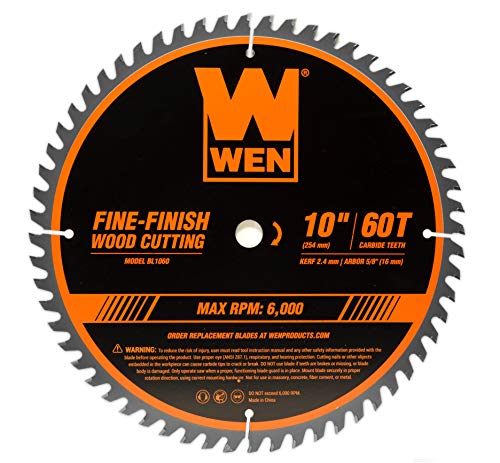
The WEN BL1060 offers a 60-tooth design for fine finish results on 10-inch miter saws. With the same 5/8-inch arbor and up to 6000 RPM rating, this blade is optimized for crisp crosscuts on a variety of softwoods and hardwoods. The thinner kerf assists in reducing waste and enhances overall finish quality for trim and panel work.
WEN BL1200 12-Inch 100-Tooth Ultra-Fine Finish Blade

The WEN BL1200 is a 12-inch blade with 100 fine-cut teeth and a 1-inch arbor, designed specifically for ultra-fine finish work. Its kerf remains ultra-thin at 1/10 inch (2.8 mm), enabling precise, clean crosscuts with minimal tear-out on both hard and softwoods. The blade is ideal for cabinetry, molding, and any project demanding a flawless edge on large boards.
WEN BL1280 12-Inch 80-Tooth Finish Blade
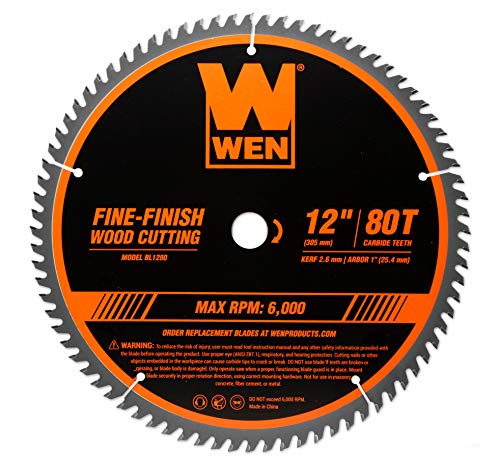
The 12-inch WEN BL1280 blade features 80 teeth and a 1-inch arbor, designed to produce fine finishes across a broad range of woods. With a maximum speed of 6000 RPM and a thin 1/10-inch kerf (2.6 mm), it reduces waste while delivering smooth crosscuts and clean edges for cabinetry and furniture work, balancing speed and precision.
DEWALT 12-Inch 100-Tooth Fine Finish Blade

The DEWALT DWA112100 blade is engineered for extended life and superior finish quality. With a 12-inch diameter and 100 teeth, it features a patented body slot design to reduce vibration and optimize cut accuracy. The carbide teeth are engineered for durability, helping maintain edge quality across many crosscuts on softwoods and hardwoods alike.
DEWALT 12-Inch 40/60-Tooth Finish Combo Pack

This combo pack from DEWALT includes 12-inch blades with 40 and 60 teeth for different finish levels. The design emphasizes increased durability and accuracy, featuring a low-vibration body slot and optimized tooth geometry to help achieve precise, fine cuts with reduced tear-out for cabinet and trim work. The pack provides versatility for projects requiring both rough and fine finish, depending on the tooth count needed.
Diablo 12-Inch 80 Teeth Finish Blade
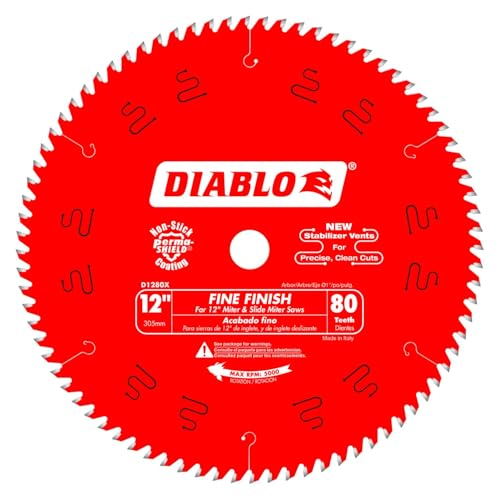
The Diablo D1280X is a 12-inch, 80-tooth blade crafted for fine crosscuts in both hardwood and softwood. It uses TiCo Hi-Density carbide for enhanced durability and cutting performance. The high tooth count supports smoother finishes, benefiting cabinetry, molding, and decorative trim where precise edges matter.
FOXBC 12-Inch 100-Tooth Finish Blade

The FOXBC 12-inch blade uses 100 teeth for premium finish results and a 1-inch arbor. Its kerf and tooth geometry are engineered to produce exceptionally smooth cuts with a polished edge that rivals high-grit sanding finishes. The double-side grind tooth design helps maintain an immaculate surface, making it suitable for precise cabinetry and trim work.
Buying Guide: Key Purchase Considerations
- Tooth count and finish target: Higher tooth counts (60–100) generally yield smoother finishes and less tear-out on fine crosscuts, especially in hardwoods. For light-duty trim, 40–60 teeth can be adequate.
- Blade diameter and arbor: Match the blade diameter to your saw’s platform (10″ or 12″) and confirm arbor size (5/8″ or 1″) to ensure compatibility and secure mounting.
- Kerf width: Ultra-thin kerfs conserve material and require less power, aiding smoother cuts in delicate work, but can be less forgiving on some older saws. Standard kerf blades are robust for heavy-duty tasks.
- Material and tooth geometry: Carbide-tipped blades offer durability and consistent edge quality. Tooth geometry (rake, hook angle) influences cut quality and vibration; blades with lower vibration designs improve finish in cabinetry.
- Vibration and runout: Look for blades with body-slot designs or special geometries that minimize vibration for cleaner edges and longer blade life.
- Intended use: For fine finish work, select blades advertised as “finish,” “fine finish,” or “ultra-fine finish.” For mixed tasks, consider a combo pack that includes blades across tooth counts.
- Installation and safety: Proper clamping, correct blade height above the work surface, and guards in place are essential. Always follow manufacturer guidelines for RPM compatibility with your saw.
- Maintenance: Keep blades clean and free of pitch buildup. When teeth dull or show chipping, replace to maintain edge quality and reduce tear-out.
These blades are designed to deliver high-quality finishes for cabinetry, molding, and decorative trim. When selecting, consider the project scale, wood type, and desired edge smoothness to balance cut quality with blade life and cost.