Best Miter Saw Blades for Wood: Clean, Precise Finishes
Choosing the right miter saw blade can dramatically improve cut quality, reduce tear-out, and increase overall project speed. This guide highlights five top wood-cutting blades ideal for general woodworking, finish work, and fine detail. Each blade is designed to deliver clean edges with minimal kerf and steady performance across hardwoods and softwoods. Use the brief product overview below to compare key specs at a glance, then read detailed sections for practical usage and considerations.
| Product | Size | Teeth | Arbor | |
|---|---|---|---|---|
| WEN BL1280 12-Inch 80-Tooth Fine-Finish | 12″ | 80 | 1″ | Fine finish |
| WEN BL1080 10-Inch 80-Tooth Ultra-Fine | 10″ | 80 | 5/8″ | Ultra-fine |
| WEN BL1200 12-Inch 100-Tooth Ultra-Fine | 12″ | 100 | 1″ | Ultra-fine |
| TOYAKI 10-Inch 120-Tooth Fine-Finish | 10″ | 120 | 5/8″ | Fine finish |
| ANGELSWORD 12-Inch 100-Tooth 2 Pack | 12″ | 100 | 1″ | Fine finish |
These selections cover a mix of finish-focused blades with varying tooth counts and diameters to suit different miter saw setups. When selecting a blade, consider the material you most often cut, whether you need ultra-fine finishes or a balance between speed and smoothness, and the arbor size on your saw. The following sections break down each product’s strengths, suitable applications, and practical usage tips.
WEN BL1280 12-Inch Fine-Finish Blade
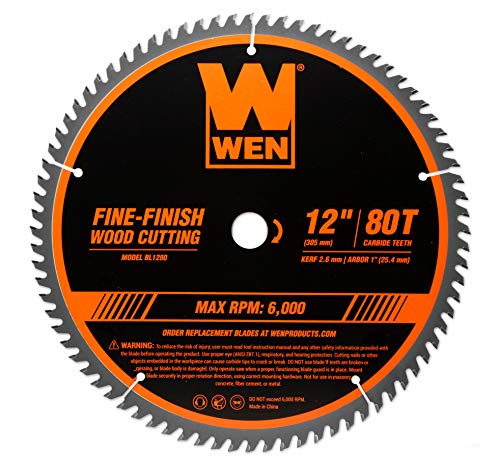
The WEN BL1280 is a high-density 12-inch blade designed for fine-finish woodworking. It features 80 teeth and a 1-inch arbor, handling both hard and soft woods with precision. The oversized diameter suits most 12-inch miter saws, and the slim kerf helps reduce material waste while producing cleaner edges. Built for sustained RPM performance up to 6000, this blade offers consistent finishes on a range of softwoods and hardwoods, making it a versatile choice for cabinetry, trim work, and decorative pieces.
WEN BL1080 10-Inch Ultra-Fine Finish Blade
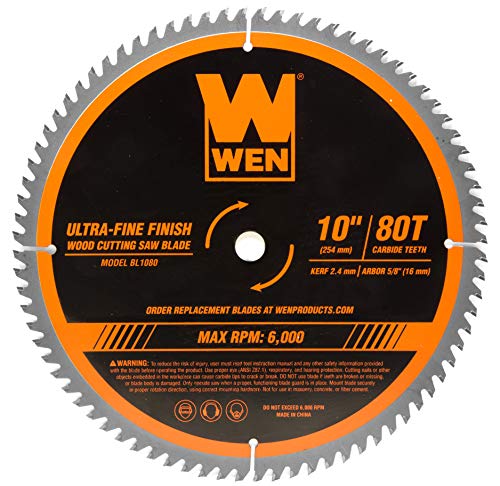
The WEN BL1080 is tailored for ultra-fine finish work on 10-inch miter saws. Its 80 teeth are optimized for clean crosscuts with minimal tear-out, especially on softwoods and mid-range hardwoods. The 5/8-inch arbor is a common standard, and the blade maintains performance up to 6000 RPM. The ultrathin kerf (about 1/10 inch) minimizes waste while preserving edge quality, making it suitable for cabinetmaking, picture frames, and fine trim.
WEN BL1200 12-Inch Ultra-Fine Finish Blade

The WEN BL1200 expands to 12 inches with 100 teeth, delivering ultra-fine finishes on a broad range of woods. The 1-inch arbor provides broad compatibility with many miter saws, while the blade’s 2.8 mm kerf and high RPM rating ensure clean, precise cuts with minimal effort. This blade excels in finish carpentry, crown molding, and cabinetry where edge quality matters most. Operators should note the higher tooth count may slightly slow aggressive ripping but yields exceptionally smooth crosscuts.
TOYAKI 10-Inch 120-Tooth Fine-Finish Blade
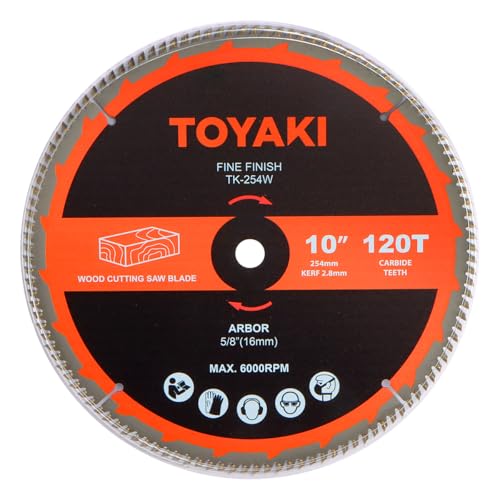
TOYAKI’s 10-inch blade with 120 teeth is designed for exceptional finish quality and smooth operation on miter and table saws. The 5/8-inch arbor aligns with most standard saws, and the 0.106″ kerf supports accurate cuts while minimizing waste. The fine-tooth configuration reduces tear-out on delicate woods and veneers, making it a practical choice for furniture components, inlays, and trim work where precision is essential.
ANGELSWORD 12-Inch 100-Tooth Blade (2 Pack)

The ANGELSWORD 12-inch blade offers a 100-tooth, 1-inch arbor setup in a two-pack, ideal for finish work requiring consistent crosscuts and ultra-smooth edges. The tungsten carbide teeth provide wear resistance and heat tolerance for repeated cuts through hardwoods and softwoods alike. Its fine kerf and precise tooth geometry help minimize vibration, contributing to cleaner finishes on cabinetry, trim, and detailed woodworking projects where repeat accuracy matters.
Buying Guide — Key Purchase Considerations
When choosing a miter saw blade for wood, consider the following factors to balance performance with your project needs:
- Tooth Count and Finish Quality: Higher tooth counts (80–120) generally deliver smoother finishes and less tear-out on crosscuts. For precision trim and cabinet work, blades in the 80–120 tooth range are common choices.
- Blade Diameter and Arbor: Match the blade diameter to your saw’s capacity (10″, 12″ are typical). Ensure the arbor size (5/8″ or 1″) matches your saw’s spindle.
- Kerf Width: Ultra-thin kerf blades reduce waste and require less cutting effort, but may wear faster on dense woods. For general work, a kerf around 2.4–2.8 mm is common; for finished details, a thinner kerf can help.
- Material and Coating: Carbide-tipped blades offer durability for hardwoods and pine, while coatings can reduce friction and heat buildup during long cuts.
- Cut Type: Crosscuts, miter cuts, and bevel cuts may benefit from specific tooth geometries (ATB, ATB+R beveled designs) to minimize tear-out and vibration.
- RPM Rating: Ensure the blade’s RPM rating aligns with your saw’s maximum. High RPM blades maintain performance for finish cuts but should not exceed the saw’s capability.
- Maintenance and Replacement: Regularly inspect teeth for wear and replace blades showing dull or chipped teeth. A sharp blade improves edge quality and safety.
- Noise and Vibration: Fine-finish blades with uniform tooth geometry reduce vibration, contributing to more controlled, accurate cuts in delicate work.
In practice, match blade characteristics to the project. For cabinetry, furniture, and detailed trim, blades with 80–100 teeth are typically ideal. For broader crosscuts in softwood framing, a balanced blade with 60–80 teeth can offer speed with acceptable finish quality. If you frequently switch between hardwoods and softwoods, consider a universal fine-finish blade with a robust carbide edge and a compatible arbor size.