Best Miter Saw Blades for Trim Projects
Choosing the right miter saw blade is essential for clean, precise trim work. This guide highlights five top blades designed to deliver ultra-fine finishes on both softwood and hardwood trims. Each blade is evaluated for kerf width, tooth design, durability, and compatibility with common 10″ or 12″ miter saws. Use this overview to match blade features with your trim tasks, from cabinet details to baseboard work.
| Product | Brand | Tooth Count | Blade Size | Best For |
|---|---|---|---|---|
| WEN BL1080 | WEN | 80 | 10″ | Ultra-fine finish on trim |
| Makita D-65486 | Makita | 100 | 10″ | Ultra-fine crosscuts |
| WEN BL1060 | WEN | 60 | 10″ | Fine-finish wood cuts |
| DEWALT DWA112100 | DEWALT | 100 | 12″ | Fine finish, low vibration |
| Diablo D1280X | Diablo | 80 | 12″ | Fine finish on various woods |
Note: All products are designed for crosscut precision, reducing tear-out and giving trims a professional edge. Availability and specs may vary by seller and year; verify blade compatibility with your miter saw before purchase.
WEN BL1080 10-Inch 80-Tooth Carbide-Tipped Ultra-Fine Finish Blade

The WEN BL1080 is a premium 10-inch blade with 80 carbide-tipped teeth, engineered for ultra-fine finishes on trim. Its 1/10-inch kerf helps minimize material loss and provides precise cuts with less resistance. The blade accommodates up to 6000 RPM, making it compatible with many standard miter saws. The combination of a thin kerf and carbide tips yields smooth crosscuts on both softwoods and hardwoods, reducing post-cut sanding for trim work.
Features include a 5/8-inch arbor and a robust design suitable for fine joinery and cabinetry tasks. This blade emphasizes clean edges and minimal tear-out—critical for door casings, crown moldings, and baseboards. For consistent trim results, pairing with a stable saw setup and proper feed rate is recommended.
Makita D-65486 10″ 100T Polished Miter Saw Blade

The Makita D-65486 features a 100-tooth design with a polished finish and an Alternate Top and Alternate Face (ATAF) tooth configuration. This creates ultra-precise, fine crosscuts with a smoother cutting action and reduced drag on the motor. The thin kerf minimizes waste while preserving the blade’s rigidity for accurate trim cuts. Hand-tensioned steel plates ensure true, stable cuts with minimal wobble during precise molding and trim work.
Ideal for hardwood and softwood trims alike, this blade excels in door frames, window casings, and decorative moldings where finish quality matters. Proper alignment and a clean saw setup are essential to maximize the crosscut quality and reduce the need for touch-up sanding.
WEN BL1060 10-Inch 60-Tooth Fine-Finish Blade
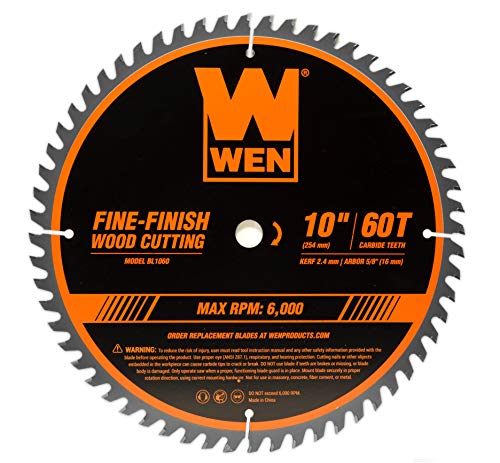
The WEN BL1060 offers a 60-tooth configuration designed for fine finishes on trim work. Its 10-inch diameter and 5/8-inch arbor fit most standard miter and table saws. The ultra-thin kerf (1/10 inch) reduces material removal and yields cleaner, smoother crosscuts for cabinetry edges, crown profiles, and skirting boards. The blade is rated up to 6000 RPM, ensuring compatibility with many pro-grade saws while maintaining precision in finishing tasks.
Suitable for a wide range of woods, this blade balances speed with finesse, delivering sharp corners and polished edges on delicate trim pieces. For best results, ensure proper blade alignment and a stable workpiece support to prevent chipping or splintering at the cut line.
DEWALT Miter Saw Blade 12-Inch 100-Tooth Fine Finish (DWA112100)

The DEWALT DWA112100 delivers a high tooth count for crosscuts and fine finish cuts on trim. This 12-inch blade is designed to reduce vibration and enhance finish quality through its optimized tooth geometry and patented body slot design. The 100-tooth arrangement enables precise, clean edges, ideal for cabinets, windows, and door trims where a flawless appearance is essential. The blade’s construction focuses on stability and reduced heat buildup during long finishing sessions.
Two-pack convenience options and alternative tooth configurations are helpful for matching to specific trim tasks, such as quarter-rounds or intricate moldings. Always verify compatibility with your saw’s arbor and guard clearance when selecting a 12-inch blade for trim work.
Diablo D1280X 12″ x 80-Tooth Fine Finish Blade
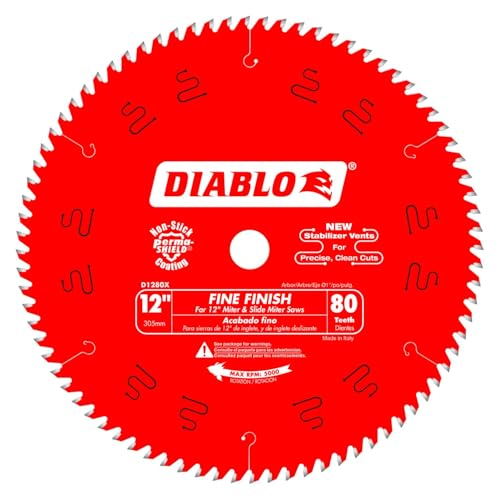
The Diablo D1280X is a fine finish blade designed for precise crosscuts on both hardwoods and softwoods. With Hi-Density carbide, the TiCo construction provides durability and efficient cutting performance for trim applications. The 12-inch blade carries 80 teeth for smooth, tear-out-minimized cuts, making it suitable for cabinet edges, baseboards, and window casings. A 1-inch arbor supports stability on compatible saws and helps maintain true cuts during long trim sessions.
Its design emphasizes clean finish and consistent results across varied wood species. For the best outcome, use a high-quality miter saw fence, proper workpiece clamping, and a slow, steady feed rate to minimize tear-out on delicate trim profiles.
Buying Guide: Key Considerations For Trim Or Fine-Finish Cuts
- Tooth count and geometry: Higher tooth counts (60–100+) with ATB or hi-ATB profiles yield cleaner finishes and less tear-out on trim wood.
- Kerf width: Thinner kerfs reduce material waste and can improve cut precision, especially on delicate trim pieces.
- Blade size and compatibility: Match blade diameter (10″ vs 12″) and arbor size to your miter saw model. Ensure proper clearance with guards and fences.
- Material compatibility: Consider blades optimized for hardwoods, softwoods, or a mix. For trim, blades with carbide tips provide durability and smoother finishes.
- Vibration and noise: Advanced body slot designs and stabilizers help reduce vibration, improving stability for fine cuts on trim work.
- Maintenance: Keep blades sharp and clean; store properly to prevent warping or chipping of tips between jobs.
- Finish quality vs. speed: Higher tooth counts enhance finish but may cut slightly slower. Choose based on project urgency and required smoothness.
When selecting a blade for trim, balance precision with durability and ensure compatibility with your saw. For most trim tasks, blades in the 60–100 tooth range with refined tooth geometry provide the best combination of smooth finishes, minimal tear-out, and reliable performance across different woods.