Best Miter Bar for Table Saw: Top Picks for Precise Crosscuts
Choosing the right miter bar is essential for accurate, repeatable crosscuts in any woodworking shop. This article highlights five highly regarded options that fit standard 3/4″ x 3/8″ miter slots and work with sleds, crosscut jigs, and router tables. Each product emphasizes durability, smooth sliding action, and easy installation. Read on for objective specs, real-world considerations, and a practical buying guide to help you pick the best miter bar for your table saw setup.
Summary of chosen products at a glance:
| Product | Brand | Key Benefit | Length |
|---|---|---|---|
| O’SKOOL Miter Slot Runner Slider Bars | O’SKOOL | Roundover entry, zero clearance expansion collars for no wiggle | 17″ (430mm) per bar |
| Fulton Woodworking Tools 17 NoPlay Aluminum Miter Bars | Fulton Woodworking Tools | Easy above-slot adjustments, expandable glides | 17″ per bar |
| POWERTEC Crosscut Sled Miter Bar | POWERTEC | Includes mounting hardware, predrilled holes for jigs | 18″ length |
| POWERTEC 48″ Miter Bar | POWERTEC | Thick, rigid bar to prevent warping; enhances sled and jig accuracy | 48″ length |
| 36 Inch Table Saw Miter Bar by Peachtree Woodworking | Peachtree Woodworking Supply | UHMW material for low friction and no residue | 36″ length |
O’SKOOL Miter Slot Runner Slider Bars

The O’SKOOL miter bars adopt a roundover entry design to ease insertion into the miter slot, while expansion collars create a zero-clearance fit between bar and track. This reduces wiggling and increases accuracy during repeat cuts. Constructed from premium aluminum alloy, the bars emphasize durability for long-term use in woodworking projects. They maintain standard 3/4″ x 3/8″ dimensions, ensuring compatibility with most T-slot and U-slot tracks used in common sleds and crosscut jigs.
Considerations: Aluminum construction offers rigidity, but users should confirm slot width tolerances on their specific saw or sled. The roundover entry helps with installation, yet consistent clamping and alignment are still necessary for perfect repeatability. Maintenance involves periodic cleaning to remove dust and checking expansion collars for any looseness over time.
Fulton Woodworking Tools 17 NoPlay Aluminum Miter Bars

These miter bars feature easy adjustments from above the slot, designed to fit standard 3/4″ x 3/8″ miter slots. The expandable glides—patent pending—allow the bar to expand or contract as you tighten or loosen the center screw, helping to minimize play and improve precision. The aluminum construction resists warping, a common issue with lower-grade bars, making them suitable for sleds, crosscut setups, and even quick router-table modifications.
Considerations: The adjustable glide mechanism offers a fine-tuning advantage, but it requires periodic checks to maintain proper tension. For large, long setups, a longer bar might be preferable to minimize any flex. Compatibility with non-standard slot dimensions should be verified before purchase.
POWERTEC Crosscut Sled Miter Bar (71518-P2)

POWERTEC’s crosscut sled miter bar includes a set of 10-32 nylon adjustment screws and predrilled holes for router table, bandsaw, and table saw use. It features six countersunk mounting holes along the top, with six more holes on the side to accommodate a range of jig configurations. This design supports precise alignment and secure mounting for jig creation, feather boards, and stop blocks, while maintaining a low-friction path for smooth sliding during repeated cuts.
Considerations: The hardware-packed design reduces the need for additional purchases, but users should ensure the screws and holes align with their specific sled or jig. Durability is strong due to the robust bar construction, yet long runs may benefit from periodic inspection for burrs or misalignment after heavy use.
POWERTEC 48″ Miter Bar (71146)
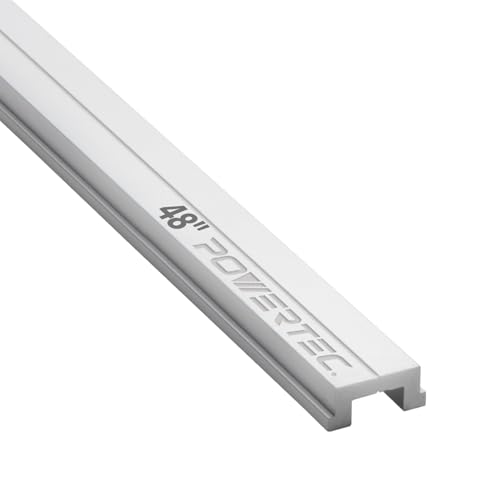
This 48″ miter bar is designed for creating extended sliding jigs, sleds, and fixtures. It emphasizes a heavy-duty exterior that resists warping and is machined for reliable compatibility with a wide range of woodworking applications. Its long length makes it ideal for larger sleds and router table setups, where extra margin improves alignment across extended tracks and keeps jig components square during long cuts.
Considerations: A longer bar increases rigidity but can be heavier and harder to handle. Ensure your miter slot and table saw are compatible with 48″ bars, and consider whether you need full-length coverage for your typical workflows or if shorter bars paired with a crosscut sled suffice.
Peachtree 36 Inch Table Saw Miter Bar

Peachtree’s 36″ table saw miter bar uses premium USA-made UHMW strips to deliver low friction, high wear resistance, and minimal residue after use. The 3/4″ x 3/8″ dimensions ensure a precise fit within most standard miter slots, while predrilled holes facilitate quick installation. The UHMW material helps maintain smooth, predictable sliding even after repeated crosscuts and sled operations, making it a reliable choice for jigs and crosscut sleds.
Considerations: UHMW is popular for its low friction, but users should verify the exact slot tolerance of their saw. Long bars can be more forgiving for large sleds, yet shorter bars may be easier to manage in smaller shops. Regular cleaning will help preserve the low-friction benefits over time.
Buying Guide: How To Choose The Right Miter Bar
When selecting a miter bar, consider fit, material, length, and compatibility with your existing table saw and jigs. Each of these factors affects accuracy and repeatability across crosscuts and sled work.
- Slot fit and material: Aluminum bars offer rigidity for longer runs and heavy-duty sleds, while UHMW bars deliver low friction and minimal residue. Match your slot width (3/4″ x 3/8″) and slot type (T-slot vs U-slot) to ensure a snug, consistent fit.
- Length and rigidity: Longer bars reduce deflection and improve alignment on extended sleds. Shorter bars are easier to maneuver in small shops but may require more frequent adjustments associated with shorter spans of travel.
- Adjustability: Some bars include expandable glides or above-slot adjustment features. These help reduce play and improve precision but require periodic maintenance to stay effective.
- Installation hardware: Look for predrilled holes, included screws, and hardware that matches common jigs, router tables, and crosscut sleds. Having hardware on hand can shorten setup time.
- Compatibility: Verify that the bar works with your specific miter slot (T-slot or U-slot) and your sled design. Some bars are optimized for crosscut sleds, while others cover a broader range of applications, including router tables and band saw jigs.
- Maintenance: Regular cleaning of dust and ensuring screws remain tight helps preserve accuracy. Inspect for wear or cracking in aluminum bars and watch for any swelling in UHMW bars exposed to moisture changes.
Thus, the best choice depends on your shop size, typical projects, and preferred jig configurations. If you frequently build long sleds or need maximum rigidity, a 48″ bar like the POWERTEC option or a long Peachtree bar may be ideal. For lightweight setups and hassle-free adjustments, the O’SKOOL and Fulton bars offer compelling roundups. Finally, the KETIPED and POWERTEC Crosscut Sled bars provide solid all-around compatibility for router tables and crosscut sleds alike.