Best Masking Solutions for Painting Cars
When tackling automotive paint projects, choosing the right masking materials and protective gear is essential for sharp lines and a clean finish. This guide highlights popular masking papers, tapes, and respirators used by professionals and DIY enthusiasts alike. Each section explains how the product contributes to a smoother paint process, plus practical tips for use in car refinishing, bodywork, and assembly touch-ups.
Summary of Selected Products
| Product | Brand | Type | Notable Benefit |
|---|---|---|---|
| 3M Automotive Refinish Masking Tape | 3M | Masking Tape | Sharp paint lines, flexible backing, residue-free removal |
| Dura-Gold Green Automotive Masking Tape | Dura-Gold | Masking Tape | Heat and solvent resistance, precise lines |
| AirGearPro G-500 Reusable Respirator Mask | AirGearPro | Respirator Mask | Dual filtration for gases and particles, reusable |
| AirGearPro M-500 Reusable Respirator Mask | AirGearPro | Respirator Mask | Dual filtration, replaceable filters, durable |
| Tangibay Pre-Taped Masking Paper | Tangibay | Masking Paper + Tape | 2-in-1 protection, clean removal, tear resistant |
3M Automotive Refinish Masking Tape

The 3M 06654 masking tape is designed for automotive paint projects, delivering sharp lines and clean removal. Its flexible, conformable backing hugs curves and contours, which is essential when masking around door jambs, hood edges, and fenders. The tape resists lifting and curling, reducing the risk of paint bleed, and leaves little residue upon removal. For auto refinishing tasks or bodywork touch-ups, this tape helps maintain precise masking during multiple coats or complex masking patterns. It is a reliable choice for professionals seeking consistent results in busy shop environments.
In practice, apply the tape along the boundary you want to protect, burnish firmly to ensure contact, then apply your masking paper or film over the edge. When you’re ready to remove, do so promptly after the final bake or cure to minimize any chance of tearing the paint edge. The tape’s durability helps keep the line crisp even with extended exposure during longer sessions or when working with multiple layers of paint.
Dura-Gold Green Automotive Masking Tape

Dura-Gold’s green automotive masking tape is engineered for demanding environments, offering heat resistance up to 230°F (110°C) for short periods. This makes it suitable for paint baking cycles and infrared curing steps in modern automotive shops. The tape’s solvent resistance helps prevent bleed-through, especially when using solvent-based primers and activators. With a strong but removable adhesive, it adheres well to curved panels and provides crisp edges with minimal lift, which is ideal for masking around complex shapes and vehicle bodies during refinishing projects.
Usage tips include aligning the tape with the edge of the masking paper or film, pressing firmly, and avoiding over-tensioning on delicate plastics or rubber seals. The high visibility green color also assists with precise placement and easy removal after curing, reducing the time needed to clean up masking lines before final inspection.
AirGearPro G-500 Reusable Respirator Mask

The AirGearPro G-500 respirator mask provides CE-certified protection suitable for painting, woodworking, construction, and DIY projects. Its dual filtration system (A1P2) defends against gases, vapors, and particles, filtering organic gases and vapors above a 65°C boiling point and capturing at least 95% of airborne particles with the P2 dust filter. The mask is designed to be reusable with replaceable filters, which reduces waste and lowers long-term costs. For painters handling solvent-based coatings or applying finishes in dusty environments, the G-500 offers a reliable barrier against respiratory hazards while enabling longer, safer work sessions.
When using a respirator, ensure a proper seal by adjusting the straps and performing a fit check. Pair the mask with compatible safety goggles for full eye protection. Replace filters according to usage and environment, and store the mask in a clean, dry place to extend its life between jobs.
AirGearPro M-500 Reusable Respirator Mask
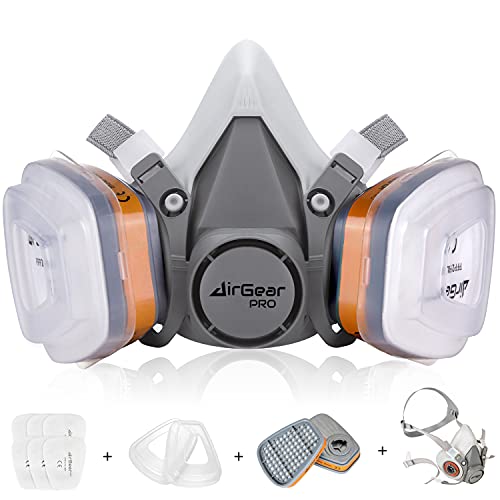
The AirGearPro M-500 offers comparable dual filtration with A1P2 protection and emphasizes reusability through replaceable filters. This design supports longer project timelines and frequent use across different painting tasks, including wood finishing, automotive prep, and general DIY projects. The M-500’s filters can be swapped as they degrade, helping maintain optimal filtration efficiency over time. For professionals who perform multiple coatings or frequently switch between coatings, the M-500 provides a sustainable, long-term solution to respiratory protection.
Practitioners should choose the M-500 when they foresee extended use or when a supplier offers an easy filter replacement workflow. Regular inspections of seals, straps, and face fit are recommended to maintain a reliable protective seal during vigorous sanding, spray, or cleanup operations.
Tangibay Pre-Taped Masking Paper

Tangibay combines masking paper and tape in one system, offering a 2-in-1 solution that speeds up the masking process. The paper is a sturdy 40gsm brown kraft that resists tearing and provides better protection than some plastic films for painting walls, trim, or auto panels. The pre-taped edge allows quick application with less setup time, and the adhesive is designed for clean removal within 30 days, leaving sharp lines and minimal residue. This product is well-suited for situations where you need fast masking on large flat areas such as doors, hoods, or side panels during automotive refinishing.
For best results, align the masking edge with the surface, press firmly to fix the position, and gradually unfold the paper toward the edges to minimize wrinkles. The tape’s adhesive is designed to release cleanly, reducing the risk of lifting paint when removing masking after the job completes.
Buying Guide: Key Considerations For Masking Cars
Masking for car painting involves choosing materials that balance protection, edge sharpness, ease of use, and compatibility with coatings. Consider the following perspectives to make an informed choice:
- Project scope: For small touch-ups or detail work, high-precision tapes such as 3M’s automotive masking tapes deliver crisp lines with minimal bleed. For larger panels, pre-taped masking paper saves time and reduces the number of components you handle.
- Surface compatibility: Curved surfaces require flexible backing and conformable tapes. Green backing tapes (like Dura-Gold) offer good conformability and solvent resistance for multi-coat workflows.
- Curing and environmental factors: If the painting process includes heat or curing steps, choose tapes with heat resistance to prevent edge lift or bleed.
- Part protection vs. line definition: Paper and film provide broad coverage, while tapes protect exact lines around edges. Combining masking paper with pre-taped edges helps maintain control and reduces cleanup.
- Safety considerations: Respirators or masks with A1P2 filtration help protect against organic gases, vapors, and particulates during sanding and spray operations. Reusable designs with replaceable filters can lower long-term costs and waste.
- Removal timing: Some tapes remove cleanly after short cure times; others are designed for longer exposure. Plan removal when the coating has achieved sufficient hardness to resist peeling or scuffing.
- Environmental impact: Paper-based masking materials are generally more eco-friendly than plastic films. Biodegradable or recyclable options may be preferred for sustainable workflows.
In practice, an effective masking strategy often combines several products: masking tape for precise edges, masking paper or film for broad coverage, and a respirator for worker safety. When selecting, weigh factors such as the surface geometry of the vehicle, the type of paint or coating used, and the expected cure schedule. This approach helps ensure sharp paint lines, minimal prep time, and safer work conditions across automotive refinishing projects.