Best Liquid Waterproofing Membrane for Concrete
Choosing a liquid waterproofing membrane for concrete is essential to protecting basements, foundations, and below-grade walls from water intrusion. A high-quality membrane can bridge hairline cracks, resist hydrostatic pressure, and provide a durable, flexible barrier. This guide highlights five well-regarded options and explains how to compare them based on surface, climate, and project goals. Each product below comes from trusted brands and is suitable for DIY or professional installations depending on the scope.
Below is a concise overview of the selected options. Use the table for a quick comparison, then read the detailed product sections to understand where each membrane shines and how to apply it for long-lasting results.
| Product | Brand | Type / Use | Notable Feature | Link |
|---|---|---|---|---|
| Liquid Rubber Basement Sealant | Liquid Rubber | Waterproofing membrane; crack filler | 900% elongation; flexible, permanent seal | View Product |
| Liquid Rubber Color Waterproof Sealant | Liquid Rubber | Elastomeric roof/foundation coating | 5x more flexible than traditional coatings | View Product |
| Ames Blue Max Waterproof Sealant | AMES | Elastomeric liquid rubber waterproofer | 1200% elongation; strong adhesion | View Product |
| USG DUROCK Liquid Waterproofing Membrane | USG Interiors | Liquid membrane; vapor retarder | Versatile application; fast drying; low perm | View Product |
| LATICRETE Hydro BAN | Laticrete | Crack-insulation membrane | IAPMO approved; fast cure | View Product |
Liquid Rubber Basement Sealant

Liquid Rubber Basement Sealant provides a permanent waterproof membrane designed for basement waterproofing, foundation leak repair, and related applications such as shower liners and planter boxes. The formula emphasizes flexibility, achieving up to 900% elongation to move with the substrate and resist cracking as temperatures shift. It acts as a comprehensive basement waterproofing system, surpassing basic concrete paints and standard sealants. Its compatibility with self-leveling concrete makes it suitable for DIY projects and professional remediation alike, with strong adhesion to concrete, masonry, wood, metal, and foundation surfaces.
- 900% elongation for a flexible, long-lasting seal
- Permanent waterproof membrane for foundations and basements
- Works with self-leveling concrete applications
- Adheres to concrete, masonry, wood, metal, and foundation surfaces
Application considerations: ensure surfaces are clean, dry, and free of bond-inhibiting contaminants. Typically applied in coats per project requirements; curing time depends on conditions. This product is designed to stop active leaks and provide ongoing protection against moisture intrusion.
Liquid Rubber Color Waterproof Sealant

Liquid Rubber Color Waterproof Sealant is a elastomeric coating designed to seal and protect various surfaces, including metal roofs, flat or sloped roofs, foundations, and concrete areas. It forms a flexible, seamless membrane that resists leaks and water damage, serving as a robust alternative to traditional roofing tar or paints. The product is highly adaptable to irregular surfaces and weather conditions, and it remains flexible across temperature variations, which helps prevent future cracking and damage.
- Elastomeric, flexible membrane for roofs and foundations
- Excellent adhesion to concrete, metal, and masonry
- 5x more flexible than standard coatings
- Simple brush, roller, or sprayer application
Notes on use: apply to clean, dry surfaces and allow appropriate cure time between coats. Avoid applying in wet conditions or when rain is forecast within 24 hours for best results. This coating is well-suited for both DIY projects and renovation work on foundations and roofs.
Ames Blue Max Waterproof Sealant

Ames Blue Max Waterproofer is a strong elastomeric liquid rubber solution designed for interior and below-grade exterior concrete sealing. With 1200% elongation, it resists cracking and peeling while maintaining adhesion to concrete, wood, metal, and more. It is suitable for use on foundations, insulated concrete forms, and other structural surfaces. The product can be brushed, rolled, or sprayed, making it versatile for various project sizes and shapes, including both vertical and horizontal applications.
- 1200% elongation to bridge cracks
- Excellent adhesion to concrete, wood, and metal
- Can be applied by brush, roller, or spray
- Ideal for above- and below-grade foundations
Usage guidance: prepare a clean, dry surface and follow multiple-coat recommendations for the best waterproof barrier. The product is designed to provide long-lasting protection against moisture while remaining flexible to accommodate substrate movement.
USG DUROCK Liquid Waterproofing Membrane
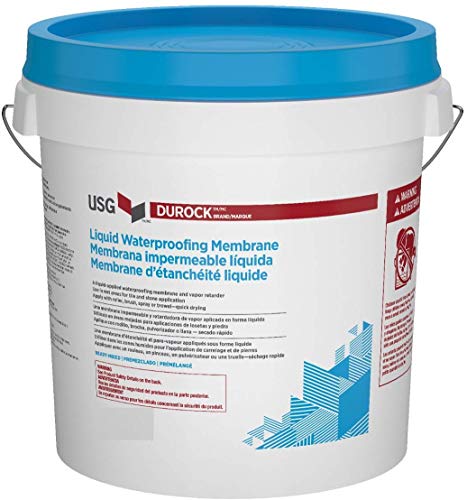
USG DUROCK Liquid Waterproofing Membrane doubles as a waterproofing layer and vapor retarder, offering a versatile solution for concrete and masonry surfaces. The membrane can be rolled, brushed, troweled, or sprayed, providing flexibility to match project needs. It features fast drying times, enabling quicker project turnover, and a low permeability rating (0.38 perms at 20 mils dry thickness) per ASTM E96, which helps minimize moisture transfer through walls and floors.
- Multiple application methods: roll, brush, trowel, spray
- Fast drying for quicker installations
- Low perm rating for effective moisture control
- Vapor retardant properties add an extra layer of protection
Best-use scenarios include below-grade walls, exterior foundations, and areas where a combined waterproofing and vapor barrier is beneficial. Surface preparation and proper curing are essential to achieve optimal performance.
LATICRETE Hydro BAN

LATICRETE Hydro BAN is a crack-insulation membrane designed to protect against in-plane cracks while providing a waterproofing layer. It is a recommended choice for tile or stone installations over proper substrates where crack isolation is required. The product is IAPMO approved and allows flood testing in as little as two hours at 70°F (21°C) or higher, depending on curing conditions. Importantly, it does not require a fabric reinforcement for small gaps, simplifying installation in some projects.
- Crack-insulation membrane with waterproofing properties
- IAPMO approved; suitable for residential and commercial use
- Fracture control with quick flood testing readiness
- No fabric reinforcement needed for small gaps
Applications include shower surrounds, shower bases, bathroom floors, and other tile installations where crack isolation and moisture resistance are critical. Always follow substrate preparation and adhesion guidelines for best results.
Buying Guide
Selecting the right liquid waterproofing membrane for concrete hinges on substrate condition, project scope, and the expected exposure. Below are key purchase considerations and how the featured products stack up across common scenarios.
- Crack-bridging capability: If your project involves significant substrate movement or existing cracking, prioritize membranes with high elongation (for example, Ames Blue Max and Liquid Rubber products) that maintain flexibility over time.
- Surface compatibility: Concrete, masonry, metal, and wood all respond differently to coatings. Some products, like USG DUROCK and LATICRETE Hydro BAN, are designed to serve as both waterproof membranes and crack-isolation barriers, which can simplify layering in complex installations.
- Application method and cure time: Brush, roller, or spray-compatible products offer versatility. Consider climate and project timelines; elastomeric coatings that cure quickly enable faster progression to subsequent layers, while others may require longer cure windows.
- Vapor control vs. waterproofing: If moisture vapor transmission is a primary concern (basement walls, below-grade spaces), membranes with vapor-retarder properties (such as USG DUROCK) provide dual benefits, reducing moisture migration while sealing leaks.
- Elongation and elasticity: Higher elongation values (e.g., 900% to 1200%) indicate better crack-bridging performance, especially on non-flat substrates or walls that experience movement.
- Color and aesthetics: Some products offer color options (Liquid Rubber Color Waterproof Sealant) that can simplify inspection and maintenance in exposed areas, though color is not a functional requirement for waterproofing.
- Certifications and approvals: Look for industry certifications and approvals (IAPMO, ASTM, etc.) when installing in areas with building code considerations or when tile and stone installations are involved (as with LATICRETE Hydro BAN and USG DUROCK).
- Coverage expectations: Real-world coverage varies by surface texture and porosity. Always consult product data sheets for guidance on coats and estimated square footage per gallon or container, then plan for extra material to account for irregular shapes and repairs.
- Durability under climate: For exterior applications or areas with freeze-thaw cycles, choose membranes with strong elongation and weather resistance to prevent micro-cracking and water infiltration over time.
In practice, the best choice often depends on the project’s priority—crack isolation (LATICRETE Hydro BAN), vapor control (USG DUROCK), or broad-dimension waterproofing with high elasticity (Liquid Rubber products and Ames Blue Max). For DIY renovators, products offering straightforward application and robust adhesion can deliver reliable results without specialized tools, while professional projects may benefit from membranes designed for faster cure times and larger scale performance.