Best Light Boxes for Color Matching in Textiles and Design
Color accuracy matters in textiles, cosmetics, plastics, and printing. A dedicated color matching light box reveals true hues under standardized lighting, helping teams compare swatches, proofs, and samples with confidence. This guide reviews five top color-matching light boxes, highlighting how they handle metamerism, light sources, capacity, and data recording. Use the buying tips to pick a cabinet that fits your workflow, industry standards, and budget. All selections below are designed to provide consistent illumination across multiple conditions for reliable color assessment.
| Product | Light Sources | Notable Features | Ideal For |
|---|---|---|---|
| Pazcii Color Matching Light Booth | D65, CWF, TL84, UV | Automatic switching, data saving, generous interior | Textiles, cosmetics, plastics evaluation |
| GrfceVue Color Assessment Cabinet | D65, TL84, plus common options | Large capacity, metamerism testing, auto-records | Industry color matching across textiles and toys |
| TFCFL 4-Light Source Cabinet | D65, TL84, F/A, UV | Four light sources, computerized control | Textiles, plastics, cosmetics with metamerism testing |
| MOCHAG 4-Light Color Box | D65, TL84, F/A, UV | Auto save, SMT parts, robust build | Quality control in textiles and dyeing |
| Pantone 3-Light Booth | D50, Home Tungsten | Consistent daylight simulation, residential light settings | Home and studio color matching |
Pazcii Color Matching Light Booth

The Pazcii Color Matching Light Booth combines four standard light sources to replicate common viewing environments. Its premium high-density board construction delivers durability and a stable, scratch-resistant exterior for long-term use. With interior dimensions of 27.95 by 16.54 by 22.44 inches, it provides ample space for placing multiple samples side by side, enabling efficient comparison. The design emphasizes uniform light distribution to minimize shadows and hotspots, supporting accurate color evaluation in textiles, paints, cosmetics, and plastics. Automatic light source switching and metamerism testing help document color differences that may appear under different lighting.
Key capabilities include automatic saving of test data and event logging. Each light source’s name, frequency, and usage time can be permanently recorded, even after outages. This makes audit trails straightforward for quality control teams that must demonstrate consistent color management across batches. The blend of British and American standard light sources ensures daily usability without extra equipment. For teams needing reproducible color judgments under varied conditions, Pazcii offers a practical, storage-friendly option.
GrfceVue Color Assessment Cabinet

The GrfceVue Color Assessment Cabinet mirrors the Pazcii model in size and purpose but emphasizes a user-friendly evaluation workflow. Its high-density board housing supports extended use in busy labs without warping or fading. A large observation chamber allows researchers to place multiple swatches for side-by-side comparison while maintaining a uniform lighting environment. The included metamerism testing capability helps detect color discrepancies that become evident only under specific lighting—critical for textiles and cosmetic product development. Automatic data saving ensures continuity of color records, which is essential for compliance and documentation in manufacturing environments.
Users benefit from a robust light-source suite aligned with widely accepted standards, ensuring compatibility with routine production checks and color proofs. The combination of reliability, space, and data integrity makes this cabinet well-suited for facilities needing rigorous color management across multiple product lines, including textiles, toys, and plastics.
TFCFL 4-Light Source Color Matching Cabinet
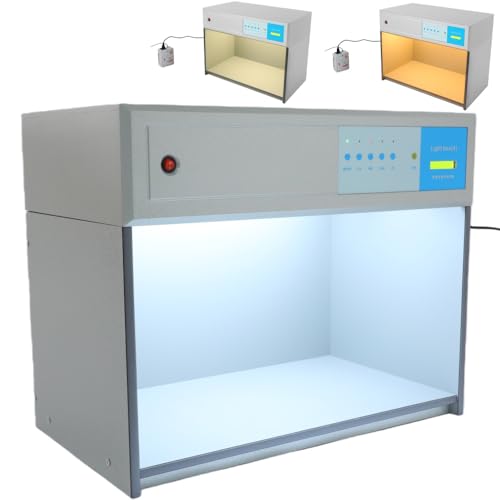
The TFCFL cabinet is a professional-grade color evaluation system featuring four standard light sources, including D65 and TL84, with additional F/A and UV options. This setup is designed for accurate assessment of color fastness and differences in textiles, printing, and dyeing materials. The device follows international standards for color and grayscale visual environments, offering a reliable benchmark for color proofing and quality acceptance. A fully computerized touch-control panel simplifies operation, while automatic data saving ensures every session is preserved for traceability. Its four-light approach helps users simulate a wide range of viewing conditions, essential for detecting metameric shifts across materials.
While the primary focus is professional quality control, the system’s broad industrial applicability makes it suitable for manufacturers seeking a single, multi-condition color evaluation station. The inclusion of reliable SMT components supports steady performance, while the capacity to record light source performance over time aids in maintenance planning and audits.
MOCHAG Professional Color Assessment Box
MOCHAG’s Professional Color Assessment Box presents four light sources—D65, TL84, F/A, and UV—matching international standard requirements. This configuration enables quick switching between lighting modes to simulate different viewing environments, ensuring color expression across varying conditions. Automatic light switching and metamerism testing, coupled with automatic data saving, streamline workflows in textiles, toys, cosmetics, and plastics. The cabinet’s design emphasizes a professional color contrast environment, aided by original SMT parts and an interior layout intended to minimize color bias. It also records usage data for each light source, supporting long-term color management programs.
Professionals will value its balance of feature richness and durability. The MOCHAG box is well-suited for quality control labs that perform frequent color matching tasks and require detailed session logs to support product development and supplier verification processes.
Pantone 3-Light Booth With D50
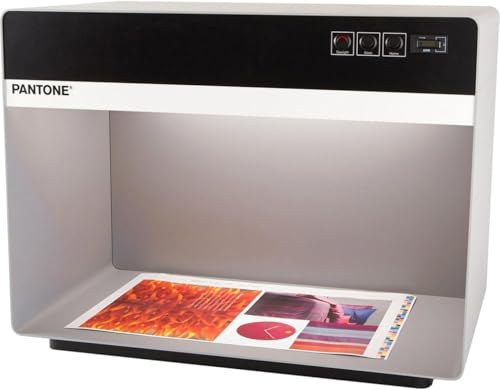
Pantone’s 3-Light Booth emphasizes consistent lighting for color evaluation with three distinct settings, including a D50 daylight simulation at 5000K and a residential-grade tungsten option. This makes it a practical choice for designers and homeowners who require predictable color perception under common ambient conditions. The D50 setting helps align color choices with print and product development workflows that rely on daylight-equivalent viewing, while the additional residential setting supports home visualization of color selections. The Pantone booth is notable for its focus on color correctness in consumer-facing contexts, where home and studio lighting can influence perceived shade accuracy.
Compared with industrial-grade metamerism testers, Pantone’s model provides a streamlined option for studios and shops that prioritize consistent color evaluation under typical consumer lighting environments. It may be especially valuable for marketing, interior design, and product development teams seeking reliable color communication across stakeholders and customers.
Buying Guide: Key Purchase Considerations
- Light source variety and metamerism testing: Prioritize cabinets with at least four standard light sources (D65, TL84, Uva, etc.) to cover typical viewing conditions. Look for metamerism testing as it helps detect color shifts under different lights.
- Chamber size and layout: Ensure interior dimensions accommodate your typical sample sizes. A roomy observation space reduces crowding and improves measurement consistency.
- Data saving and traceability: Auto save functions that log light source names, frequencies, and usage times are essential for quality control and audits. Consider models that retain data during power outages.
- Build quality and materials: Durable cabinets with scratch-resistant finishes prevent wear that can affect color perception over time. High-density boards often offer good stability and longevity.
- Standard compliance and compatibility: Choose lighting configurations aligned with British and American standard lighting environments if you work with international suppliers or clients. Verify compatibility with your color management workflow, including Pantone or other color libraries if relevant.
- Cost and maintenance: Weigh initial price against long-term maintenance needs and spare-part availability. Four-light systems may command higher upfront costs but yield better versatility for color matching across materials.
- Portability vs. fixed installation: Handheld or compact units suit studios with limited space, while larger cabinets fit dedicated color lab rooms requiring substantial sample capacity and stable conditions.
In choosing a light box for color matching, balance the breadth of lighting scenarios with data integrity and durability. For labs requiring rigorous metamerism testing and audit trails, models with automatic data saving and robust build quality generally deliver the best long-term value. If you primarily work with consumer-facing design or home projects, a dependable three-light setup with a familiar daylight option can streamline color decisions without overwhelming the workflow.