Best Laser Machine for Wood: Top Picks for Precision Engraving and Cutting
Choosing the right laser engraver for wood depends on power, precision, speed, and features like offline usage or safety enclosures. The following selections cover a range of budgets and capabilities, from compact 2.5W diodes to robust 50W systems. This guide highlights how these machines perform on wood, plus considerations for beginners and professionals alike.
| Product | Brand | Working Area | Laser Power | Key Benefit |
|---|---|---|---|---|
| Ray5 5W Engraver | Longer | 400 x 400 mm | 5W | High precision with 0.01 mm engraving |
| ACMER S1 2500mW | ACMER | 130 x 130 mm | 2.5W | Compact, versatile for small projects |
| Woxcker L2 MAX 20W | Woxcker | 300 x 300 mm | 20W | Strong cutting and safety features |
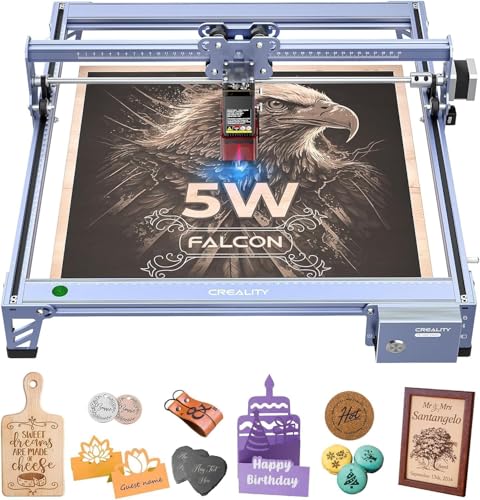
| Creality Falcon 5W | CREALITY | 400 x 415 mm | 5W | Large area with fast engraving |
| KENTOKTOOL LE400PRO | KENTOKTOOL | 400 x 400 mm | 5W | Ultra-fine compression and safety design |
Longer Ray5 5W High-Precision Engraver

The Longer Ray5 5W laser engraver combines speed and accuracy for wood projects. It uses a 240MHz ESP32 chipset, enabling speeds up to 10,000 mm/min and efficient power management. The laser point size is 0.08 x 0.08 mm, with an engraving accuracy of 0.01 mm, allowing intricate designs across multiple layers or patterns. Its 400 x 400 mm working area supports larger boards and panels, making it suitable for craft, signage, and hobbyist production. The offline capability enhances workflow when a computer isn’t readily available, while the 3.5″ touch screen simplifies setup and operation.
Key considerations for this model include ensuring proper ventilation due to fumes from cutting and engraving certain materials. The machine’s performance scales with material type and thickness, so users should run test engravings to calibrate depth and speed. The 0.08 mm laser dot is excellent for fine text and detailed artwork, but very dense materials may require more passes or slower speeds. Overall, this is a solid choice for wood crafters who want reliable precision in a mid-size footprint.
ACMER S1 Laser Engraver 2500mW

The ACMER S1 offers a compact desktop footprint with a 130 x 130 mm working area and a 2500 mW diode laser. Its engraving speed can reach 10,000 mm/min with 0.01 mm repeatable accuracy, making it suitable for precise patterns, text, and artwork on wood, acrylic, and more. This model emphasizes education and classroom or maker-space use, giving students hands-on experience with design, materials, and digital fabrication. Its versatility extends to a range of materials beyond wood, including leather, plastic, and certain metals, depending on material thickness and safety precautions.
Considerations include basic safety practices, as with all laser devices. While the S1 is beginner-friendly and 2-in-1 capable for engraving and cutting, users should operate it in a well-ventilated area with appropriate eyewear. The 130 x 130 mm area supports small to medium projects, and the device is well-suited for rapid prototyping, signage, and customized gifts.
Woxcker L2 MAX 20W Laser Engraver

The Woxcker L2 MAX pushes into higher power for deeper cuts and faster results. A 20W laser module enables more aggressive engraving and cutting on wood, including denser hardwoods, with better outcomes compared to lower-power diodes. The unit emphasizes safety with a six-safety protection system, including auto-shutdown on tilt, emergency stop, and a built-in flame sensor to prevent hazardous conditions. An enclosure captures fumes and minimizes exposure, making it more suitable for workshop environments and home studios seeking higher throughput.
Performance-wise, this model aims at users who need stronger materials handling and longer continuous operation. It supports continuous usage and a longer laser life, designed for extended sessions. When planning projects, consider ventilation, material thickness, and whether a larger working area is needed for your typical wood pieces. This machine is competitive for makers seeking a balance between power, safety, and enclosure benefits.
KENTOKTOOL LE400PRO 50W Laser Engraver

The LE400PRO represents a higher-power option for wood engraving and cutting, featuring a 50W laser capable of more aggressive material processing. It delivers ultra-fine compression with a 0.08 mm square focus for precise engraving and cutting. The system emphasizes speed, with engraving capabilities up to 6,000 mm/min, and a durable all-metal frame designed for stability and accuracy. The protective design includes eye safety features, and the overall build supports more demanding projects, including larger boards and thicker wood sections.
When evaluating this type of machine, consider ventilation needs, noise level, and maintenance requirements typical of higher-power systems. The LE400PRO is best suited for users who require rapid throughput, professional-grade results, and the ability to handle denser materials without sacrificing precision. It’s ideal for sign makers, prototype shops, and small businesses building wood products at scale.
Buying Guide: Key Purchase Considerations
Power and Material Suitability
Laser power directly affects cutting depth and speed. For wood, 2.5W–5W systems handle light engraving and thin cuts well, while 20W–50W units can cut thicker boards or denser hardwoods. Choose based on typical material thickness and the complexity of designs you plan to produce.
Working Area and Layout
A larger working area enables bigger panels and more versatile projects. If you frequently work with panels or plaques, a 400 x 400 mm area or larger is advantageous. Smaller deskside units suit jewelry, intricate designs, and prototyping in tight spaces.
Precision, Speed, And Repeatability
Look for a small laser dot size (such as 0.08 mm) and repeatable positioning accuracy around 0.01 mm for clean text and detailed artwork. Engraving speeds up to 10,000 mm/min are common at mid-range power, but higher-power models may sustain faster results on large projects.
Safety and Enclosure
Enclosures reduce exposure to laser light and fumes, while features like flame sensors and automatic shutdown enhance safety in busy workshops. Consider models with protective covers and interlocks, especially in shared spaces or classrooms.
Ease of Use And Setup
Preassembled or near-ready systems shorten the learning curve. A color touch panel or simple software workflow helps beginners start quickly. Check for offline modes to run designs without a PC and compatibility with common design formats (SVG, DXF, PNG).
Education And Community Support
Educational models are valuable for classrooms or maker spaces, with learning resources and accessible customer support. If you’re teaching fabrication concepts, or enabling student projects, consider tools with clear documentation and safety guidelines.
Maintenance And Longevity
Maintenance includes cleaning lenses, checking air paths, and replacing worn components. Laser diodes and optics have finite lifespans; understanding the expected life and warranty terms helps with budgeting and planning for replacements.
In summary, the right laser machine for wood balances power, accuracy, safety, and convenience. For hobbyists and education-focused users, mid-power systems with comfortable working areas and offline use often provide the best return. For professionals or hobbyists expanding into thicker woods and denser materials, higher-power units with strong ventilation and enclosure support offer greater flexibility without compromising precision.