Best Laser Cutter for Wood Signs and Engraving
Finding a reliable laser cutter for creating wood signs involves balancing power, precision, and ease of use. This guide reviews five popular options suitable for wood sign projects, from compact desktop engravers to higher‑power machines capable of cutting and marking thicker materials. Each product highlights key specs like laser power, working area, and engraving speed to help you compare at a glance. Use the buying guide at the end to weigh features against your sign-making needs and budget.
| Product | Working Area | Power | Best For |
|---|---|---|---|
| LONGER Ray5 5W | 400×400 mm | 5W | Detail engraving and large signs |
| ACMER S1 3500mW | 130×130 mm | 3.5W | Beginner-friendly small projects |
| ACMER S1 6000mW | 130×130 mm | 6W | More material options, faster cuts |
| Creality Falcon 5W | 400×415 mm | 5W | Medium‑sized signs with detail |
| Carverall K15 Pro | Near A4 size | 10W | Pro-grade precision for complex designs |
LONGER Ray5 5W Laser Engraver

The LONGER Ray5 5W laser engraver targets wood sign makers with a 400×400 mm work area and high-speed processing. It uses a 240 MHz ESP32 chipset to deliver engraving speeds up to 10,000 mm/min, combining fast performance with energy efficiency. The laser point size is 0.08×0.08 mm, enabling detailed patterns and text for wood signs. Its 0.01 mm engraving accuracy supports fine lines, letters, and decorative elements. This model suits projects that require both large sign panels and intricate font work, with offline usage for convenient workflow.
ACMER S1 Laser Engraver 3.5W

The ACMER S1 3.5W engraver focuses on beginner-friendly operation with a 130×130 mm working area. It delivers up to 10,000 mm/min engraving speed and 0.01 mm repeatable positioning accuracy. The device supports wood, bamboo, leather, plastic, and more, making it suitable for wood signs with mixed materials. It arrives largely preassembled, reducing setup time and enabling quick transitions from concept to final product.
ACMER S1 Laser Engraver 6W

The 6W variant from ACMER increases laser power while keeping a compact 130×130 mm working area. It provides 10,000 mm/min engraving speed and 0.01 mm repeatable accuracy, enabling bolder text and deeper engravings on wood and other substrates. As with the 3.5W version, it emphasizes easy setup and a user-friendly experience, making it well-suited for hobbyists upgrading to more capable equipment.
Creality Falcon 5W Laser Engraver
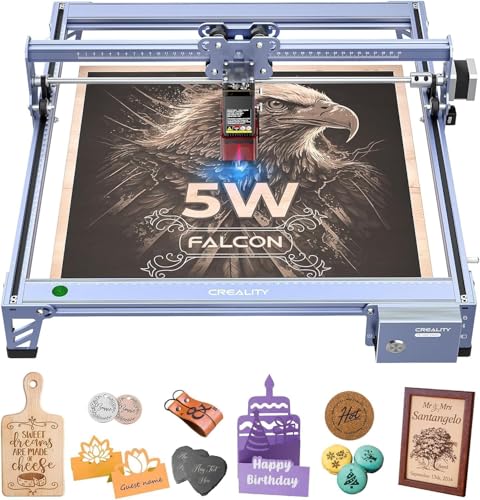
The Creality Falcon 5W laser engraver delivers high-precision results with a 0.06×0.06 mm laser spot and positioning accuracy near 0.01 mm. It supports fast engraving up to 10,000 mm/min and features a generous 400×415 mm working area for larger sign panels. The machine’s 32-bit control architecture supports complex patterns, and optional accessories like a rotary roller expand its capabilities for cylindrical signs or raised letters on wood.
Laser Engraver LE400PRO 50W

The LE400PRO 50W model targets professionals with a robust 50W class 1 laser and a 400×400 mm work area. It claims precise 0.08 mm compression focus, enabling clean, crisp edges on wood, acrylic, and other materials. The system is designed to handle more demanding sign projects, with faster work cycles and durable construction suitable for frequent use in a workshop environment.
Buying Guide: Key Considerations For Wood Sign Projects
Choosing the right laser cutter for wood signs depends on several factors. Consider power versus material thickness: thicker wood and deeper engravings require higher wattage and stable cooling. Working area matters for large signs; a larger bed reduces the need to mosaic designs. Precision and repeatability are crucial for legible typography and fine details; look for machines with at least 0.01 mm repeatable positioning accuracy and small focal spots.
Ease of use influences adoption, especially for beginners. Preassembly, clear software integration, and offline capability can shorten the learning curve. Material compatibility is essential: confirm that the machine can handle wood types you use (hardwoods vs. softwoods), plywood, acrylic, and laminates. Safety features, such as protective shields and proper ventilation, help maintain a safe workspace.
Speed affects production, particularly if you’re crafting multiple signs or running a small business. A higher engraving speed is beneficial, but not at the expense of quality. Consider upgrade paths: some models offer larger work areas, higher power modules, or additional accessories like rotary attachments for cylindrical surfaces, which expand your sign-making capabilities.
Budget and support are practical realities. Compare initial costs with long-term maintenance, replacement parts availability, and vendor support. For entry-level sign makers, a model with straightforward setup and a strong community or official tutorials can provide significant value. For professionals, reliability, upgrade potential, and consistent results take priority.