Best Keyless Deadbolt Locks for Your Home
Keyless deadbolt locks combine convenience with enhanced security, offering keypad entry, biometric access, and smart-home integration. This guide reviews five top options that fit a range of doors and needs—from traditional keypad models to WiFi-enabled smart locks. Each selection emphasizes simple installation, reliable auto-lock features, and durable construction. Read on to compare how these models perform in everyday use and which type best matches your household access patterns, whether you prioritize codes, fingerprints, or remote control.
| Product | Key Benefit | Access Type |
|---|---|---|
| Kwikset Powerbolt 250 | 25 user codes + one-time codes; customizable | Keypad |
| TEEHO TE001 | 20 codes plus one-time code; quick auto-lock | Keypad |
| Schlage Encode Smart WiFi | Remote access, 100 codes, voice control | Smart WiFi |
| Veise Fingerprint Door Lock | Fingerprint + codes + spare keys; fast biometric unlock | Biometric + keypad |
| Schlage BE365 CAM 619 | Pre-programmed codes, durable build | Keypad |
Kwikset Powerbolt 250 Keypad Deadbolt

The Kwikset Powerbolt 250 is a standalone keypad deadbolt designed for straightforward, keyless entry. Its 10-button keypad supports up to 25 user codes and five one-time codes, making it suitable for households with regular guests or service providers. An on-board programming code lets you edit or delete codes as needed, so you can tailor access without reconfiguring your door hardware. The lock features an auto-lock option, enabling you to set a timer (30 seconds to 10 minutes) for automatic locking after entry. This combination of control and automation contributes to daily security with minimal effort.
Key management is a core strength here. The model accommodates many family members and temporary visitors, reducing the need for physical keys. Installation is designed to be quick and non-intrusive, and the keypad is backlit for use in low-light conditions. While the lock is primarily a keypad solution, it integrates well into homes that favor simple, code-based access rather than remote connectivity. Its construction emphasizes durability for standard residential doors, with a focus on dependable, low-maintenance operation.
Security considerations include reliance on a keypad rather than a connected network, which minimizes the risk of remote hacking but requires careful code management. Lost codes can be revoked, and the auto-lock feature provides consistent protection after entry. For homes with higher security needs—such as frequent guests or multiple entry points—this model offers reliable, code-driven convenience without requiring a robust smart-home setup.
TEEHO TE001 Keyless Entry Door Lock
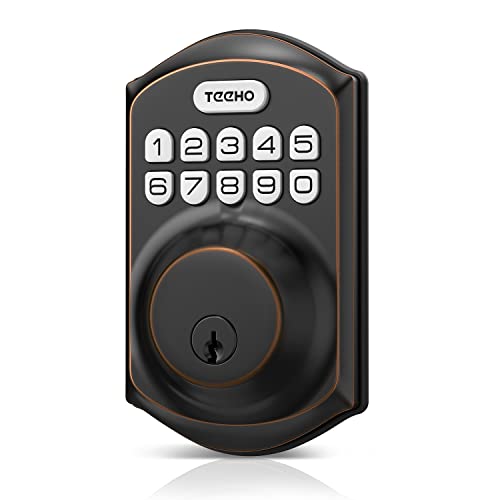
The TE001 from TEEHO offers a keypad-based solution designed for easy front-door access. It supports up to 20 access codes for family use and a temporary one-time code for guests, simplifying short-term access without sharing physical keys. A notable feature is its automatic locking capability, which can be configured to lock the door after a set interval (between 10 and 99 seconds). Additionally, a one-touch auto-lock function can be activated by holding any keypad key for two seconds, enhancing daily convenience when hands are full or occupied.
Delivery of codes and access is straightforward, with an emphasis on user-friendly setup and reliable operation. While this model focuses on keypad entry, it also emphasizes security with the option to create temporary guest codes and to delete individual user codes as needed. For households that prioritize simple code sharing and quick, secure access without internet connectivity, TE001 presents an approachable solution with practical auto-lock features and backup access via traditional keys included in some packages.
Considerations for potential buyers include the trade-off between a standalone keypad model and more advanced smart-lock options. TE001 provides strong on-site control and predictable performance, but it lacks WiFi connectivity and remote monitoring. If you want monitoring from a mobile app or integration with voice assistants, a smart-lock alternative may be a better fit. However, for straightforward, code-based entry on a front door, this TE001 model remains a solid choice with dependable auto-lock functionality.
Schlage BE365 V CAM 619 Camelot Keypad Deadbolt

The Schlage BE365 V CAM 619 Camelot keypad deadbolt emphasizes traditional keypad entry with reliable security. It offers a couple of pre-programmed codes to facilitate a quick setup, with the ability to assign up to 19 additional codes for trusted household members and guests. The unit is constructed from quality metal, delivering durability for residential and light commercial use. A 9V battery powers the lock, and a low-battery indicator helps prevent lockouts. The product is designed to fit common backset, cross bore, and door thickness measurements, ensuring a proper fit on many standard doors.
Performance and durability are paired with straightforward maintenance. The keyless convenience is complemented by the option to add multiple codes, which makes it suitable for households with several regular users. The battery-powered operation may require periodic battery checks, but the lock is designed to provide extended battery life with typical use, reducing the frequency of battery changes. The Camelot styling is a classic choice that blends well with many door finishes, contributing to a cohesive exterior appearance while maintaining solid security credentials.
From a security perspective, the BE365 CAM 619 emphasizes dependable, code-based access with a strong metal construction. It is less feature-rich than modern WiFi-enabled models but remains a trusted option for those who prefer local control without connectivity requirements. Compatibility with standard doors and a reasonable code-management framework makes this a practical pick for traditional homes seeking a durable keypad solution.
Schlage Encode Smart WiFi Deadbolt

The Schlage Encode Smart WiFi Deadbolt brings remote access and control to a traditional keypad-style lock. Built-in WiFi allows you to connect the lock to your home network, enabling management through the Schlage Home app from anywhere. You can create and manage up to 100 access codes for family, friends, or guests, while receiving notifications and lock history to monitor activity. The Encode integrates with voice assistants like Alexa and Google Assistant for hands-free control, expanding convenience across a connected home.
Installation focuses on modern convenience: you can control the lock from a smartphone, set up guest codes, and monitor activity without a hub. The lock’s emphasis on remote management and real-time alerts makes it well-suited for homes with frequent visitors or multiple entry points. As with many smart locks, maintaining a secure network and keeping firmware up to date are important considerations to maintain ongoing security and reliability.
Security and reliability are enhanced by the ability to lock or unlock remotely, view a history of access events, and receive alert notifications. While the Encode is feature-rich, it relies on a stable WiFi connection for full functionality. For households seeking seamless integration with smart-home ecosystems, voice control, and guest code management, this model provides a comprehensive, app-driven solution that goes beyond keypad-only entry.
Veise Fingerprint Door Lock

The Veise fingerprint door lock combines biometrics with traditional keypad entry and automatic locking for enhanced security. It identifies a fingerprint within about 0.3 seconds and unlocks in roughly 1 second, supported by a high recognition rate. The lock offers a 4-in-1 access scheme: up to 20 fingerprints, 20 passwords, two spare keys, and one-time passwords that are automatically deleted after use. This versatility supports households with multiple family members and occasional guests while maintaining strong security controls.
Auto-lock is configurable within a 10-99 second window, and there is a one-touch lock option by pressing and holding a key for two seconds. The rotatable inner knob ensures quick locking and unlocking from inside. Anti-peeking password features help prevent code exposure through shoulder surfing, adding another layer of security. The Veise model emphasizes rapid biometric access without sacrificing the flexibility of pin codes and spare-key back-ups, making it suitable for users who want multiple secure entry options without relying solely on one method.
Security considerations for biometric locks include ensuring the fingerprint database remains protected and regularly updating firmware to guard against vulnerabilities. Biometric systems can provide convenience, but physical back-ups (codes, keys) are advisable for scenarios such as batteries running low or biometric changes over time. Veise offers a balanced approach with fast access, multiple unlock methods, and reliable auto-lock behavior.
TEEHO TE002 Fingerprint Door Lock

The TE002 from TEEHO is a fingerprint-based door lock designed for easy front-door access. It supports unique access codes and fingerprints for up to 20 family members, along with the ability to generate temporary codes for guests. The system emphasizes biometric convenience, while maintaining a straightforward keypad option for households that want backup access methods. Auto-lock is available, providing a secure, hands-off way to finalize entry after closing the door.
Installation is described as fast and tool-efficient, suitable for typical 2-1/8 inch door holes. The TE002 is positioned for homes seeking biometric entry as a primary method with the flexibility to issue temporary or shared codes when needed. It is designed to be easy to install and maintain, with a focus on user-friendly operation and rapid unlocking via fingerprint recognition in addition to codes.
Buyers should evaluate the importance of biometric access versus traditional codes, as well as the reliability of the fingerprint sensor in various lighting and weather conditions. TE002 provides a practical option for households prioritizing biometric convenience while still accommodating peers or service personnel via codes or backups, all while supporting automatic locking to reduce the risk of forgotten locks.
Buying Guide
Keyless deadbolt locks come in several flavors. Understanding the differences helps you choose the right type for your home and lifestyle. The main categories are keypad-only, biometric, and smart WiFi locks. Each offers distinct advantages and trade-offs in terms of convenience, security, installation, and maintenance.
Access Method and Management
- Keypad: Simple, code-based access. Look for a lock that supports multiple user codes and one-time codes for guests or service workers. Consider how easy it is to add, edit, or revoke codes.
- Biometric: Fingerprint or other biometric readers speed entry and reduce the risk of code sharing. Ensure a high recognition rate and secure storage of biometric data.
- Smart WiFi: Remote control and monitoring via a mobile app. Ideal for households with multiple doors or frequent visitors, but requires a stable WiFi network and attention to firmware updates.
Security and Durability
- Lock grade and material: Look for Grade 1 or Grade 2 (industrial/consumer) standards and solid metal construction for residential security.
- Battery life and power options: Many locks rely on standard batteries; check battery type, life expectancy, and low-battery indicators.
- Auto-lock settings: Configurable auto-lock timing reduces the risk of doors remaining unlocked after entry.
Installation and Compatibility
- Backset, door thickness, and bore compatibility: Ensure the model fits your door’s dimensions and hole patterns.
- Installation effort: Some models are tool-free or require only basic screwdriver use; others may need additional drilling or alignment.
- Finish and exterior style: Choose a finish that matches your door hardware for visual harmony.
Smart Home Integration and Privacy
- Connectivity: WiFi-enabled locks enable remote access, event history, and voice control, but rely on internet security and device firmware.
- Privacy considerations: Biometric data should be stored securely on the device; understand the vendor’s data handling policies and whether codes can be reset remotely.
Practical Recommendations
For households prioritizing low maintenance and offline reliability, keypad-only locks with robust code management are appealing. If you want remote monitoring and guest code control, a smart WiFi lock provides multi-user management and app-based visibility. For homes with frequent visitors or service providers, a biometric lock offers quick access while preserving security through multi-factor options. Consider your door type, desired features, and how you plan to manage access over time to determine the best fit.