Best Jointing Tools for Mortar: Smooth, Precise Masonry Finishes
Masonry projects rely on crisp, uniform mortar joints to ensure both beauty and durability. The right jointer tools help masonry workers create clean lines, consistent depths, and long-lasting finishes between bricks, blocks, and stone. Below are five top options from trusted brands, along with a concise buying guide to help you select the best tool for your job.
| Product | Brand | Key Benefit | Approx. Size |
|---|---|---|---|
| Hyde Tools 18170 3/8-Inch And 1/2-Inch Joint Sizes On Each End Steel Brick Jointer | Hyde | Two joint sizes in one tool | 10-Inches |
| MARSHALLTOWN QLT Steel Brick Jointer, 1/2 x 3/8 Inch | MARSHALLTOWN | Polished carbon steel for smooth joints | 2 sizes in one |
| Bon “V” Bar Jointer – 1/2 in. Tempered Steel Masonry Joint Tool | Bon | Crisp, uniform 1/2 in. V joints | 9-Inch overall |
| Bon Tool 11-989 M Style Convex Jointer | Bon | Dual ends for varied joint profiles | Each end different size |
| Faithfull FAIMMR10 Masonry And Mortar Rake/Router | Faithfull | Removes old mortar before repointing | 10 mm routing head |
Choosing the right tool depends on joint profile, material, and how much control you need over depth and finish. The following sections review five well-regarded options, highlighting features, sizes, and usage notes to help builders and DIY enthusiasts pick confidently.
Hyde Tools 18170 Joint Sizes On Each End

The Hyde Tools 18170 combines two common brick joint sizes on a single 10-inch steel brick jointer, offering efficiency for masonry joints in both 3/8-inch and 1/2-inch profiles. The one-piece high-carbon steel construction provides stiffness and durability for repeated passes along bricks and concrete blocks. Its flat, robust design helps create smooth, concave mortar joints that look uniform along long wall runs. The tool’s weight balance and simple grip aid steady control, reducing hand fatigue on larger projects. This dual-size option is especially useful when working with varied brick sizes or mortar thickness requirements across a single job site.
Pros: Dual-end design reduces tool swaps, sturdy steel construction, suitable for smooth concave joints. Cons: Limited to the two sizes included; may require alternative profiles for decorative or wide joints on complex layouts.
Mortar Pointing Trowel Brick Jointer Trowel

This 304 stainless steel trowel-style jointing tool is designed for flexible use on wall joints with various angles. Its corrosion-resistant blade is suitable for repeated water exposure typical of exterior masonry projects. The angled head helps reach tight joints and tight corners while maintaining consistent mortar depth. The stainless construction reduces staining and makes cleanup easier after use on masonry walls. It’s a versatile option for bricklayers who also need a precise pointing edge for mortar between bricks and blocks.
Pros: Stainless steel construction resists rust, angled head adds reach, adaptable for multiple joint angles. Cons: Primarily a finishing tool; not a dedicated concave joint profile tool for all jobs.
MARSHALLTOWN QLT Steel Brick Jointer

Marshalltown’s QLT line offers a two-size brick jointer crafted from polished carbon steel intended for smooth, consistent joint lines. The dual-size function accommodates common 1/2-inch and 3/8-inch mortar joint profiles, helping masons adapt quickly to different sections of a wall without swapping tools. The tempered blade is fully ground and polished for long-term edge retention, ensuring clean lines through repeated passes. Hardwood-handled models in this line emphasize comfort during extended use, helping maintain steady pressure and depth control on larger projects.
Pros: High-quality steel with dual profiles, durable finish, comfortable grip for repetitive tasks. Cons: May be slightly heavier than budget options; professional-grade intent may exceed casual DIY needs.
Bon “V” Bar Jointer – 1/2 in.
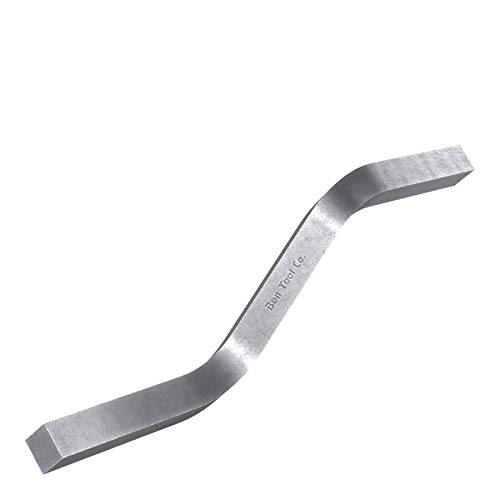
The Bon “V” Bar Jointer is a 9-inch tool designed to produce crisp, uniform 1/2-inch V-shaped mortar joints. The tempered steel construction provides a balance between resilience and control, enabling consistent depth while maintaining clean lines across long runs. The V groove is particularly useful for architectural or decorative masonry where precise drainage and joint compaction are desired for long-term performance. The tool’s shorter length makes it agile for detailed work or tight spaces where larger jointers can’t reach.
Pros: Clear V profile yields strong visual definition, robust steel with reliable edge, good balance. Cons: Limited to 1/2 inch joints; may require other profiles for non-V joints.
Bon Tool 11-989 M Style Convex Jointer

The Bon Tool 11-989 M Style Convex Jointer features two ends with different sizes, allowing varied convex joint profiles to suit different brick and block configurations. The heavy-gauge steel body provides durability for frequent use, and its dual-end design minimizes the need to switch tools mid-project. This option is favored by masons who require reliable performance across multiple joint shapes and want to achieve smoothly finished, rounded mortar joints.
Pros: Dual ends for versatility, sturdy construction, easy handling. Cons: May be heavier than simpler jointers; best for projects needing more than one profile.
Faithfull FAIMMR10 Masonry And Mortar Rake/Router

The Faithfull FAIMMR10 is a dedicated mortar removal tool with a 10 mm diameter TCT routing bit designed for removing old and soft mortar between brick courses prior to repointing. Compatible with mains-operated drills with a 1/2-inch chuck, it offers precision control for preparing joints before refilling. While not a traditional hand jointer, it is an important prep instrument when refurbishing masonry joints and restoring uniform appearance before tile or brick work is completed.
Pros: Effective for removing old mortar; compatible with standard drills; helps ensure clean faces for repointing. Cons: Requires power tool setup and guarding; not a hand-finishing jointer for final joints.
Buying Guide: Key Purchase Considerations
- Joint profile and size: Decide if you need 1/2 inch, 3/8 inch, V-shaped, or convex profiles. Some tools offer two sizes in one, reducing swaps during work.
- Material and durability: Look for high-carbon steel or tempered steel for durability, edge retention, and consistent performance over time. Stainless steel resists corrosion in damp environments.
- Ergonomics and balance: A comfortable handle and well-balanced tool reduce fatigue on long jobs. Wood, rubber, or composite handles can influence grip and control.
- Durability versus cost: Professional-grade tools tend to be more durable and provide precise finishes, while budget options may be suitable for DIY intermittent use.
- Accessory compatibility: Some tools pair well with mortar rakes or routers for prep work, especially when restoring existing structures or dealing with old mortar.
- Project type: For exterior masonry with frequent weather exposure, prioritize corrosion resistance and robust finishes; for interior projects, comfort and precision may take precedence.
In sum, selecting the right jointing tool depends on the desired joint profile, work scope, and comfort preferences. For repetitive, professional use, dual-size or multi-profile jointers streamline workflows. For restoration or decorative work, specialized profiles such as V-shaped or convex jointers provide distinctive finishes. Prep tools like rakes or routers can improve the base before tooling the final joints, ensuring long-term durability and a clean appearance.