Best Insulation for Basements: Effective Budget-Friendly Ways to Keep Heat In
Basements are often overlooked when it comes to energy efficiency. The right insulation reduces heat loss, blocks drafts, and can lower utility bills. This guide reviews five top-rated basement insulation options, ranging from fiberglass rolls to radiant barriers and window curtains. Each product is selected for suitability in damp or cool basement environments, moisture considerations, and DIY installation potential. Use the buying guide at the end to compare options based on climate, space, and budget. The selections below focus on practicality, installation ease, and long-term performance in American basements.
| Product | Brand | Focus |
|---|---|---|
| R-13 Fiberglass Insulation Roll | Owens Corning | Wall insulation for basements (2×4 walls) |
| SmartSHIELD Reflective Insulation Roll | INSULATION MARKETPLACE | Radiant and vapor barrier, indoor/outdoor use |
| Winemana Window Insulation Roll | winemana | Window insulation for basement windows |
| Kathfly Pipe Insulation Foam Tube | Kathfly | Pipe insulation for basement plumbing |
| RYB Home Thermal Insulated Curtain | RYB HOME | Window/door drafts reduction |
Owens Corning R-13 Fiberglass Insulation Roll

The Owens Corning R-13 fiberglass insulation roll is a common choice for basement walls in 2×4 framing. It features faced insulation designed to maintain interior temperatures and provide noise reduction in living spaces adjacent to basements. The pink fiberglass is widely regarded as soft to the touch and formaldehyde-free, contributing to indoor air quality. This product is well-suited for retrofit basement walls and new construction where standard wall cavities are used for insulation. Its flexibility and ease of installation support DIY projects as well as contractor-installed applications.
- R-13 faced insulation, suitable for 2×4 wall installations.
- Helps maintain temperatures and reduces interior noise.
- Formaldehyde-free and soft to touch for safer handling.
- Commonly used in basement wall assemblies for energy efficiency.
Overall, this option provides reliable thermal resistance and straightforward installation for basement walls, combining comfort with cost-effective performance.
SmartSHIELD Reflective Insulation Roll

The INSULATION MARKETPLACE SmartSHIELD roll is a reflective radiant barrier with a built-in vapor barrier, designed to reflect radiant energy and minimize moisture intrusion. It acts as a radiant shield and helps reduce heat transfer through walls and ceilings, which is especially useful for basements with exposed surfaces or crawlspaces. The product’s design makes it suitable for indoor and outdoor use, and its sound-deadening properties can contribute to a quieter living space near the basement. This roll can complement traditional insulation by addressing radiant heat gains or losses in mixed climates.
- Reflects up to 95% of radiant energy for a strong radiant barrier.
- Vapor barrier remains effective under humidity and moisture variations.
- Double purpose: radiant and sound barriers for basements and other spaces.
- Versatile for indoor and outdoor installations, including basements.
For basements with heat transfer concerns from concrete or exterior walls, SmartSHIELD provides an added layer of protection and moisture management, supporting overall thermal performance when paired with traditional insulation.
Winemana Window Insulation Roll

Winemana’s Window Insulation Roll uses multi-layer reflective aluminum to create a double-sided barrier that blocks solar gain and drafts through basement windows. The heat-reflective design helps keep interior spaces cooler in summer and warmer in winter by reducing heat transfer through glass. The material is tear-resistant and rated for outdoor exposure, making it suitable for basement windows that may experience temperature swings or occasional moisture. Easy installation options—tape, suction cups, clamps, or hooks—support quick retrofits and seasonal use.
- Multi-layer reflective aluminum blocks up to 90% of solar radiation.
- Tear-resistant, durable film suitable for outdoor exposure.
- Easy installation with common fastening methods for windows and doors.
- Dual-sided insulation improves comfort in basements with large windows or light exposure.
In basements where window drafts are a concern, this roll offers a practical, removable solution to minimize heat loss and maintain a steadier indoor climate.
Kathfly Pipe Insulation Foam Tube

Kathfly’s pipe insulation foam tubes come in a six-pack with a 25-inch length and a 2.5-inch outer diameter. These programed foam tubes fit around exposed pipes in basements to reduce heat loss and prevent condensation. The foam is soft, durable, and highly elastic, allowing easy bending to accommodate bends and joints. With multiple uses, these sleeves can shield pipes from cold drafts, preventing freezing and helping maintain consistent temperatures in damp basement environments. The package size supports replacement and coverage for common basement layouts.
- Six pieces of 25 inches each to cover standard basement piping.
- Outer diameter around 2.5 inches; inner diameter about 1 inch.
- Soft, durable foam with high elasticity for easy fitting.
- Keeps pipes insulated, reducing heat loss and preventing freezing.
Pipe insulation is often essential in basements where plumbing runs through uninsulated cavities, and Kathfly provides a straightforward, cost-effective solution for protecting exposed pipes.
RYB Home Thermal Insulated Curtain
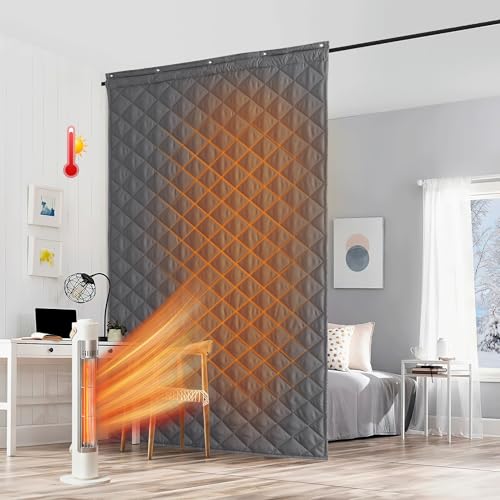
RYB Home’s Grey Thermal Insulated Curtain is designed to block drafts from basement windows and doorways. The outer Oxford fabric pairs with a cotton lining to reduce heat loss, helping maintain indoor climate with less reliance on heating and cooling systems. The curtains include hooks and adhesive strips for quick installation, and offer three methods of mounting—rod pocket, hooks, or adhesive—allowing flexible integration into existing basement windows or doorways. This option complements other insulation by addressing convective heat loss from drafts and air leakage.
- Outer waterproof Oxford fabric with cotton lining for draft reduction.
- Includes hooks and adhesive strip for ready-to-install convenience.
- Three installation methods with minimal tools or alterations.
- Improves year-round comfort by minimizing cold drafts near windows and doors.
Thermal curtains can be an effective, low-cost addition to basement insulation strategies, especially where window or door drafts are persistent, or where structural changes are not feasible.
Buying Guide
Choosing the right basement insulation involves balancing climate, moisture, and installation practicality. Consider these key factors to select an option that best fits your space and budget.
- R-value and climate needs: Higher R-values provide greater insulation. Match material choices to your local climate and the part of the basement being insulated (walls, floors, or ceilings).
- Moisture management: Basements are prone to humidity and occasional moisture. Favor products with vapor barriers or moisture resistance and ensure proper drainage around the home to protect insulation over time.
- Radiant barriers vs conventional insulation: Radiant barriers help in warm climates or spaces with high solar gain, but most basements benefit from conventional insulation on walls and floors; radiant barriers can supplement where heat transfer is a concern.
- Window and door insulation: Basement windows and exterior doors are common sources of drafts. Reflective films, insulation rolls, and thermal curtains offer practical, adjustable options for reducing heat loss.
- Pipe insulation: Frozen or sweating pipes in basements can be mitigated with foam pipe insulation; this is a low-cost way to prevent heat loss and condensation-related issues.
- Installation considerations: DIY-friendly products save time and money, but complex retrofits may benefit from professional installation to ensure tight seals and correct layering.
- Air sealing first: Before adding insulation, seal cracks and gaps with caulk or spray foam to maximize energy savings and prevent air leaks.
- Cost vs long-term savings: Upfront cost matters, but the best value often comes from materials with durable performance and lower ongoing energy costs.
- Safety and environmental factors: Look for products with low VOCs, formaldehyde-free formulations, and relevant safety certifications for indoor air quality and fire resistance.
- Compatibility and space: Assess the specific basement area—walls, windows, pipes, and doors—to choose compatible products (rolls for walls, foams for pipes, curtains for windows).