Best Infrared Garage Heaters for Cold Weather Comfort
Choosing an infrared heater specifically for a garage or workshop can improve comfort without sacrificing energy efficiency. Infrared heat warms objects and people directly, rather than heating the air, which is ideal for drafty spaces or areas that aren’t heated year-round. The models below represent five strong options for American garages, workshops, and partially open spaces, balancing power, installation needs, and safety features. Each model offers different voltage requirements, mounting options, and control methods to fit a variety of setups and budgets.
| Product | Brand | Power / Voltage | Use | Key Feature |
|---|---|---|---|---|
| DR-238 Carbon Infrared Outdoor Heater | DR. INFRARED HEATER | 900–1500W • 120V | Indoor / Outdoor | IP55 rating; remote control |
| Heat Storm HS-1500-PHX-WIFI Infrared Heater | Heat Storm | 1500W • 120V | Wall Mounted | Wi‑Fi control; digital thermostat; tip‑over safety |
| Dr. Infrared Heater 10,260 BTU Infrared Heater | DR. INFRARED HEATER | 3000W • 220–240V | Indoor / Outdoor | IP55 weatherproof; remote; two power levels |
| Dr Infrared Heater DR-988A Garage Shop Heater | DR. INFRARED HEATER | 5600W • 240V | Garage / Shop | High‑capacity for garages; NEMA 6‑30R requirements |
| TEMPWARE Electric Garage Heater | TEMPWARE | 6,250–7,500W • 240V | Workshop / Garage | Timer; ECO mode; wide heating range |
DR-238 Carbon Infrared Outdoor Heater
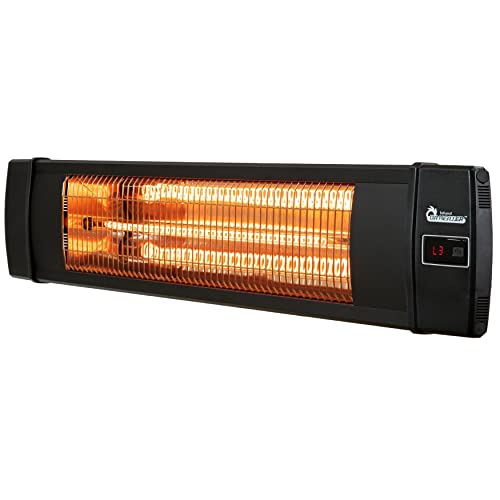
The DR-238 is designed for both indoor and outdoor use, making it versatile for a garage that opens to the outside or a covered workspace. It delivers clean infrared heat with three power settings—900W, 1200W, and 1500W—operating on a standard 120V circuit. Its IP55 rating means reliable protection against dust and water splashes, which is useful in humid or damp garage environments. A remote control enables convenient operation from a distance, and installation is simplified by a plug‑and‑go setup without specialized wiring. This model is well-suited for zones where quick, odorless warmth is needed without significant ducting or ventilation.
For garages or patios that require flexible heating, the DR-238 provides fast heat directly to people and objects, reducing the time needed to achieve a comfortable temperature. The unit’s infrared approach minimizes air movement, which helps maintain a steady comfort level even when doors are opened intermittently. However, as with any outdoor‑rated heater, it’s important to place it on a stable surface and keep it away from flammable materials. Remote control and straightforward mounting options support temporary or semi‑permanent setups.
Heat Storm HS-1500-PHX-WIFI Infrared Heater

This wall‑mounted infrared heater is designed to conserve floor space while providing consistent heat through a convenient form factor. The HS‑1500‑PHX‑WIFI model combines 1500W of radiant heat with Wi‑Fi connectivity, allowing you to adjust temperature settings from your phone. A touch screen with a digital thermostat, a remote, and a tip‑over safety shutoff enhance daily usability and safety in garages or workshops that might be used for projects or storage. The wall‑mount design makes it easy to position heat where you need it most, without occupying precious shop floor area.
Because it operates on standard 120V current, this Heat Storm option is well aligned with typical garage electrical circuits. It provides a quiet, efficient heat source that can be controlled remotely or locally, which is helpful when you are working on a project and don’t want to get up to adjust settings. Its space‑saving design is a key advantage in smaller garages, while its modern controls appeal to tech‑savvy users who prioritize connectivity and precise temperature control.
Dr. Infrared Heater 10,260 BTU Infrared Heater
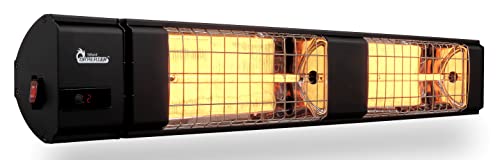
Equipped with a carbon infrared heating element, this unit delivers instant warmth with up to 10,260 BTU (about 3,000 watts) and operates on 220–240V. It’s suitable for both indoor spaces like shops and garages and outdoor areas such as patios and decks, thanks to IP55 weather resistance. The heater ships with a remote and supports two power levels plus a standby mode, enabling flexible energy use. Its installation is designed for ceiling or wall mounting, making it adaptable for garages with high ceilings or dedicated heat zones. The combination of powerful output and weather resistance makes it a strong candidate for larger garages.
The model’s rapid heat delivery is ideal for quickly elevating comfort without lengthy heat buildup. While it requires appropriate electrical sourcing (220–240V, with the suitable outlet and mounting hardware), the unit’s remote control and standby capabilities add convenience for frequent use. Users should confirm space dimensions and wiring compatibility before installation, especially in older garages or buildings with modest electrical panels.
Dr Infrared Heater DR-988A Garage Shop Heater

The DR-988A is built for heavy garage and shop use, delivering substantial heat through a 240‑volt circuit with a 5600‑watt capacity. It’s designed to plug into a NEMA 6‑30R receptacle, reflecting its need for higher amperage and the corresponding electrical infrastructure. This model is suited for large spaces or workshops with high ceilings where consistent heat is required to maintain comfortable working conditions during cold seasons. Proper electrical planning is essential, as the heater’s installation involves a dedicated outlet and compatible power cord.
Users should consider ventilation and mounting options when deploying this unit, as its substantial output can rapidly raise room temperatures. The DR‑988A is a robust choice for dedicated garages, service bays, or workshops where long hours of operation and consistent heat are priorities. The unit’s sheer wattage ensures warmth even in sizable spaces, provided electrical requirements are met.
TEMPWARE Electric Garage Heater
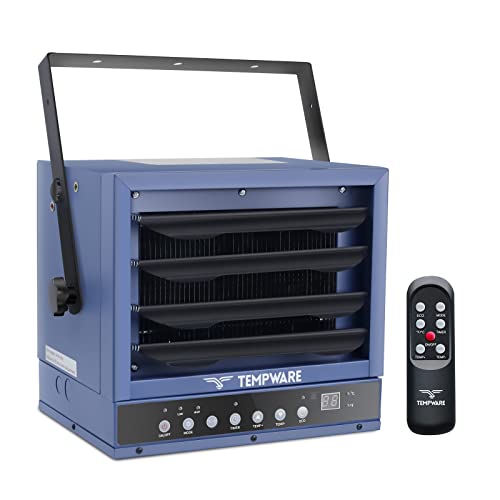
The TEMPWARE garage heater blends high power with smart features tailored for workshop use. With a 6,250–7,500 watt range and a 240‑volt hardwired setup, this unit is designed to heat larger garages or workshops efficiently. It includes an auto timer (1–12 hours) and an ECO mode that adjusts operation based on ambient temperature, helping manage energy consumption. A built‑in thermostat lets users set a target temperature, while an overheat protection system provides a safety margin during extended runs. The adjustable louvers also help direct airflow to where it’s needed most.
Installation considerations center on electrical readiness and mounting options. Depending on your space, you may need ceiling or wall mounting and a compatible electrical circuit. The higher wattage models like this one are best suited for larger garages or spaces that require rapid, sustained warmth during cold seasons. The ECO mode and timer help balance comfort with energy use, making TEMPWARE a practical choice for serious workshop environments.
Buying Guide: Key Purchase Considerations
Power, Voltage, and Space
Infrared heaters come in a range of voltages from 120V to 240V. In a typical American garage, 120V units are easier to install and often sufficient for smaller spaces, casual use, or occasional cold days. For larger garages or workshops, 240V models deliver more heat and faster warmth, but they may require a dedicated circuit and, in some cases, a professional installation. Consider the space area you need to heat and how quickly you want to reach comfort. Infrared heat is efficient for targeted warming, while convection approaches benefit overall air temperature in larger, enclosed environments.
Coverage, BTU, and Heat Type
BTU and wattage influence heat coverage. Portable units might be ideal for quick, temporary warmth in a corner or tool area, while higher‑output units are better for maintaining comfortable conditions in larger bays or uninsulated garages. Infrared heaters provide direct warmth to people and objects, reducing energy waste by avoiding heat loss through walls and ceilings. If your garage doors are frequently opened, prioritize models with strong heat output and fast warm‑up times. IP ratings and weatherproofing are additional factors to consider for spaces that are exposed to moisture or outdoor draft.
Installation Style: Portable, Wall, or Ceiling
Garage heaters come in portable, wall‑mounted, and ceiling‑mounted configurations. Portable units offer mobility and quick setup, ideal for small spaces or seasonal use. Wall or ceiling mounts save floor space and help distribute heat more evenly across a room. When choosing a mounted model, verify the mounting hardware, weight support, and clearances from combustibles. If you plan to install a wall‑mounted 120V or 240V heater, ensure the wall can physically support it and that wiring complies with local electrical codes.
Controls, Smart Features, and Convenience
Modern infrared heaters often include digital thermostats, remotes, and even Wi‑Fi connectivity. A programmable thermostat or ECO mode can reduce energy usage by adjusting power based on ambient temperature. Remote controls and mobile app access provide convenience when your hands are full with a project. For workshop environments, consider models with a simple manual override in addition to digital controls for reliability. Noise level should also be considered; most infrared heaters operate quietly, but high‑output models may introduce a slight hum at full power.
Safety, Durability, and Maintenance
Key safety features include tip‑over shutoff, overheat protection, and moisture resistance for outdoor or damp environments. An IP55 rating, for example, indicates protection against dust and water jets, which is beneficial in humid garages or outdoor setups. Durability is important in workshop settings where equipment can be bumped. Look for sturdy housings, stable bases for freestanding units, and robust mounting options for wall or ceiling installations. Regularly inspecting electrical connections and ensuring proper ventilation can extend the life of your heater and reduce risk factors.
Cost Considerations and Operating Efficiency
While initial cost is a consideration, operating efficiency and wattage influence long‑term costs. Infrared heaters are often more energy efficient for localized heating because they warm people and objects directly. Larger, high‑wattage units require a reliable electrical supply and can increase electricity use if left running at full power for extended periods. When evaluating options, balance upfront installation complexity against ongoing energy costs, and choose a model that matches both your space size and typical usage pattern. Always ensure installation adheres to electrical codes and safety standards.
Recommended Top Picks for Garages
- Best power for large spaces: DR-988A Garage Shop Heater for workshops or bays that need sustained warmth.
- Best for flexible setup: DR-238 Carbon Infrared Heater offers indoor/outdoor versatility with remote control.
- Best for connectivity and space saving: Heat Storm HS-1500-PHX-WIFI for wall mounting and remote control via app.
- Best budget‑neutral option with timer: TEMPWARE 7500W for medium to large garages needing programmable heat.
- Best all‑around performance: 10,260 BTU Dr. Infrared Heater for quick warm‑up in mixed indoor/outdoor spaces.