Best Hand Sanders for Drywall: Dust-Free Drywall Smoothing Tools
Choosing the right hand sander for drywall can dramatically reduce dust, improve comfort, and speed up projects. This guide reviews top options that integrate with vacuums, offer adjustable speeds or heights, and minimize cleanup. Each product is evaluated on dust control, ergonomics, versatility, and ease of use to help you compare effectively.
| Product | Brand | Key Feature |
|---|---|---|
| Goldblatt Dust Free Hand Sander | Goldblatt | Dust-free with vacuum integration and 6.5 ft hose |
| Hyde Tools 09165 Dust-Free Drywall Vacuum Hand Sander | Hyde | Attachs to any wet/dry vacuum for clean sanding |
| WEN DW1085 10-Amp Variable Speed Handheld Sander | WEN | Variable speed, enhanced dust collection, left/right handle |
| IMQUALI Drywall Sander with Vacuum Dust Collector | IMQUALI | Auto dust vacuum system, extendable handle, LED light |
| ROLLINGDOG Hand Sander | ROLLINGDOG | Ergonomic grip and compatible with 9×11″ sheets |
Introduction to selected products: This list focuses on lightweight, vacuum-assisted or dust-minimizing hand sanders suitable for drywall work. The models vary in power, reach, and compatibility with different sanding papers and dust collection setups. Whether you’re finishing joints or smoothing ceilings, these tools aim to reduce airborne dust and improve operator comfort during long sanding sessions.
Goldblatt Dust Free Hand Sander
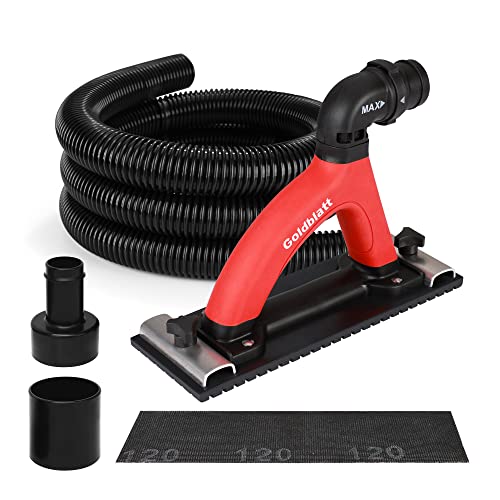
Goldblatt’s dust-free system minimizes drywall dust by capturing particles through a vacuum connection. It uses a 6.5-foot hose and includes a sanding pad and adapter for compatibility with most vacuum cleaners. The design emphasizes a soft rubber grip to reduce hand fatigue during extended sanding sessions. It uses a 120-grit sandpaper mesh, which is aggressive enough to flatten irregularities while ensuring dust is drawn away through the hose into the vacuum system. The 360° pivoting elbow enhances maneuverability on vertical surfaces, improving access to corners and ceilings. An integrated adapter accommodates Φ1-1/4” hoses common on many vacuum units.
Hyde Tools 09165 Dust-Free Drywall Vacuum Hand Sander

Hyde’s sander is designed to attach to any wet/dry vacuum to create a dust-free sanding environment across the worksite. It protects furniture, floors, electronics, and lungs from drywall dust exposure. The EasyClamp system enables quick replacement of sanding screens, reducing downtime between passes. This model emphasizes simple, reliable dust management and a straightforward setup, making it a practical choice for professional and DIY projects where rapid debris containment is essential.
WEN DW1085 Variable Speed Drywall Sander
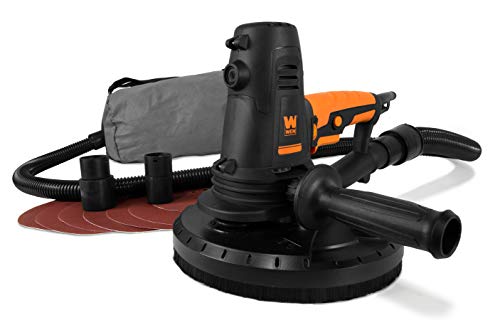
The WEN DW1085 combines a reversible auxiliary handle with a variable speed range from 1500 to 2300 RPM, providing flexibility for various drywall textures and finishes. Its improved hole configuration is designed to maximize dust collection, supporting a cleaner work environment. This model is compatible with DW series replacement sandpaper (DW120SP), which helps ensure efficient dust control and consistent performance over time. The tool is particularly suitable for right- or left-handed operators who need balanced control during overhead or wall sanding tasks.
IMQUALI Drywall Sander With Vacuum Dust Collector

IMQUALI’s 2025 upgraded sander features an 8-amp copper motor and seven-speed settings from 800 to 1800 RPM, delivering robust sanding power for drywall, ceilings, and coatings. A built-in vacuum system with a 10-hole disc design claims up to 99% dust extraction when used correctly, enhancing worksite cleanliness. The extendable handle ranges from 3.9 to 5.5 feet, accommodating varied ceiling heights while keeping the user’s weight balanced. At approximately 10 pounds total, it balances portability with reach for mid- to high-ceiling applications, and includes LED lighting to illuminate the work surface.
ROLLINGDOG Hand Sander

ROLLINGDOG offers a 9×3 inch drywall hand sander with an ergonomic grip and an aluminum base plate that secures 9×11 inch sandpaper sheets. The design supports wrapping sandpaper around the base and clamping with wing nuts, enabling quick changes and consistent contact with flat or contoured surfaces. This option is ideal for users who prefer manual control and want to work with standard sheet sizes, especially when precise edge work around outlets or fixtures is required.
Goldblatt Drywall Sanding Block

Goldblatt’s sanding block features a 9.5 x 3.1 inch aluminum plate with a durable foam cushion for even sanding pressure. A reinforced plate design supports heavy-duty use in drywall finishing and offers compatibility with half-sheet sandpaper or die-cut abrasives. The cushioned grip reduces fatigue, and the wing nut design keeps sheets securely in place for consistent results across large patches and corners.
Buying Guide: Key Purchase Considerations
- Dust control: Prioritize models with integrated vacuum connections or built-in dust collection that suit your vacuum setup. Check hose compatibility and whether the system supports 1-1/4 inch hoses where applicable.
- Power and speed: For drywall, adjustable speeds (from 800 to 2300 RPM) help tailor the aggressiveness of sanding and finish quality. Copper motors may offer better longevity at higher speeds.
- Weight and ergonomics: Lightweight designs with ergonomic grips reduce fatigue during prolonged sessions. Extendable handles help reach ceilings without ladders.
- Paper compatibility: Ensure the sander accepts common sheet sizes (9×11, 9×3, or compatible discs) and that replacement sandpapers are readily available.
- Ease of maintenance: Quick-change sandpaper systems and simple clamp mechanisms reduce downtime between passes.
- Versatility: Consider whether you need tool-free height adjustments, LED lighting for low-visibility areas, or reversible handles for left-handed use.
- Durability: Look for reinforced bases and solid construction to withstand frequent use on rough drywall surfaces and popcorn ceilings.
Overall, selecting a hand sander for drywall depends on the balance between dust management, reach, power, and ease of replacement accessories. Vacuum-assisted units are generally preferable for cleaner jobsites, while more basic hand sanders offer superior control in tight spaces and edge work. Consider the typical room height, ceiling access, and the noise tolerance of the workspace when choosing between these models.