Best Hand Planes for Woodworking: Top Picks for Every Project
For woodworkers, a quality hand plane is a foundation tool for smoothing, flattening, and shaping wood. This guide highlights five reliable options and explains how their designs, blades, and materials affect performance. Whether you’re trimming edges, creating precise chamfers, or leveling surfaces, the right hand plane makes detailed work faster and cleaner. The selections below come from trusted brands and feature durable bodies, adjustable cutting depths, and sharp blades suited for both beginners and professionals.
Summary of chosen products:
| Product | Brand | Key Feature | Estimated Use |
|---|---|---|---|
| 3.5″ Mini Wood Planer | Jorgensen | Adjustable depth; ductile iron body | Detail trimming, small projects |
| No.60-1/2 6-1/4″ Wood Planer | Jorgensen | Low angle; adjustable mouth | General planing, edging |
| No.4 10″ Wood Planer | Jorgensen | Longer smoothing plane; adjustable depth | Flattening and smoothing panels |
| No.5 Wood Planer | Jorgensen | Jack plane; ergonomic handle | Flattening and smoothing larger surfaces |
| Amazon Basics | Solid cast iron body; contoured grip | General smoothing and edging |
Jorgensen 3.5″ Mini Wood Planer

The Jorgensen 3.5″ Mini Wood Planer is designed for precision detail work in tight spaces. It uses a professional level O1 tool steel blade for clean cuts with extended edge life. The body is constructed from ductile iron to endure heavy use, while stainless steel components and a zinc alloy lever cap contribute to durability and consistent performance. An adjustable depth mechanism lets users set blade exposure with a simple turn, enabling a range of planing depths. This mini plane is suitable for trimming, smoothing small stock, and achieving fine finishes on craft projects or high-detail work.
Jorgensen No.60-1/2 6-1/4″ Wood Planer

This low-angle block plane from Jorgensen balances versatility and control. The blade is a professional O1 tool steel edge, designed to resist wear while delivering fine shavings. A ductile iron body ensures rugged durability, and the adjustable mouth feature lets woodworkers tailor the tool to different stock widths and grain patterns. It excels at trimming edges, end grain work, and surfacing small panels where precision matters most. The overall design supports stable cuts and repeatable results across sessions.
Jorgensen No.4 10″ Wood Planer

The Jorgensen No.4 10″ model is a traditional smoothing plane with a ductile iron body and an adjustable cutting depth. It provides reliable performance for flattening and preparing boards for finishing, making it a staple in workshops where larger projects require truer surfaces. The plane’s design emphasizes comfortable control and consistent blade engagement, helping woodworkers achieve uniform thickness and a refined surface across long stock without excessive effort.
Jorgensen No.5 Wood Planer
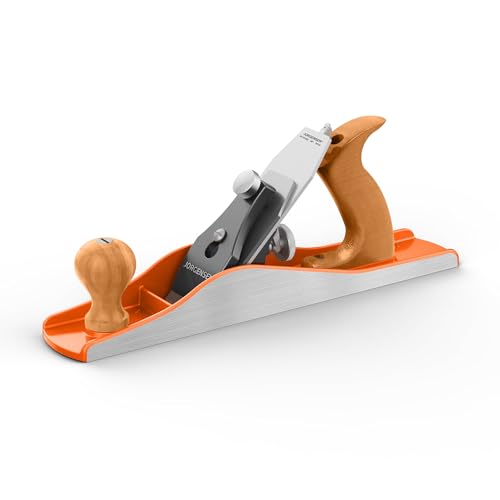
The No.5 is a classic jack plane optimized for heavier smoothing and flattening tasks. Its ductile iron body provides rigidity and stability, while an ergonomic handle helps maintain balance during extended planing sessions. The adjustable cutting depth allows for precise removal and step-by-step stock leveling, making it suitable for resaw edges, faces, and high-precision work on larger boards. This model is designed to deliver dependable performance across various hardwoods and softwoods.
Amazon Basics Woodworking Hand Planer

The Amazon Basics hand planer offers solid, entry-level performance with a cast iron body that provides stability and weight for consistent cuts. An impact-resistant plastic handle offers a comfortable grip, and the steel blade is built for lasting sharpness and dependable edge quality. While it doesn’t boast the premium features of higher-end models, this planer serves well for hobbyists and casual woodworkers tackling smoothing, edging, and light stock removal.
Buying Guide: Key Purchase Considerations For Hand Planes
- Blade material and sharpness: Look for high-carbon steel or tool steel blades (e.g., O1) with a hard, sharp edge. A blade that’s easy to sharpen and maintain prolongs tool life and improves cut quality.
- Body material and durability: Ductile iron bodies are common in mid-to-high-end planes for rigidity and resistance to impact. Cast iron with a robust lever cap can also provide solid performance in budget models.
- Adjustability: Check for adjustable depth and, in some models, adjustable mouth openings. The ability to fine-tune blade exposure and throat width helps handle different grain, stock sizes, and finishing requirements.
- Ergonomics and weight: A comfortable handle and well-balanced feel reduce fatigue and improve control, especially for longer sessions. Ergonomics matter more as planes scale from mini to full-size tools.
- Mouth configuration: Some planes offer adjustable mouths to accommodate different stock widths and to manage tear-out. This is particularly useful when working across variable grain directions.
- Maintenance and parts: Consider models with readily replaceable blades and durable hardware. A well-supported blade ecosystem simplifies upgrading or resharpening over time.
- Intended use and size: Mini planes excel at detail work and tight corners; No.4 and No.5 planes cover smoothing and general flattening; longer planes tackle larger panels. Choose according to project scale and handling comfort.
- Brand ecosystem: Reputable brands often provide replacement blades, accessories, and instructional resources that help learning curves and long-term maintenance.
- Budget and skill level: Entry-level planes offer essential functionality for beginners, while premium options provide increased precision and longevity for professionals.
When selecting a hand plane, match your project needs to the tool’s strengths: detail-oriented trimming and chamfering for small parts, or broader smoothing and flattening for tabletops and panels. Considering blade quality, body durability, and adjustability can yield consistent results with less effort, enhancing both the finish and your workflow.