Best Gym Flooring for Basement: Durable Interlocking Mats for Home Gyms
Your basement can become a dedicated training zone with flooring that protects concrete, reduces noise, and cushions heavy equipment. The right gym flooring also adds comfort for floor-based exercises and prevents slipping on damp or dusty surfaces. This guide highlights five top Amazon mats and tiles that excel in basement environments. Each option balances coverage, durability, and ease of installation, so you can pick a solution that fits your space and workout routine.
Below is a quick summary of the chosen products to compare coverage, thickness, and standout features at a glance. The table helps you gauge which setup best suits a typical home gym in a basement with equipment like treadmills, weights, and benches.
| Product | Brand | Coverage | Thickness | Key Benefit |
|---|---|---|---|---|
| ProsourceFit Puzzle Exercise Mat | ProsourceFit | 144 sq ft | ½ in | Non-skid, easy assembly |
| Sorbus Wood Grain Floor Tiles | Sorbus | 96 sq ft | 3/8 in | Wood-grain look, easy expansion |
| Home Aesthetics Wood Grain Tiles | Home Aesthetics | 100 sq ft | 3/8 in | Elegant finish, easy setup |
| SUPERJARE Extra-Thick Mats | SUPERJARE | 48 sq ft | 0.79 in | Dual-layer durability, rubber top |
| BalanceFrom Puzzle Mat | BalanceFrom | 24 sq ft | ½ in | Simple, protective floor tiles |
ProsourceFit Puzzle Gym Mats
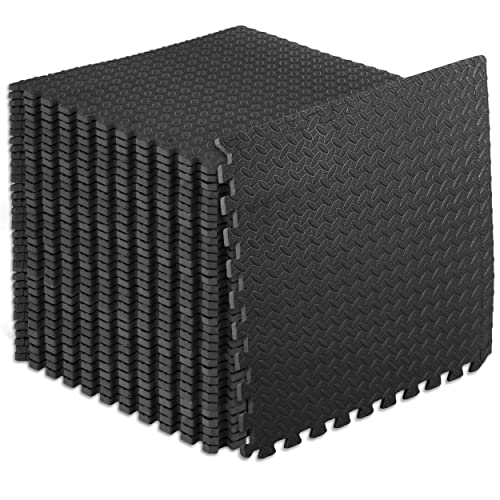
The ProsourceFit Puzzle Exercise Mat uses interlocking foam tiles that form a 144-square-foot floor covering. Each tile is 24 by 24 inches and ½ inch thick, offering a stable base for free weights, benches, and cardio machines. The textured surface provides a non-skid grip, helping to prevent slips during dynamic moves. The mats are designed to protect underlying flooring, reduce noise, and cushion joints during high-impact activities.
Assembly is straightforward: tiles click together quickly and can be disassembled for easy storage when the workout area shifts or you reorganize equipment. The water-resistant design makes cleaning simple, and the surface resists sweat and spills typical of home gyms. This set works well in a basement that doubles as a play area, since it provides a soft, forgiving surface for kids when workouts are paused.
- Non-skid textured surface enhances safety on basement concrete.
- Easy-to-clean and water-resistant for damp environments.
- Renewable layout with quick disassembly for flexible space use.
- Durable yet lightweight tiles ideal for portable gym setups.
Overall, this option provides broad coverage with a balanced thickness that suits most basement workout needs. It blends protection, ease of maintenance, and adaptability, making it a solid choice for a first-time basement gym floor or to expand an existing setup.
SUPERJARE Extra-Thick Mats

These mats offer a substantial 0.79-inch thickness, with 12 interlocking pieces spanning 48 square feet. The dual-layer design combines a high-density EVA foam base with a robust EPDM rubber top. This construction supports heavy exercise equipment and reduces wear on the floor even during intense workouts. The rubber top also minimizes odor and improves surface grip, helping prevent slips during movements like presses or heavy deadlifts.
Beyond durability, the mats provide strong noise and vibration dampening. The soft foam layer absorbs shock, helping maintain a quieter environment in laminate or hardwood basements. Their thicker profile makes them particularly suitable for weight training, plyometrics, and cardio devices that generate more impact. The tiles interlock for a seamless floor and can be trimmed or rearranged to fit irregular basement spaces.
- 0.79 inch thick for enhanced protection and feel under heavy loads.
- Dual-layer design with rubber top for grip and odor control.
- Excellent shock absorption reduces noise and floor vibrations.
- Durable surface withstands routine gym equipment use.
For basements where equipment is dense or where you want more cushion underfoot, this option delivers sturdiness without sacrificing comfort. It is well-suited to spaces that have concrete floors and require additional thickness to protect joints during longer sessions.
bemaxx Gym Mats Set
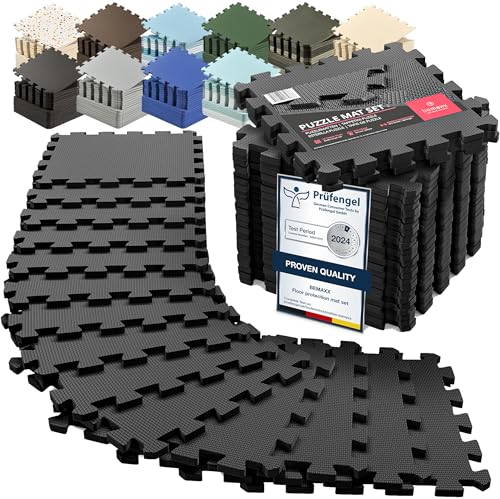
The bemaxx Gym Mats Set includes 18 interlocking EVA foam tiles with edge pieces for a clean border and complete floor protection. Each tile is crafted from highly compressed, non-toxic EVA foam with an anti-slip surface, designed to resist sweat, moisture, and everyday basement humidity. The set offers a robust protection layer under equipment and for floor transitions, reducing noise and dampening impact when weights are dropped.
These tiles are BPA-free and easy to clean with soap and water. The puzzle-piece design can be expanded by adding more tiles to cover additional room areas, making it a flexible solution for growing basements or changing workout layouts. They work well as a protective mat under treadmills, rows of dumbbells, or a small cardio area, while preserving a neat, professional look.
- 18-piece set with edge pieces for complete coverage.
- High-density EVA foam provides durability and shock absorption.
- Anti-slip surface enhances safety on basement floors.
- Expandable and easy to clean for routine maintenance.
For homeowners needing a modular, scalable flooring solution that blends protection with a clean aesthetic, bemaxx mats offer a reliable, budget-friendly option that travels well between rooms as needs change.
Sorbus Wood Grain Floor Tiles

The Sorbus wood grain floor tiles bring a distinctive faux-wood look to a basement gym. This set includes 24 interlocking tiles that total 96 square feet of coverage and feature a 3/8-inch thickness. The jigsaw puzzle connection allows for a secure, seamless floor and makes expansion straightforward as a gym grows. Borders can be detached to create edges for wall-to-wall installations or used to build a defined workout zone.
These tiles are designed for multi-purpose use, including home gyms, living spaces, and play areas. The wood grain appearance adds a polished, residential feel to the basement, which some users prefer over plain foam. They provide a comfortable surface for floor exercises and can handle equipment like light cardio machines and free weights with appropriate spacing.
- Wood-like finish enhances basement aesthetics.
- 96 square feet of coverage with 24 tiles.
- Secure interlocking design reduces shifting during workouts.
- Borders enable easy, clean edging around the room.
For basements where appearance matters as much as protection, Sorbus tiles deliver a balanced blend of style and function. They offer a convincing wood-look alternative without sacrificing the benefits of interlocking foam flooring.
Home Aesthetics 100 Sq. Ft Foam Tiles
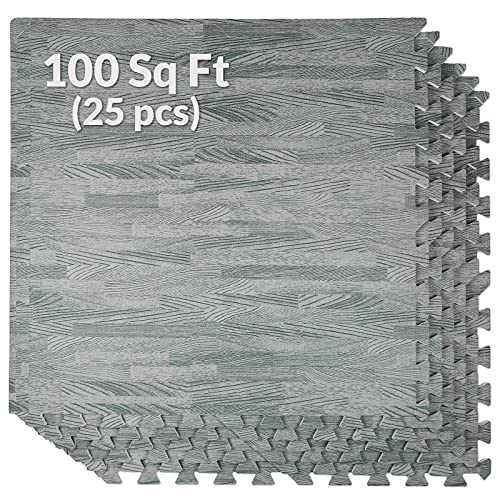
The Home Aesthetics interlocking foam tiles cover 100 square feet and showcase a 3/8-inch thickness. The set features a wood grain style print to complement living spaces while providing basement protection. Each tile uses a puzzle-style connection for a secure fit and includes two border pieces for clean edging. The tiles are designed for quick installation and easy removal, making them ideal for rentals or seasonal gym setups.
These mats balance durability with aesthetics. The foam composition cushions hops, lunges, and jumps while keeping the surface easy to clean and maintain in a basement environment. The wood grain look helps the space feel more like a finished room than a workshop, which can be appealing in multipurpose basements.
- 100 square feet of protective flooring with borders included.
- Elegant wood grain print for a polished basement look.
- Easily assembled and disassembled for flexible space use.
- Lightweight and portable, suitable for temporary setups.
For basements that double as living spaces or home studios, these tiles offer a practical blend of form and function. They provide solid protection, a refined appearance, and simple maintenance for everyday basement workouts.
Buying Guide: Key Considerations For Basement Gym Flooring
Choosing basement gym flooring involves assessing coverage needs, environment, and exercise plans. Consider how heavy your equipment is, how much space you have, and how often you’ll reconfigure the layout. Moisture resistance and ease of cleaning are essential in basements, which can experience humidity and temperature fluctuations. Noise reduction is another important factor when living spaces sit below or beside the workout area. Below are practical considerations and comparisons to help you decide.
Thickness And Cushioning
Thicker mats, such as near 0.79 inches, provide more joint protection and better impact absorption for heavy lifting and plyometrics. Lighter, ½ inch options still offer good protection and are easier to install in tighter spaces. For cardio devices or weight racks, balance thickness with overall room height and ceiling clearance to avoid collisions during movements.
Durability And Surface Grip
Look for a dual-layer design or rubber top surface if you plan to place heavy machines or drop weights. A non-slip surface reduces the risk of slips on damp concrete commonly found in basements. Odor control and long-term wear resistance are pluses, especially in rooms with limited ventilation.
Coverage And Expandability
Calculate total square footage and consider modular tiles that can be added as your gym grows. Puzzle-style mats and border pieces help create a clean edge along walls. If space is irregular, choose tiles that can be cut or extended to fit odd dimensions without compromising protection.
Maintenance And Cleaning
Basements can collect dust, moisture, and spills. Materials that are water-resistant and easy to wipe down will save time and keep floors sanitary. Avoid porous surfaces that trap sweat or moisture, which could degrade over time or harbor odors.
Installation And Portability
Interlocking tiles are typically straightforward to install and remove, making them suitable for seasonal gyms or renters. Heavier mats may require more effort to transport but often offer superior durability. Consider your willingness to cut tiles for fit and whether you’ll store sections when not in use.
Cost And Value
While price varies, prioritize long-term protection, durability, and the ability to expand. A slightly higher upfront cost can yield better protection for concrete, less maintenance, and easier reconfiguration in the future.
In summary, the best basement gym flooring combines ample coverage, adequate thickness, durable surfaces, and ease of maintenance. By weighing these factors against your equipment, space, and room usage, you can select a system that keeps your basement comfortable, safe, and ready for workouts for years to come.