Best Glue Line Table Saw Blade Options for Clean, Glue-Ready Rips
When glue line precision matters, a dedicated glue line ripping blade can make the difference between a smooth, ready-to-assemble edge and a laborious sanding session. This guide reviews top-performing glue line blades designed to deliver flat, true cuts with minimal tear-out. We highlight blades favored for glue-ready edges, high rigidity, and consistent performance on both hardwoods and softwoods. Each pick balances durability, edge retention, and finish quality to help you choose the right blade for cabinetry, trim work, and fine carpentry.
| Product | Angle | Tooth Count | Kerf | Notes |
|---|---|---|---|---|
| Freud LM74R010 | 30T | 30 | 0.125 inches | Heavy-duty, TiCo carbide, great glue-line surfaces |
| Freud LM75R010 | 30T | 30 | 0.125 inches | Thin kerf, ultra-smooth finish, precision edges |
| CMT 203.630.10 | 30T | 30 | Not stated | Quality laser-cut steel, accurate cuts |
| Freud LU87R010 | 24T | 24 | 0.098 inches | Optimized for low-power saws, thin kerf |
| Ultra-Shear US1030RIPFK | 30T | 30 | 0.125 inches | USA-made, glue line ready, full kerf |
Freud Industrial Glue Line Ripping Saw Blade LM74R010
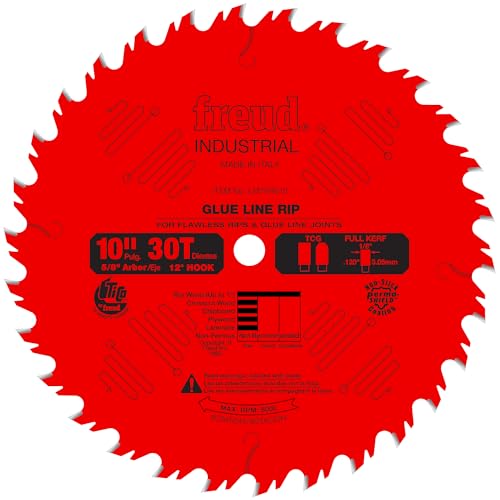
Freud’s LM74R010 features a heavy-duty construction designed to maintain flatness and stability during tough ripping tasks. Its thick kerf and reinforced plate help prevent deflection, ensuring consistent glue-ready edges. The premium TiCo carbide blend delivers durable edge retention and robust cutting performance, while the triple chip tooth design helps produce smooth, true surfaces ideal for glue joints. This blade is built for tasks demanding clean, precise rip cuts with minimal post-processing.
Freud Industrial Thin Kerf Glue Line LM75R010
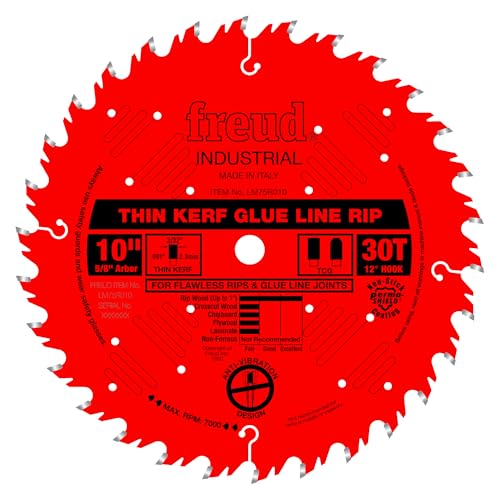
This thin-kerf blade emphasizes precision with a triple chip grind that yields ultra-smooth, glue-ready surfaces. The TiCo carbide blend is designed for high-density cutting performance, great edge retention, and durability—ideal for clean, consistent rip cuts through tough woods. The LM75R010 shines in fine cabinetry and trim work where a flawless glue line is paramount, especially when working with materials up to an inch thick.
CMT 203.630.10 Orange Chrome Glue Line Ripping Blade

The CMT 203.630.10 blends quality engineering with a dedicated glue line profile. Its 10″ diameter and TC geometry are described as high-quality and precise, with a laser-cut steel plate that is tuned for tension and flatness. This blade aims to deliver true rip cuts with strong edge retention and clean glue-line surfaces, making it a solid choice for cabinetry projects and any glue-ready edge work.
Freud Thin Kerf Rip LU87R010

This thin kerf rip blade is optimized for low-power saws, reducing horsepower demands while maintaining cutting efficiency. The 0.098″ kerf supports faster feed rates and less waste, while the TiCo carbide blend provides steady, reliable performance for glue line applications. The LU87R010 is well-suited for precision ripping on lighter saws and projects requiring consistent, clean edges.
Whiteside Dimar Glue Line Rip Blade

Whiteside’s Dimar glue line rip saw blade emphasizes aggressive cutting in solid woods while maintaining glue-line quality. With a 10″ diameter, 30T count, and a 5/8″ bore, this blade is configured to deliver robust performance across a range of wood species. The TCG grind is tailored to minimize tear-out and produce true edges for glue-up assemblies, making it a practical option for shop use on rip-heavy tasks.
Freud Heavy-Duty Glue Line LM72R010

The LM72R010 focuses on ultimate ripping performance with a rigid body and oversized flat teeth that deliver a smooth, glue-line finish. The TiCo carbide blend underpins cutting performance and durability, making it suitable for hardwoods and softwoods alike. Its design supports materials ranging from 3/4″ to 2-3/4″ thick, delivering stable, precise results in demanding scenarios where glue lines matter.
Ultra-Shear Glue Line 10″ Rip Blade US1030RIPFK

Ultra-Shear’s US1030RIPFK is an American-made blade designed specifically for glue line ripping. The full-kerf 1/8″ blade maintains stability and precision for high-powered saws, with a 30-tooth configuration, 5/8″ arbor, and a glue-line optimized grind. This blade emphasizes durability and consistent performance in demanding shop settings where glue-ready edges are standard workflow.
Woodriver Glue Line Rip Saw Blade

Woodriver’s glue line rip blade offers a practical option with a 10″ diameter, 5/8″ bore, and a 30T triple chip grind. The German steel construction is designed for durability and reliable performance in ripping operations, delivering clean, glue-ready edges with consistent results across various wood species. The blade’s kerf and hook angle balance fast removal with edge quality for precise glue-ups.
Buying Guide: Key Purchase Considerations and Comparisons
- Tooth design and grind: Glue line blades typically use a combination of triple chip (TCG) or large flat tooth geometry to minimize tear-out and deliver smooth edges. Pick a grind that matches your material type and finish needs.
- Kerf and power compatibility: Thin-kerf designs reduce power requirements and waste on underpowered saws, while full-kerf blades maximize stability on higher-powered machines. Consider your saw horsepower and feed rate.
- Carbide quality: TiCo or equivalent high-density carbide blends offer better edge retention and longer life. This is crucial for glue-line tasks where clean, repeatable cuts matter.
- Blade thickness and rigidity: Heavier blades with reinforced plates minimize deflection in tough ripping tasks. This translates to truer edges that glue up better.
- Compatibility: Ensure bore size (commonly 5/8″) and arbor length fit your table saw. Some blades offer alternative bore options or spacers for compatibility.
- Finish quality and sanding needs: Some blades are designed to yield surfaces that often require little to no sanding, while others may require minor cleanup. Consider the finish expectations of your project.
- Power and saw type: Low-power saws benefit from thin-kerf blades to reduce resistance, while heavy-duty cabinet saws can leverage thicker, more rigid blades for fine glue line aesthetics.
- Maintenance: Regular cleaning and proper alignment help preserve glue line quality. Check for warping, plate rigidity, and tooth wear as part of routine maintenance.
Choosing the right glue line blade involves weighing build quality, tooth geometry, and kerf against your typical materials and saw power. The blades listed here are well-regarded for producing consistent glue-ready edges, a critical factor for fast, accurate assembly and high-quality cabinetry projects. When in doubt, match blade geometry to your most common stock (hardwood vs softwood) and your saw’s power and vibration tendencies to optimize performance.