Best Glue for Wood to Glass: Clear, Strong Bonds for Wood and Glass Projects
Choosing the right adhesive for bonding wood to glass requires balancing bond strength, transparency, cure time, and surface compatibility. The five adhesives below are selected for mixed-material projects common in home, workshop, and craft environments—whether you’re repairing a glass-top table, mounting glass panels in a wooden frame, or creating mosaic pieces that combine wood and glass. Each option performs well on both porous wood and non-porous glass surfaces, offering reliable results with careful application.
Summary table of the chosen products:
| Product | Brand | Best For | |
|---|---|---|---|
| Weldbond Wood Glue For Furniture | Weldbond | Wood-to-glass projects, mosaics | Clear, quick-dry, weather resistant |
| ARKA Extra Strong CA Adhesive | ARKA | Fast bonding on glass, wood, and more | Industrial-strength, precision tip |
| WoldoClean All-Purpose CA Glue | WoldoClean | General repairs including glass | Clear, waterproof, heat resistant |
| AtlasBond Ceramic Glue | ATLASBOND | Wood, glass, ceramic repairs | Food-safe formula, durable and clear |
| Weldbond Multi-Surface Adhesive | Weldbond | All-purpose wood and glass projects | Crystal-clear, flexible, fast set |
Weldbond Wood Glue For Furniture

Weldbond Wood Glue for Furniture Heavy Duty is a versatile PVA adhesive designed for projects that mix substrates, including glass. The formula is advertised as water-resistant and weatherproof, a feature that supports indoor and sheltered outdoor pieces where wood frames meet glass components. It is advertised as permanent and flexible, with a fast-drying cycle of about 20 minutes and no clamping required for many applications. Drying to a clear, sandable surface means you can seamlessly integrate a glass insert into a wooden frame or create a glass mosaic embedded in wood without visible resin lines.
From a wood-to-glass perspective, Weldbond emphasizes a strong, adaptable bond that holds up under routine handling, while remaining workable for crafts. The product is described as sandable and paintable, which is important when a glass edge needs to be hidden behind a painted frame or stained wood. Its “no run, no drip” characteristic helps keep adhesive away from glass surfaces during application, reducing cleanup. For mosaic or tile work on a wooden base, its clear-set behavior can minimize joint visibility while offering enough flexibility to resist minor wood movement. Users should apply a thin coat to both surfaces and allow the glue to cure fully for a durable bond.
In practice, Weldbond Wood Glue provides an accessible option for hobbyists and homeowners seeking a single adhesive capable of wood-to-glass assembly without switching products. It may not be ideal for heavy loads or structural joints that will experience significant stress, but for display pieces, picture frames, and decorative panels, it delivers a clean, dependable bond with a straightforward workflow. As with all CA or PVA blends, ensure surfaces are clean, dry, and free of dust before application for best results.
ARKA Extra Strong CA Adhesive

ARKA Extra Strong CA Adhesive is a cyanoacrylate (super glue) formulated for rapid bonding across multiple materials, including glass, plastic, wood, metal, and ceramic. The XL 1.76-ounce bottle supports frequent repairs or workshop use, and its medium-viscosity design provides a balance between controlled flow and penetration into joints. The formula cures quickly—typically within seconds to a minute—allowing for rapid assembly of glass-to-wood joints such as frames, decorative inlays, or mosaic elements that require a fast, solid bond without clamping.
For wood-to-glass applications, ARKA’s CA adhesive offers a clear, nearly invisible bond that dries hard and smooth, which is ideal when joints are visible or when maintaining the aesthetic of a glass surface is essential. The precision tip helps apply small, exact amounts to tight joints, reducing squeeze-out on glass edges. While CA glues are excellent for quick fixes, they are less forgiving under flex or repeated stress. For lightweight, non-structural joints or delicate glass elements within a frame, ARKA provides a reliable, fast-setting solution that minimizes handling time during assembly.
Users should work quickly and in a well-ventilated area, and avoid skin contact. Because cyanoacrylates can be brittle under flex, consider ARKA for small, rigid joints rather than large structural connections. For projects combining wood frames and glass panels where speed matters, this adhesive can be a practical choice, especially for repairs, inlays, or decorative accents that benefit from a fast-setting, clear bond.
WoldoClean All-Purpose CA Glue

WoldoClean Super Glue All-Purpose is designed as a universal fast-bond option for metal, plastic, wood, ceramic, and glass. It forms a crystal-clear, ultra-strong bond within seconds, making it suitable for household fixes, crafts, and automotive touch-ups. Its medium viscosity offers good control and drips resistance, aided by an anti-clog cap and fine-tip applicator for precise placement on small joints or delicate pieces. The bond remains waterproof and heat-resistant after curing, increasing reliability in damp environments and high-temperature applications where glass and wood meet.
For wood-to-glass bonding, WoldoClean provides a straightforward, rapid solution with a strong initial tack and a clear finish, which helps maintain the appearance of both materials. The glue’s quick-set characteristic can be advantageous for single-assembly projects where speed is essential, such as repairing a glass pane into a wood frame or securing a glass mosaic onto a wooden backing. As with any cyanoacrylate, ensure surfaces are clean and dry before application, and avoid applying excessive amounts that can cause squeeze-out onto glass edges. It’s well-suited for small to medium joints requiring fast handling times.
While CA glues can deliver impressive initial strength, they may not tolerate flex or long-term vibration as well as some PVA or epoxy options. For decorative items or light-duty assemblies where you need quick fixes and a discreet finish, WoldoClean is an effective choice that balances speed, clarity, and versatility for wood-to-glass projects.
AtlasBond Ceramic Glue For Wood And Glass

AtlasBond Ceramic Glue is marketed for ceramic repair but clearly states it can bond wood, glass, and plastic. This adhesive is described as a strong, transparent repair solution intended for porcelain, pottery, and china. It includes a food-safe formula, supporting use on mugs and dishes, and is designed to remain waterproof and heat-tolerant for durability in various environments. The emphasis on clear, discreet joints makes it appealing for glass-to-wood accents where visibility should be minimized, such as repairing a ceramic-inlay in a wooden frame or a glass panel adjacent to a wood surface.
The product positioning suggests suitability for non-structural repairs where aesthetic invisibility is important and where moisture exposure is possible. While AtlasBond Ceramic Glue is not a traditional heavy-load wood glue, it offers a reliable option for glass-wood connections that require a transparent, resilient bond in indoor settings. For projects demanding higher shear strength or long-term heavy use, consider pairing with a secondary adhesive or testing on scrap pieces to determine performance under specific conditions.
Weldbond Multi-Surface Adhesive
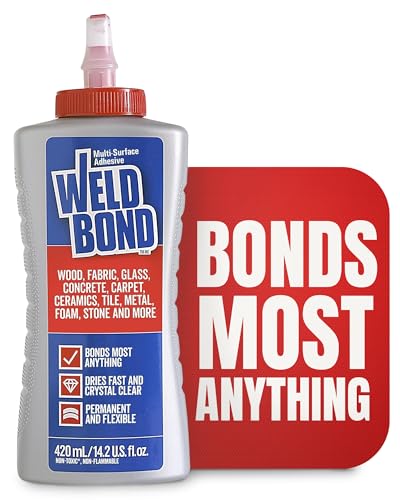
Weldbond Multi-Surface Adhesive is marketed as an all-purpose adhesive designed to bond wood, glass, ceramic tile, metal, stone and more. It dries crystal clear and remains permanently flexible, offering a single solution for diverse projects. The glue is described as water-resistant and weatherproof, enabling some exposure to moisture or outdoor use for light-duty applications. A fast set time around 20 minutes and water cleanup when wet add convenience for quick repairs and intermediate craft work. The product is particularly useful for mosaic projects or when attaching glass fragments to wooden substrates where a clear, seamless finish is desired.
In the wood-to-glass context, Weldbond Multi-Surface provides a practical balance between strength and aesthetics. It supports clean joints, eases alignment during assembly, and minimizes visible glue lines on transparent or light-toned glass. While not a specialized glass-to-wood epoxy, its versatile formulation makes it a reliable choice for mixed-material builds, frames with glass panels, or decorative pieces with glass inlays. For structural loads or heavy-duty hardware, consider reinforcing joints with a dedicated epoxy or mechanical fasteners in conjunction with this adhesive, and always test on test pieces before final assembly.
Buying Guide
Bond Type And Substrates
For wood-to-glass bonding, cyanoacrylate (super glue) options offer rapid set times and clear bonds suitable for small joints and decorative accents. Polyvinyl acetate (PVA) glues provide strong wood-to-wood bonds that also perform reasonably well with glass when used carefully and in thin layers. Multi-surface adhesives balance versatility with practicality, delivering workable bonds across wood, glass, and ceramics. Choose a product whose substrate compatibility matches your project’s materials and expected stress levels.
Drying Time And Clamping
Fast-curing glues like ARKA CA and WoldoClean CA typically set within seconds to a minute, enabling quick assembly but offering limited working time. PVA glues from Weldbond may require longer curing and sometimes benefit from clamping, especially for larger joints. For glass-to-wood frames or inlays, a glue that sets quickly can streamline assembly, but ensure you have proper alignment before the glue cures. For larger panels, plan for clamping or use a product that explicitly requires no clamping.
Finish And Clarity
Clear, colorless adhesives minimize visibility on glass edges and inlays. This is especially important when joints are exposed or when glass pieces are highly visible. CA glues dry clear but can leave a sheen or slight amber tint in some cases. Multi-surface glues with crystal-clear dry times help maintain the aesthetic of glass and light-colored wood surfaces, reducing the risk of visible glue lines.
Water And Heat Resistance
Moisture exposure is common in kitchen or bathroom settings; adhesives marketed as water-resistant or waterproof are preferable for glass-to-wood projects in such environments. Heat resistance matters for glass items exposed to hot beverages or direct sunlight. Consider products with explicit water and heat tolerance for durability, especially on outdoor or semi-outdoor pieces that involve glass components.
Application And Precision
Viscosity and nozzle design influence application control. Medium-viscosity glues reduce drips on glass edges, while fine tips support precise joints on small hardware. For mosaic or inlay work, a low-squeeze style that remains manageable without running into the glass surface is beneficial. A precision applicator helps prevent messy joints and improves overall appearance.
Safety And Maintenance
Ventilation is important for cyanoacrylate adhesives due to fumes. Follow product safety data, avoid skin contact, and keep out of reach of children. Clean up with water or appropriate solvents as recommended, and store containers tightly closed to maintain shelf life. For dishware or food-contact surfaces, choose food-safe formulas and test adhesion on non-critical pieces before full-scale use.
Key buying considerations for wood-to-glass projects include the intended use (decorative vs. structural), surface preparation (clean, dry surfaces), the need for speed vs. working time, and the final appearance (clarity of joints). By evaluating these factors against each product’s strengths—clear, fast-set CA glues for quick assemblies; flexible, crystal-clear multi-surface adhesives for mixed materials; or specialized glues for ceramic-to-wood repairs—you can select the most suitable adhesive for your specific project. Always test on scrap pieces to verify bond performance before committing to a final build.