Best Flat Roof Coatings for Waterproofing and Longevity on American Homes
Flat roofs require protective coatings that can endure sun, rain, and seasonal movement. A high-quality coating not only prevents leaks but also reflects heat, extends roof life, and can reduce cooling costs. This guide spotlights five top flat roof coatings available on Amazon, explaining how to choose the right option for your roof type, climate, and maintenance plan. The included quick-reference table helps you compare essentials at a glance, while detailed product sections break down performance, application, and suitability for common American roof scenarios.
| Product | Brand | Key Benefit | Typical Coverage |
|---|---|---|---|
| Liquid Rubber Waterproof Sealant – DIY Leak Repair Coating for Flat Roofs | Liquid Rubber | Flexible waterproof membrane; high elongation | Flat/low slope: 15 sq ft per gallon (60–80 mil); Vertical: 30 sq ft per gallon |
| Liquid Rubber Silicone Roof Coating – UV-Reflective, One-Coat Sealant | Liquid Rubber | UV-reflective; highly flexible; multi-surface | Approximately 1 gallon per 50 sq ft; 1–2 layers recommended |
| Countryman Coatings 100% Silicone Roof Coating | Countryman Coatings | No primer required; high reflectivity | Coverage varies by surface; not specified |
| AMES MSS1 Maximum Stretch Roof Coating | AMES | 650% elongation; resists cracking and peeling | Coverage varies by substrate; not specified |
| Rust-Oleum Elastomeric Roof Coating | Rust-Oleum | Elastomeric, high reflectivity; quick rain resistance | Coverage not specified |
Liquid Rubber Waterproof Sealant For Flat Roofs

Liquid Rubber’s industrial-strength bitumen formula creates a seamless waterproof membrane suitable for flat roofs, metal roofs, low-slope surfaces, foundations, gutters, concrete, planter boxes, and more. The coating delivers superior flexibility with over 950% elongation, maintaining adhesion even as the building moves or temperatures shift. It resists cracking, peeling, and UV damage, providing a durable rubberized barrier against water infiltration where other sealants fail. Applications can be brushed, rolled, or sprayed to fit your project needs.
Usage specifics emphasize professional-grade coverage. On flat or standing-water surfaces, one gallon covers about 15 square feet with heavy coats to achieve a 60–80 mil membrane (usually 3–4 coats). For vertical surfaces like foundations, coverage is about 30 square feet per gallon for a 30 mil membrane (2–3 coats). This product is designed for both roof repairs and preventative maintenance, delivering long-lasting protection when properly applied.
- Flat and low-slope roofs
- Standing-water surfaces
- Foundations and basements
- Gutters and planters
- Concrete surfaces and more
Liquid Rubber Silicone Roof Coating For Flat And Metal Roofs

This Liquid Rubber silicone roof coating is a versatile, UV-reflective sealant suitable for flat roofs, sloped roofs, sheds, wood, concrete, and a range of substrates including EPDM and TPO. The membrane is highly flexible with over 237% elongation, helping it resist cracking from thermal expansion and adhesion failures. It is UV-stable, ensuring long-term performance in sunny climates. Coverage guidance indicates about 1 gallon per 50 square feet, with 1–2 layers recommended for a robust waterproof layer. The product emphasizes multi-surface performance and durability in outdoor environments.
Designed for DIY readiness, this coating is marketed as a no-primer-needed solution on many surfaces, simplifying prep and application. It supports straightforward application with brush, roller, or spray methods, making it suitable for homeowners tackling flat or slightly sloped roofs, sheds, or other exterior surfaces that demand a reliable, flexible sealant.
Countryman Coatings Silicone Roof Coating

Countryman Coatings Silicone Top Coat is designed to restore, protect, and extend the life of roofs with a silicone layer that adheres to metal, modified-bitumen, EPDM, smooth-surface built-up roofs, and many other substrates. A key feature is no primer required in most situations, which helps meet building-code adhesion requirements while simplifying application. The coating delivers high reflectivity—nearly 90%—which can contribute to cooler buildings and lower energy costs in hot climates. It supports roller, brush, or spray application for versatile use.
Versatility stands out here: it adheres to a broad range of roof types and surfaces, including spray foams and concrete, making it a practical topcoat for aging roofs that still have structural integrity. The white finish suits long-term solar reflectivity goals, and the product is well-suited for contractors and dedicated DIYers seeking durable, energy-conscious roofing solutions.
AMES Maximum Stretch Roof Coating
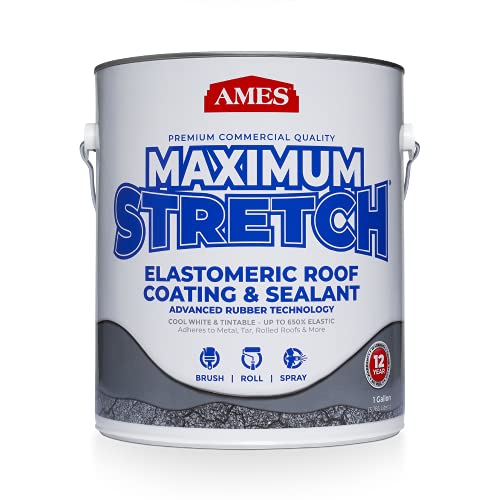
AMES MSS1 Maximum Stretch Roof Coating is an elastomeric, white coating offering extraordinary elasticity with 650% elongation. This high stretch capacity helps resist cracking and peeling as the roof expands and contracts with temperature changes. The coating reflects about 88% of sunlight, contributing to cooler roof surfaces and potential energy savings. It adheres to metal, tar, and rolled roofs and is widely used for low-slope roof maintenance, RV roofs, and other flat-to-slightly sloped applications. Brush, roll, or spray can be used for application on prepared surfaces.
Application guidance notes that coverage varies by substrate and coat thickness, with multiple coats yielding greater durability. The product is designed for maintenance and restoration projects on aging roofs that still retain structural soundness, providing a flexible, long-lasting barrier against moisture intrusion.
Rust-Oleum Elastomeric Roof Coating

Rust-Oleum Elastomeric Roof Coating delivers a white, reflective membrane formulated for flat roofs. It features high color retention and flexible elastomeric properties that accommodate building movement without cracking or peeling. Reported performance indicators include 84% initial reflectivity and 74% weathered reflectivity, along with rain resistance within about six hours, enabling a faster return to service after application. The product is intended for multiple roof types and surfaces, offering a practical option for DIY projects seeking reliable protection and energy efficiency.
Buying Guide
Key purchase considerations
When selecting a flat roof coating, focus on elasticity, UV resistance, and surface compatibility. Higher elongation helps coatings bridge cracks and cope with thermal movement. UV stability protects against sun damage, preserving adhesion and color. Surface compatibility matters: some coatings adhere to metal, EPDM, TPO, or concrete with or without primers. Consider the number of coats required and the resulting thickness to achieve the desired membrane strength.
Roof type and material compatibility
Not all coatings suit every roof. Silicone coatings excel on metal, EPDM, and smooth surfaces with excellent reflectivity, while elastomeric and bitumen-based products work well on built-up roofs and concrete. If you have a roof with multiple materials, a versatile sealant with broad adhesion can reduce the need for surface-specific products. Always check the manufacturer’s surface compatibility chart and perform a small test area before full application.
Elasticity, durability, and movement
Elongation values indicate a coating’s ability to stretch with roof movement. Greater elongation reduces the risk of cracking during temperature swings. Durability encompasses resistance to UV exposure, weathering, and chemical attack from the atmosphere. For roofs that experience large temperature differences or substrate movement, prioritize coatings with high elongation and robust adhesion.
Reflectivity and energy efficiency
High solar reflectivity can lower attic and interior temperatures, reducing cooling loads. White or light-colored coatings typically offer better reflectivity. If energy savings are a priority, look for coatings advertised with reflectivity percentages or cooling performance metrics in hot climates. Note that some products emphasize reflectivity at installation only, while others maintain performance over time.
Application, coverage, and maintenance
Assess whether the coating is brushable, rollable, or sprayable, as this affects ease of application and equipment needs. Coverage figures are influenced by surface porosity, existing coatings, and the desired membrane thickness. Plan for multiple coats on flat and vertical surfaces to ensure complete waterproofing. Proper surface preparation—clean, dry, and sound substrates—yields the best adhesion and longevity.
Primer requirements and surface prep
Some coatings require no primer, while others demand a primer layer for optimal adhesion. Verify whether any primers are essential for your roof substrates (metal, concrete, asphalt, etc.). Inadequate prep can compromise adhesion, leading to premature failure. When in doubt, perform a small test patch and follow the manufacturer’s guidance for curing times and recoating windows.
Maintenance intervals and recoat timing
Flat roof coatings typically require reapplication every several years, depending on climate, traffic, and UV exposure. Consider the recommended recoat window and whether the coating supports spot repairs or full reapplication. Routine inspections after severe weather help catch early signs of wear, allowing timely maintenance to extend roof life and preserve warranty coverage if applicable.