Best Finger Joint Jig for Table Saw: Top Picks for Precise Box Joints
Finding the right finger joint jig for a table saw or router table can dramatically improve joinery accuracy, repeatability, and project speed. This guide highlights five standout options that blend precision, versatility, and ease of use. Each product below is evaluated on key factors like indexing options, travel or sled smoothness, and compatibility with common table saw slots and router tables. Read on to compare features and identify the jig that best fits your workshop needs.
Summary of chosen products:
- JessEm 06300 Precision Box Joint Jig — four bearings, multiple indexing keys, aluminum construction
- ROCKLER Router Table Box Joint Jig — three finger widths, brass indexing keys, smooth sled
- POWERTEC Adjustable Box Joints Jig — comprehensive hardware, versatile for saws and routers
- INCRA I-BOX Jig for Box Joints — advanced design, fast setup, safety-focused
- Woodpeckers Spline Jig — facilitates splines and strong, decorative joints
JessEm 06300 Precision Box Joint Jig

Precision joinery is the core feature of the JessEm 06300 jig. It’s designed for router tables, delivering flawless box joints for drawers, boxes, and cabinetry with consistent, professional results. The system includes 1/4″, 3/8″, and 1/2″ aluminum indexing keys along with matching Baltic birch fences, offering versatility across various project scales. The four R4 bearings ensure smooth, low-friction travel, providing 4-1/4″ of travel for repeatable cuts. This combination supports precise finger spacing and repeatable alignment, essential for high-accuracy woodworking.
ROCKLER Box Joint Jig With Indexing Keys

The Rockler router table box joint jig emphasizes interchangeable indexing keys for three finger widths: 1/4″, 3/8″, and 1/2″. Brass keys provide durable precision while an improved design keeps the sled square to the router bit. The long, smooth-sliding sled uses “skis” to maintain alignment and end stops, ensuring repeatable joints. With comfortable knobs to lock the platform and a sturdy measurement system, this jig supports tight tolerances for small to medium-sized boxes and drawers, making it a reliable choice for frequent box-joint work.
POWERTEC Adjustable Box Joints Jig

The POWERTEC jig is designed for both table saws and router tables, offering a broad toolkit for wooden box making and other joinery. It includes the box joints body, MDF sub fence, guide bar, and multiple stops, plus a safety blade guard and clamping hardware. The wide fence helps clamp workpieces securely, and the adjustable stop plates permit precise spacing between pin plates. Flexible pin plates accommodate various cuts without impacting accuracy, delivering versatile performance for traditional finger joints and more decorative joint patterns.
INCRA I-BOX Box Joint Jig
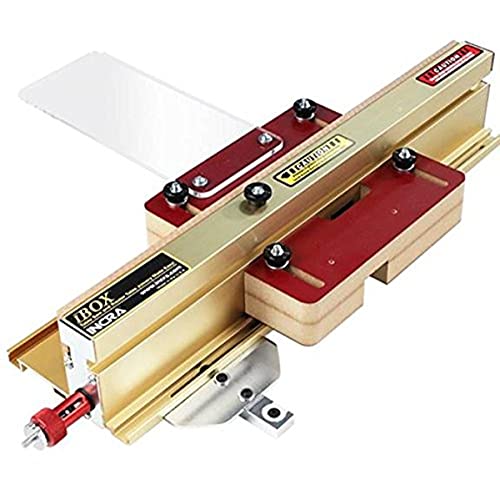
INCRA’s I-BOX represents an advanced approach to box joints, focusing on faster setup, greater versatility, and enhanced user safety. The design emphasizes user-friendly operation and improved accuracy across a range of joint sizes and configurations. The kit typically includes a comprehensive setup guide or DVD to cover basics and advanced decorative joinery, making it well-suited for woodworkers seeking a premium, feature-rich jig with long-term reliability.
Woodpeckers Spline Jig for Joints

The Woodpeckers Spline Jig focuses on adding splines to miters and corners, strengthening joints while offering a design element. This jig uses dual aluminum Super Track sections with UHMW glide strips and powder-coated steel legs, plus molded flip stops to keep splines aligned. It supports projects from narrow to wide, enabling splines across miters for enhanced joint integrity. While not a traditional finger-joint jig, it complements finger-joint work by providing additional strength and aesthetic options for table saw and router table projects.
Right Angle Spline Jig for Miter Joints

The Right Angle Spline Jig for table saw and router table work focuses on strengthening miter joints and adding decorative elements. Made from CNC-machined aluminum for durability, it offers a wide clamping range suitable for frames, deep projects, and small boxes. The anodized finish provides rust resistance, ensuring long-term stability in a busy workshop. This jig serves as a complementary tool for projects where precise bevels and tight miter joints are critical to visual appeal and structural integrity.
GOINGMAKE Thin Rip Jig for Table Saw

The GOINGMAKE thin rip jig is designed for rapid, repetitive narrow strip cuts. It slides into the table saw’s miter slot and fits 3/8″ x 3/4″ T-slots, U-shaped slots, and 1/4″ x 3/8″ T-slots. The guide extends up to 8 inches from the center of the slot to the blade, enabling consistent thin strips. Features include a one-way roller bearing for forward movement and laser-engraved scales in both metric and imperial units for precise replication of each cut. It emphasizes safety and repeatability for fine ripping tasks.
Woodpeckers Joinery Sled for Precision Joints
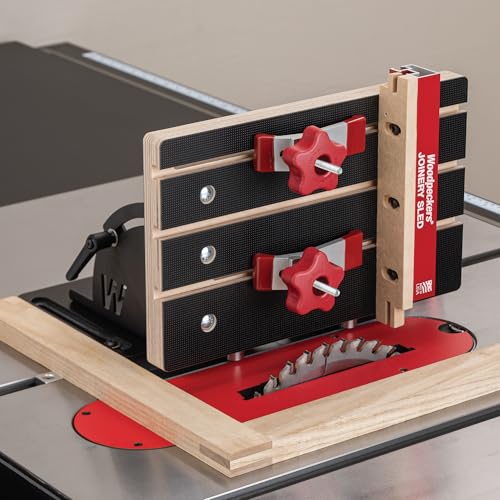
The Woodpeckers Joinery Sled is designed to create precise box joints, miters, and angled cuts on both table saws and router tables. It features micro-adjustable components for fine-tuning joint fit, with a base travel of 5-1/2 inches plus 3-1/2 inches of adjustable extension. The tool supports complex joints, offering angle adjustments from 44° to 91°. This makes it especially suitable for skilled projects requiring high-precision alignment and repeatable joint integrity, across a range of project sizes.
Buying Guide: Key Purchase Considerations For Finger Joint Jigs
- Joint type and versatility — Decide between traditional finger joints, box joints, and spline joints. Some jigs focus on one pattern, while others are adaptable for multiple joint styles.
- Indexing precision — Look for multiple indexing key sizes and high-precision materials (aluminum or brass) to ensure uniform finger spacing and repeatability across cuts.
- Sled and guide quality — A smooth, well-built sled with stable guidance minimizes drift and helps maintain square joints. Check for bearings, rails, and locking mechanisms.
- Compatibility — Confirm compatibility with your table saw’s miter slot dimensions and with router tables if you plan to use the jig on both systems. Some kits include dual-use features.
- Shaping and strength — Spline options or reinforced joints can add strength and aesthetics to boxes and frames. Consider whether you need decorative options in addition to functional joints.
- Setup and safety — Jigs that offer clear setup guides, instructional material, and safety features help reduce miscuts and accidents, especially for beginners.
- Included hardware — Review what is included (fence, stops, guide bars, replacement parts) to gauge overall value and setup flexibility.
- Expansion potential — Some jigs allow you to upgrade components or swap keys for new finger widths, enabling longer-term use as projects scale or interests evolve.
- Budget and value — While premium jigs offer durability and performance, balance features with budget. For occasional use, a simpler jig with solid repeatability may suffice.
In summary, the best finger joint jig for your table saw depends on your project scale, preferred joint style, and whether you value quick setup, long-term accuracy, or special features like spline capabilities. The options above cover a range of needs—from precise box joints to decorative splines—allowing workshop owners to select a tool that aligns with their joinery goals and workflow.