Best Exterior Bonding Primers for Tough Surfaces
Choosing the right exterior bonding primer is essential for durable paint jobs on challenging substrates. The best primers create a secure anchor on glossy, porous, or previously painted surfaces, reducing prep time and extending topcoat life in harsh weather. Below are five top-rated exterior bonding primers, selected for strong adhesion, surface versatility, and practical application. Each product includes a concise overview of its bond strength, dry times, and ideal surface types to help you pick the right primer for your project.
| Product | Brand | Best For | Key Benefit |
|---|---|---|---|
| KILZ Adhesion Primer | KILZ | Glossy, plastic, metal | Exceptional adhesion on tough surfaces |
| Rust-Oleum Stops Rust Universal Bonding Primer | Rust-Oleum | Exterior and humid environments | Low odor, versatile for many materials |
| INSL-X High Build Peel Bonding Primer | INSL-X | Rust-prone, tannin-prone surfaces | Flexible, breathable, heavy-build |
| Rust-Oleum 5-in-1 Bonding Primer Spray | Rust-Oleum | Spray-on applications | Five-in-one bonding performance |
| INSL-X Stix Bonding Primer | INSL-X | Glossy and hard-to-coat substrates | Excellent adhesion on challenging surfaces |
Note: Each product below is chosen for exterior bonding strength and compatibility with a range of topcoats. The summaries pull from manufacturer claims and common professional usage to help you compare options quickly.
KILZ Adhesion Primer: Exterior Bond

KILZ Adhesion Primer offers high adhesion on surfaces that typically resist coating. Its advanced styrenated acrylic polymer forms a strong anchor for topcoats, reducing or potentially eliminating the need for extensive sanding on glossy finishes. It is suitable for both interior and exterior use and can be followed by water- or oil-based paints. For coatings involving epoxies, lacquers, or high-solvent products, allow to dry fully (often 24 hours) and test compatibility before full application. This primer expands the range of paintable surfaces on exterior projects.
- High adhesion to challenging substrates
- Advanced styrenated acrylic formula anchors topcoats
- Works with water- or oil-based finishes
- Suitable for: vinyl, PVC, glass, tile, metal, fiberglass
Recommended for projects where a secure bond to smooth or glossy substrates is critical, such as metal railings, vinyl siding, or glossy interior/exterior surfaces awaiting durable topcoats.
Rust-Oleum Stops Rust Bonding Primer
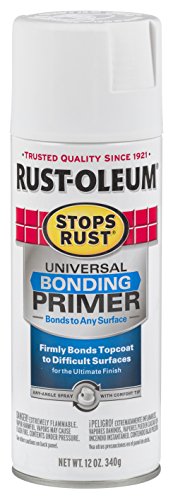
This primer is designed for exterior and interior use and bonds well to a wide range of surfaces, including galvanized steel, wrought iron, railings, furniture, laminate, PVC, porcelain, masonry, and glazed brick. It features a low odor, low-VOC water-based formula with strong wet adhesion in moist environments. Drying time is quick—often to the touch in about 30 minutes—making it ideal for projects that need faster turnarounds. Coverage typically falls in the 10–12 square feet range per can, depending on porosity and texture.
- Exterior and interior versatility
- Low odor, low-VOC water-based formula
- Excellent wet adhesion in humid environments
- Quick dry to touch, practical for busy projects
Best used where moisture resistance and broad surface compatibility are priorities, such as metal railings, outdoor furniture, and masonry surfaces ready for topcoats.
INSL-X High Build Peel Bonding Primer

INSL-X High Build Peel Bonding Primer is engineered for durability on challenging surfaces. It remains flexible and breathable over time, helping prevent peeling as temperatures and weather shift. The primer also blocks rust stains and mild tannin bleed, and it can be applied in thicker coats—up to 20 mils wet—when needed to fill minor imperfections before topcoating. This makes it a solid choice for exterior surfaces that experience expansion, contraction, or moisture-related stress.
- Flexible and breathable for temperature changes
- Blocks rust stains and tannin bleed
- Can be applied up to 20 mils wet for build
- Strong performance on glossy or slick surfaces
Ideal for exterior metal, wood, or previously painted glossy surfaces where a robust, creepage-resistant bond is required.
Rust-Oleum 5-in-1 Bonding Primer Spray

This spray primer provides exterior/interior bonding in a convenient aerosol format, designed to firmly anchor topcoats to surfaces such as galvanized steel, wrought iron, railings, furniture, laminate, porcelain, masonry, and glazed brick. Its durability and corrosion resistance help extend the life of topcoats on metal, masonry, and ceramic surfaces. Coverage is typically strong for a spray primer, with the practical advantage of easy reach on complex or vertical surfaces.
- Spray-on convenience for hard-to-cover areas
- Bonds to a wide range of substrates
- Durable and corrosion-resistant finish
- Typical coverage suitable for small-to-medium projects
Useful for exterior projects where spray application saves time or where you need precise control around fixtures, trims, or tight spaces.
INSL-X Stix Bonding Primer

INSL-X Stix is a premium acrylic-urethane bonding primer-sealer known for unparalleled adhesion to challenging surfaces. It bonds to glossy tile, PVC, vinyl, plastic, glass, glazed block, Formica, ceramic tiles, and galvanized metals, among others. It is designed to bond to hard-to-coat substrates and can be top coated with almost any product. This makes Stix a versatile base for exterior walls, trims, and joints where durability and adhesion are critical.
- Exceptional adhesion to glossy and slick surfaces
- Broad substrate compatibility, including metal and PVC
- Compatible with a wide range of topcoats
- Premium acrylic-urethane formula for long-term performance
Recommended when the project involves stubborn substrates or multiple material types in one area, such as a stone veneer with vinyl trim or metal fixtures with ceramic tile accents.
Buying Guide
When selecting an exterior bonding primer, consider surface type, climate, and topcoat compatibility to maximize adhesion and longevity. The following factors help buyers compare products beyond brand names and marketing claims.
- Surface compatibility: Match the primer to the substrate. Metal, vinyl, glass, glossy ceramic, masonry, and Formica each respond differently to primers. Choose a product explicitly rated for exterior use on the target material.
- Pore structure and texture: Porous surfaces (concrete, brick, wood) absorb more primer and may require longer dry times or multiple coats. Glossy or sealed surfaces demand bonding primers designed for adhesion to nonporous finishes.
- Drying and recoat windows: Dry times vary by product and environmental conditions. Fast-drying formulas speed up schedules, but ensure full cure before topcoating if the coating system recommends it.
- Topcoat compatibility: Verify that the primer is compatible with your intended topcoat (water-based latex, oil-based enamel, epoxy, etc.). Some bonding primers require specific topcoats, while others offer broad compatibility.
- VOC and odor: Water-based, low-VOC primers are preferable for indoor areas or enclosed spaces. Outdoor projects still benefit from lower odor formulations for worker comfort.
- Application method: Primers are sold as brushes-on, rollers, or spray cans. Sprays are convenient for complex shapes or vertical surfaces but may require more even coverage to avoid runs.
- Coverage and economy: Coverage per gallon or per can depends on surface texture and porosity. Rough, porous masonry yields higher primer use than smooth drywall.
- Weather and temperature: Exterior primers perform best in dry, moderate temperatures. Extremely humid or cold conditions can extend dry times and affect adhesion.
- Safety and handling: Follow label instructions for ventilation and disposal. Some primers may contain solvents; always wear appropriate PPE when required.
In practice, homeowners often choose bonding primers to repair peeling finishes, restore adhesion on vinyl or metal surfaces, or prepare glass or ceramic surfaces for new paint. Professionals may select multi-surface bonding primers for mixed-material projects where different substrates share a single paint system. Always perform a small test area before committing to a full coat, especially when using epoxies, high-solvent coatings, or tannin-rich woods.