Best Epoxy Coatings for 3D Prints: Clear Finishes and How to Choose
Finishing 3D printed parts often requires more than printing skills. A good epoxy or coating not only smooths layer lines but also adds durability, water resistance, and a professional gloss. This guide reviews top epoxy-related products and finishing tools that help achieve flawless 3D prints, from clear epoxy coatings to UV-curing fillers and deburring tools. Each pick is evaluated for compatibility with common 3D printing media, cure behavior, and surface results to help makers select the right option for their projects.
| Product | Brand | Type | Notable Benefit |
|---|---|---|---|
| Smooth-On XTC-3D 3D Print Coating | Smooth-On | Coating | Clear top coat; smooths and finishes prints; works on SLA, SLS, PLA, ABS |
| MAX CLR A/B Epoxy Resin Coating | The Epoxy Experts | Epoxy Resin | Crystal-clear, high-gloss, waterproof coating; FDA-compliant |
| SUNLU 3D Printer Resin | SUNLU | Resin (3D printer) | Low shrinkage; easy to use; good stability |
| FUNCRECOL UV Light Curing Putty | FUNCRECOL | UV Putty/Filler | Ultra-fast UV cure; fills cracks and nicks; sands and paints well |
| voltrish 11-Blade Deburring Tool | voltrish | Deburring Tool | 11 high-speed steel blades; swivel head; replaces burrs on 3D prints |
Note: The products listed here cover coatings, resins, fillers, and finishing tools commonly used in post-processing 3D prints. Each product’s features come from the manufacturers and listed specifications and are intended to help inform finishing decisions for a range of 3D printing materials and applications.
Smooth-On XTC-3D 3D Print Coating
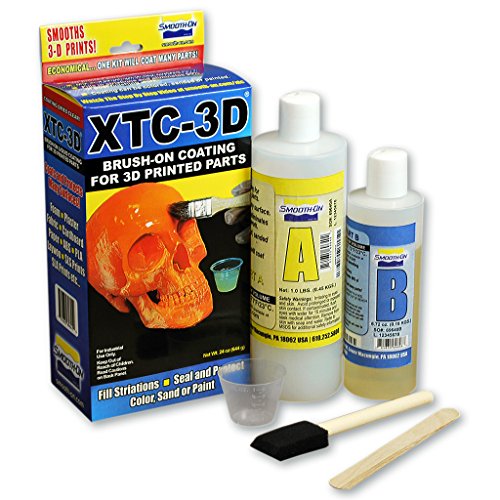
Smooth-On XTC-3D is a high-performance coating designed to smooth and finish 3D printed parts. It is described as a clear top coat suitable for both SLA and SLS prints as well as various rigid media such as PLA and ABS. The product specifies a 2A:1B mix by volume with a working time of about 10 minutes, allowing multiple parts to be coated before it begins to set. Cure time is approximately 3.5 hours, resulting in a hard, impact-resistant surface around 80D Shore hardness. This coating helps reduce visible layer lines and improves overall surface hardness for parts that require durability or glossy aesthetics. Use in controlled conditions to avoid tackiness and ensure thorough coverage for crisp results.
MAX CLR A/B Epoxy Resin Coating
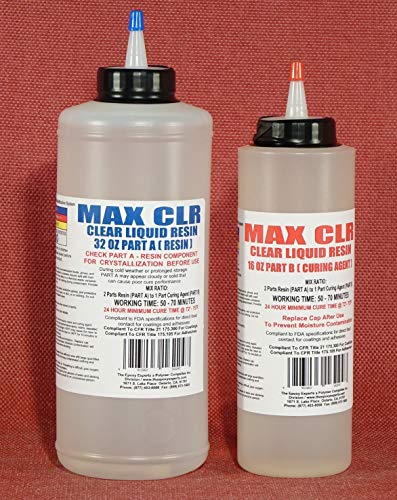
The MAX CLR A/B system provides a crystal-clear, high-gloss epoxy coating suitable for 3D printed parts made from PLA, PVC, and PET. Marketed as an FDA-compliant formulation, it emphasizes a food-safe, durable finish, and waterproof protection once fully cured. The product promotes a transparent result with strong adhesion and a robust protective layer, ideal for tabletops, display pieces, or parts requiring a clear, durable seal. As with most two-part epoxies, precise mixing of the A and B components is essential to achieve proper cure and avoid issues like yellowing or clouding. Proper ventilation and safety gear are recommended during application and curing.
SUNLU 3D Printer Resin

SUNLU 3D Printer Resin is a standard resin designed for LCD, DLP, and SLA printers. It emphasizes ease of use, low shrinkage, and good stability, with a 1-kilogram package in a grey shade. The resin’s fluidity and cure properties are suitable for beginners and experienced users alike, supporting accurate form reproduction and smooth surfaces. For epoxy-focused finishes, users may apply this resin print as a base or model to be finished with an epoxy top coat or filler to achieve the desired gloss and sealing properties. Always follow printer manufacturer guidelines for post-curing to optimize final strength and dimensional accuracy.
FUNCRECOL UV Light Curing Putty
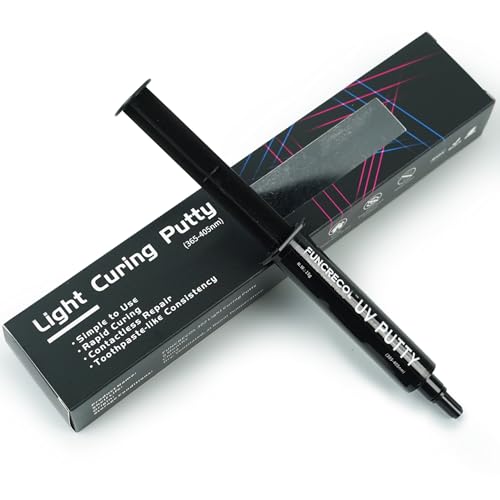
FUNCRECOL UV Light Curing Putty is a fast-curing filler designed for resin models, with a curing time under 1 minute under UV light (365–405 nm). It fills nicks, scratches, cracks, and gaps on resin prints and other surfaces like quartz, ceramic, wood, and plastic. The putty’s toothpaste-like consistency allows smooth application, and once cured, it can be sanded, painted, or polished for a seamless appearance. This filler is particularly useful for repairing minor defects before applying a protective epoxy or clear coat, minimizing post-processing time and enhancing surface uniformity.
voltrish 11-Blade Deburring Tool

The voltrish deburring tool offers 11 high-speed steel blades in a swivel-head design to match uneven surfaces during cleanup. It includes an extra 10 blades and a durable metal handle with a non-slip finish. The tool is suitable for trimming and smoothing edges on metal, resin, PVC pipes, copper, and 3D printed parts. It excels at removing burrs and preparing surfaces for coatings, seals, or paints, contributing to a cleaner final finish on resin prints that require precise edge smoothing before epoxy or resin coatings are applied.
Buying Guide: Key Purchase Considerations
Coating Type: Epoxy vs. Other Resins
Epoxy coatings provide durable, clear, high-gloss finishes and strong adhesion to many print substrates. When choosing, consider whether a dedicated epoxy resin (two-part systems like A/B formulations) or a protective topcoat (such as a smoothing coating) best fits your workflow. For glossy, food-safe surfaces, reference FDA-compliant options. For rapid repairs and fillers, UV-curing putties can bridge gaps before final sealing with epoxy.
Cure Time and Handling
Work time and cure duration influence throughput. Two-part epoxies often require careful mixing and longer cure periods but yield robust finishes. Quick-curing putties provide speed for small fixes, while coatings like XTC-3D offer moderate work time for multiple parts. Plan curing schedules around production demands and environmental conditions such as temperature and humidity, which can affect cure speed and surface hardness.
Safety and Compatibility
Many epoxy systems require proper ventilation and PPE. Some products advertise food-safe or FDA-compliant properties, but ensure compatibility with your print material (PLA, ABS, PET, resin) and intended use. If the finished part will contact food or be used indoors near people, prioritize clear, stable formulations with proven safety data and minimal off-gassing during cure.
Surface Preparation and Application
Surface prep greatly influences coating adhesion and finish quality. Light mechanical sanding to remove sheen, followed by cleaning to remove dust and oils, often yields the smoothest results. Follow mixing ratios, application thickness, and recoat intervals exactly as specified. For coatings that smooth layer lines, even coverage is critical to avoid uneven gloss or film thickness.
Finish and Aesthetics
Gloss level, clarity, and hardness determine the final look and durability. A crystal-clear epoxy with high gloss is ideal for display pieces and protective surfaces, while a satin or matte finish may be preferred for prototypes or functional parts. If color or tinting is needed, verify compatibility with the chosen coating or use compatible pigments designed for that resin system.
Cost, Coverage, and Availability
Consider the total cost relative to the area to be covered and the number of parts you plan to finish. Some coatings offer broader coverage per bottle but require longer cure times, while fillers and deburring tools are cost-effective for edge finishing. Availability from reputable sellers ensures supply continuity for ongoing projects and replacements such as extra blades or additional resin batches.
These insights help balance performance, safety, and workflow efficiency when selecting epoxy or finishing products for 3D printed parts. By matching material properties to your project goals—durable protection, crystal clarity, or rapid repairs—you can achieve a professional, long-lasting finish that highlights the strengths of your 3D prints.