Best Entry Level Table Saw Options for DIY Woodworkers
The right entry level table saw balances portability, power, and accuracy for home shops. This guide highlights five approachable models that deliver solid performance without overwhelming beginners. Each product section includes key features, a quick pros/cons snapshot, and visual reference to help you compare at a glance. The buying guide below covers what to look for when choosing your first table saw and how different features impact everyday use.
Chosen Products Overview
- Skil 15 Amp 10 Inch Portable Jobsite Table Saw with Folding Stand (TS6307-00)
- DEWALT 10-Inch Table Saw with Rolling Stand (DWE7491RS)
- SKIL 10 Inch Heavy Duty Worm Drive Table Saw with Stand (SPT99-11)
- BOSCH GTS15-10 10 Inch Portable Jobsite Table Saw with Gravity-Rise Stand
- Evolution R10TS 10″ Jobsite Table Saw
Skil 15 Amp Portable Jobsite Table Saw
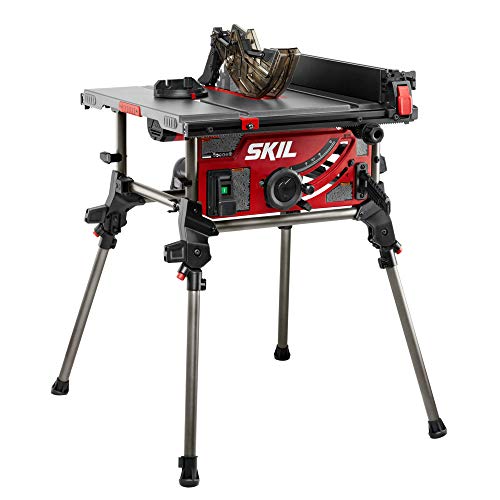
The Skil TS6307-00 combines portability with a foldable stand, making it a practical entry point for on-site tasks and small shops. Its rack and pinion fence rails help keep the fence parallel to the blade for consistent cuts, while the integrated folding stand allows quick setup and compact storage. The micro-adjustment feature supports precise blade alignment to the miter slot. This model is well-suited for beginners who value ease of transport and straightforward setup.
DEWALT 10-Inch Table Saw with Rolling Stand

DEWALT’s DWE7491RS entry model features a rack and pinion telescoping fence system for rapid, precise adjustments. The included rolling stand supports mobility between job sites, and the 32-1/2″ rip capacity opens up wide material options while maintaining a compact footprint. The design emphasizes durable materials and consistent performance, making it a reliable choice for beginners who expect strong after-sale support and a proven track record.
SKIL 10 Inch Heavy Duty Worm Drive Table Saw
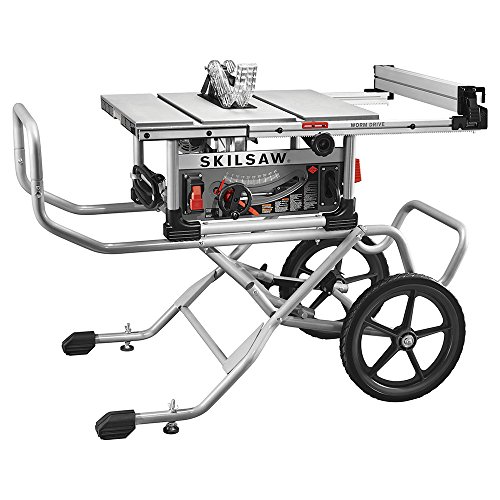
SKILSAW’s SPT99-11 leverages a worm drive system known for power and torque, enabling robust cutting performance in wood and other materials. With a substantial 30-1/2 inch rip capacity and a 3-5/8 inch depth of cut, this model supports larger stock while maintaining mobility through a rugged stand. Precision rack and pinion fence adjustments help users achieve accurate, repeatable cuts, appealing to beginners who anticipate more demanding projects.
BOSCH GTS15-10 Portable Jobsite Table Saw
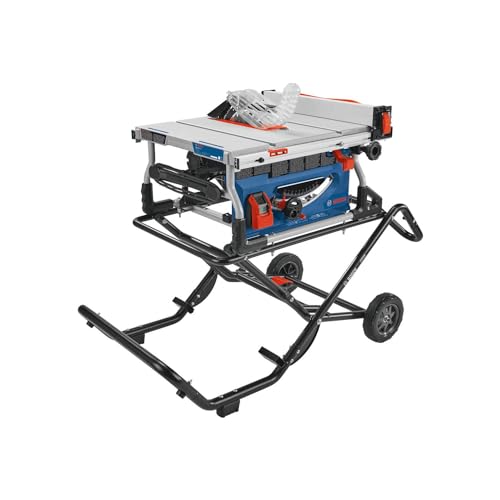
The Bosch GTS15-10 brings a gravity-rise stand and a 32-1/8 inch rip capacity to a compact, portable package. This model emphasizes quick setup and reliable braking, reducing the blade stop time to boost productivity on demanding days. The clamp zones help provide a secondary work surface, adding versatility for workshop tasks beyond straight cuts, making it a strong entry option for users who value workflow efficiency.
Evolution R10TS 10″ Jobsite Table Saw

The Evolution R10TS offers a high-torque 15A motor capable of cutting wood, aluminum, and composites with a premium 10” TCT blade. It provides a large 26″ rip capacity and a 3-3/8″ cut depth, plus a geared bevel system for precise 0-45° bevel cuts. The dual rack and pinion fence, combined with tool-free adjustments, supports repeatable and accurate results, appealing to hobbyists who expect versatile material handling from a budget-friendly saw.
Buying Guide: Key Considerations for Your First Table Saw
- Purpose and materials: Identify the primary tasks (rough framing vs. fine finish, wood types, metal allowances) to determine rip capacity and motor power needs. Entry-level models commonly handle common lumber and plywood; heavier stock may require more robust build and better dust management.
- Power and motor type: Most entry models use 10″ blades with 15A motors. Worm-drive designs offer torque advantages for thicker cuts, while side winders tend to be lighter and easier to maneuver for beginners.
- Portability and stand design: Folding stands, gravity-rise stands, and rolling units affect setup time and mobility. If you frequently move between job sites, prioritize stands with quick release mechanisms and stable footing.
- Fence quality and accuracy: A good fence system is essential for repeatable cuts. Look for rack and pinion or micro-adjustable fences that maintain parallelism with the blade and alignments with the miter slot.
- Bevel and height control: Bevel gears and height adjustments should be smooth and precise. Tool-free adjustments save time and reduce frustration for beginners.
- Safety features: Look for riving knives, blade guards, and easily reachable emergency stops. A robust brake can reduce blade stopping time in busy work settings.
- Dust collection: Integrated dust ports or compatibility with shop vacs helps maintain a cleaner workspace and reduce airborne dust during cuts.
- Accessories and support: Check availability of replacement parts, blades, and guidance from the brand. A widely supported model reduces downtime and upgrade friction as skills grow.
- Budget vs. long-term value: A lower upfront price may come with compromises on accuracy or durability. Weigh total cost of ownership, including blades, stands, and accessories.
How to Compare Models at a Glance
- Evaluate rip capacity against typical workpieces you plan to cut; larger capacity benefits shelving, plywood, and wide boards.
- Assess fence systems: micro-adjustment and rack-and-pinion features usually translate to faster, more accurate setup.
- Consider stand design and portability if workshop space is limited or you need to move the saw often.
- Review safety features and dust management to maintain a clean, safe workspace.
- Check warranty and support options to ensure long-term reliability and access to parts.