Best Electric Shears for Metal: Top Picks for DIY and Pros
Choosing the right electric metal shear can streamline sheet metal work, roofing, HVAC, and fabrication projects. This guide highlights five reliable options, comparing power, head design, speed, and durability. Whether you need a cordless model for mobility or a corded tool for continuous cutting, the selections below cover 14-gauge to 18-gauge capabilities, 360° swiveling heads, and safety features to help you finish tasks with cleaner edges and less waste.
| Product | Brand | Key Benefit | Best For |
|---|---|---|---|
| Cordless Metal Shears for Dewalt 20V Max (No Battery) | PropeLannt | High torque 400Nm with brushless motor | Industrial-grade power on the go |
| WEN Metal Shear, Swivel Head, 18-Gauge | WEN | Variable speed, lightweight | General metalworking and DIY |
| DEWALT Metal Shear, Swivel Head, 18GA (DW890) | DEWALT | 360° swivel head, strong 5A motor | Professional projects |
| Wild Edge Electric Metal Shear, 14 Gauge | Wild Edge | Double-cut blade, 360° head | Sheet metal cutting with clean edges |
| SHALL Electric Metal Cutting Shear | SHALL | Clean cut, 360° swivel, 2500 SPM | Curves and intricate shapes |
Cordless Dewalt-Style Metal Shears With 360° Pivot

The PropeLannt cordless metal shears are designed as a bare tool compatible with Dewalt 20V MAX and 60V Flex batteries. They deliver 400Nm of torque via a commercial-grade brushless motor, making them well-suited for 14-gauge steel operations. The tool is IP54-rated for dust and moisture resistance and built to MIL-STD-810G standards for durability. It features High-Speed continuous cutting, an anti-mishap safety lock, and options for intermittent cutting to handle intricate shapes while maintaining user protection and efficiency.
WEN Metal Shear With Swivel Head
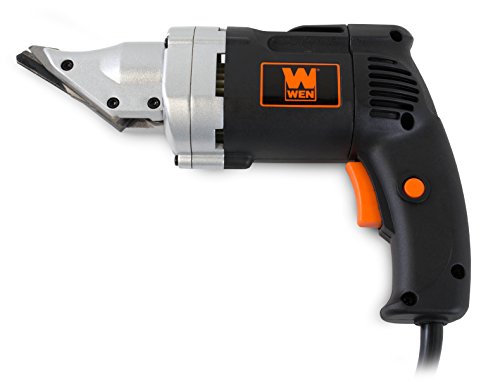
The WEN metal shear offers a 0–2500 SPM range with a pressure-sensitive trigger suitable for cutting up to 20 gauge stainless steel. Weighing less and featuring a swivel head for flexible cutting angles, this model emphasizes ease of use for lighter metalworking tasks and DIY projects, making it a practical option for hobbyists and professionals needing maneuverability and speed control.
DEWALT Metal Shear, 18GA (DW890)

The DEWALT DW890 features a robust 5-amp motor and a 360° swiveling head for cutting convenience. It can handle up to 7/32-inch wide strips, enabling clear visibility of the work area as curls exit the cutting zone. The tool is designed for durability and steady performance on sheet metal tasks, with emphasis on long service life and precise control during complex cuts.
Wild Edge 14 Gauge Electric Metal Shear

The Wild Edge shear features a double-cut blade design and a strong 5.0-amp motor, designed to cut up to 14-gauge metal and 15-gauge stainless steel. A full 360° swiveling head supports curved and irregular cuts, producing curled edge pieces that minimize post-cut finishing. The tool supports a variable speed control (0–2700 SPM), allowing adjustments for different materials and thicknesses, which enhances versatility on varied projects.
SHALL Electric Metal Cutting Shear

The SHALL adjustable-speed metal shear provides a 360° swivel head and a 4.0-amp motor with a 0–2500 SPM range. It delivers a clean cut with a double-cut blade, reducing waste and airborne dust. The flexible head position and steady speed control support curved and intricate cuts, making it suitable for HVAC, roofing, and sheet metal fabrication tasks that require precise shaping and minimal burrs.
Buying Guide: Key Purchase Considerations
- Cutting capacity: Determine the maximum gauge the tool can handle, whether 14, 16, or 18 gauge stainless or carbon steel, to match your typical projects.
- Head orientation: A 360° swivel or pivoting head increases versatility for curves, circles, and awkward angles. Consider if you need constant reorientation during work.
- Power source: Corded models offer uninterrupted performance, while cordless tools provide mobility on job sites. Battery type and runtime (especially for longer sessions) are important.
- Torque and motor: Higher torque and brushless motors tend to deliver better performance under load and longer life in demanding cuts.
- Speed control: Variable speed helps optimize cutting for different metals and thicknesses, reducing burrs and splinters.
- Safety features: Look for lock-off switches, clear visibility of cut lines, and robust housing for dust and vibration resistance to protect the operator.
- Weight and ergonomics: A lighter tool with a comfortable grip reduces fatigue during extended use, particularly when overhead cuts are required.
- Reliability and durability: Tools meeting MIL-STD or similar ruggedness standards tend to endure tough job-site conditions.
- Blade design and maintenance: Double-cut blades can reduce waste and finish time, while easy blade changes improve productivity on multi-material tasks.
When selecting, balance power and maneuverability with project scope. For frequent, long sessions, a high-torque, durable, and comfortable model is advantageous. If you need to navigate tight corners or curved lines, prioritize a 360° swivel head and precise speed control. Cordless options are ideal for fieldwork, while corded units suit shop floors where continuous cutting is common. Considering these factors helps ensure better efficiency, cleaner cuts, and safer operation across metalworking tasks.