Best Dust Collectors for Woodworking: Top Picks for 2026
Choosing the right dust collector can dramatically improve air quality, tool longevity, and overall workshop cleanliness. This guide highlights five reliable options that balance performance, portability, and value for American woodworkers. The selections cover cyclone separators, bag-style collectors, and compact tabletop units to suit different shop sizes and workflows.
| Product | Brand | Type | Capacity | Key Benefit |
|---|---|---|---|---|
| WEN DC1300 1,300 CFM Dust Collector | WEN | Central | 50 Gal | High airflow with dual 4″ inlets |
| DEWALT Dust Separator DXVCS002 | DEWALT | Separator | 6 Gal | Pre-separates debris to protect vacuums |
| WEN DC3401 | WEN | Central | 12-15 Gal (Bag) | Compact with mobile base |
| The Dustopper PRO | Dustopper | Low-profile Separator | N/A (Bucket system) | High-efficiency pre-separation |
| Dewalt DXVCS003 | DEWALT | Separator | 10 Gal | High-efficacy cyclone design |
WEN DC1300: 1,300 CFM Dust Collector

The WEN DC1300 delivers robust air movement with up to 1,300 CFM for mid to large woodworking spaces. It features dual 4-inch inlet connections, allowing two tools to operate simultaneously while maintaining strong suction. A vertical 50-gallon collection bag reduces bag changes and simplifies maintenance, making this unit a practical option for shops that run multiple tools at once. Its mobile base adds maneuverability, so repositioning is effortless during cleanup or when reconfiguring the workspace.
DEWALT Dust Separator DXVCS002

The DEWALT DXVCS002 dust separator is designed to protect vacuum systems by capturing chips and dust before they reach the vacuum. With an efficiency rating near 99.5%, it minimizes suction losses and reduces filter and bag replacements. The 6-gallon canister and four-caster base provide stability and easy mobility around a workshop. It supports a range of inlet sizes (1-7/8″ to 2-1/2″) and is compatible with most vacuum cleaners, making it a versatile choice for mixed-tool setups.
WEN DC3401 Woodworking Dust Collector
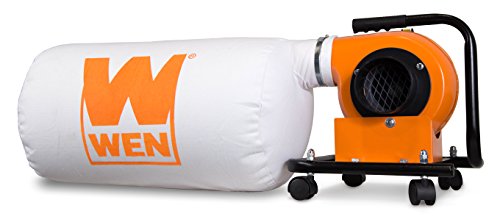
The WEN DC3401 offers a compact, portable dust collection option with a 12-gallon bag and a 6-inch impeller that delivers up to 660 CFM. The motor is lighter compared to larger central units, yet provides ample suction for smaller shops or dedicated workstations. Its onboard carrying handle and optional wall-mount compatibility help tailor space usage, making it a solid choice for hobbyists or woodworking enthusiasts with limited floor space.
The Dustopper PRO: Low-Profile Dust Separator

The Dustopper PRO is a low-profile separator designed to fit atop standard 5-gallon buckets. It pre-separates more than 99% of typical shop dust before it reaches a vacuum or dust collector, protecting filters and extending equipment life. Suitable for vacuums and tools with 2-1/2″ nominal hoses, it is especially compatible with shop vac configurations that require compact, efficient pre-separation. A parabolic design enhances airflow and capture efficiency while reducing clogging risk.
DEWALT Dust Separator with 10 Gal Tank

DEWALT’s 10-gallon dust separator uses cyclone technology to capture up to 99.5% of debris, protecting the fan and improving airflow. Its sturdy, portable design can mount directly to a vacuum or stand-alone setup, with compatible port sizes (1-7/8″ or 2-1/2″). The unit supports a broad range of materials, including wood dust, drywall, concrete, plastics, and more. This makes it a versatile option for multi-material workshops or renovation projects where different dust types are encountered.
Buying Guide: Key Purchase Considerations
- Shop size and workflow: For larger workshops with multiple tools, central collectors like the WEN DC1300 or DEWALT separators offer higher airflow and greater dust handling. Smaller spaces may benefit from compact units like the DC3401 or Dustopper PRO.
- Dust separation vs. filtration: Separators pre-clean the air before it reaches the vacuum or filter, reducing maintenance. Separators are ideal when you already own a vacuum system or need to protect filters from heavy debris.
- Port sizing and compatibility: Ensure the unit’s inlets and hoses match your tools. Inlets commonly come in 4″ or 2-1/2″ sizes. Look for adapters if you use a mix of tools and vacuums.
- Mobility and space: If you must move the system around the shop, prioritize mobile bases or wall-mount options. Tabletop or compact units work well in tight spaces.
- Maintenance and bags: Large-capacity bags reduce frequency of changes but may be heavier when full. Look for easy-empty designs and simple bag replacements.
- Material compatibility: Some units handle damp or varied materials; consider cyclone designs for consistent performance with mixed debris.
All listed options provide objective performance features suitable for American woodworking environments, from hobbyist garages to mid-sized shops. When selecting, align the unit with your tool layout, available floor space, and preferred maintenance workflow to optimize dust collection and air quality.