Best Cross Cut Jigs for Table Saw: Precision, Safety and Consistency
When accuracy matters in woodworking, a reliable crosscut sled or jig can transform table saw results. This guide highlights top cross cut jigs and sleds designed to deliver clean 90-degree cuts, repeatable accuracy, and safer operations. Each product below includes a brief on its strengths, so you can compare features at a glance and choose the best fit for your shop workflow.
| Product | Brand |
|---|---|
| POWERTEC 71403 Table Saw Crosscut Sled | POWERTEC |
| Fulton Crosscut Sled for Table Saw | Fulton |
| POWERTEC 71035V Table Saw Angle Cutting Jig | POWERTEC |
| Rockler Small Parts Crosscut Sled | ROCKLER |
| Peachtree Dubby Jr. Cut-Off Crosscut Sled | Peachtree Woodworking Supply |
The following selections prioritize compatibility across common 3/4″ x 3/8″ miter slots, zero-clearance performance, and easy repeatability for tasks ranging from small moldings to longer rips. Each entry includes practical features and setup notes to help you evaluate suitability for your specific table saw model and project needs.
POWERTEC 71403 Table Saw Crosscut Sled

The POWERTEC 71403 kit is a complete table saw sled system designed to deliver precise crosscuts with a dedicated MDF base and an aluminum fence for rigidity. It includes a 3/8″ x 3/4″ miter bar, flip stop, hold-down clamp, and all necessary hardware. A standout feature is the easy-to-read 1/2° graduations and a hairline indicator, which support accurate setups and repeatable cuts. The sled base is cut to fit specific saws, enabling a zero-clearance experience that reduces tear-out and produces cleaner edges.
With a robust construction and clear measurement aids, this sled is well-suited for routine crosscuts on furniture, cabinets, and trim. The zero-clearance cut helps prevent small pieces from catching or binding, which can improve both safety and finished quality. While installation may take a bit of setup time, the results in repeated tasks are generally dependable for seasoned woodworkers.
Fulton MDF Crosscut Sled for Table Saw
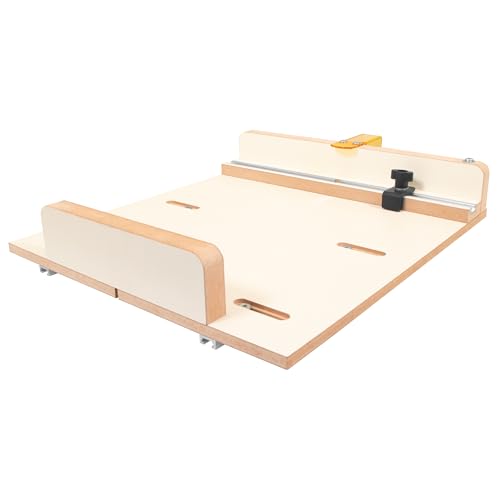
This crosscut sled emphasizes precision and stability, helping users achieve consistent short and cross cuts. It features adjustable rails and a stop block, with aluminum rails designed for compatibility with standard 3/4” x 3/8” miter slots. A notable caution is noted about compatibility with Ryobi table saw slots, so confirm slot geometry before purchase. The kit’s composite stop block is designed to avoid blade contact damage, and its approximately 18” x 16” footprint offers a compact but capable work surface for many crosscut tasks.
The Fulton sled is intended for repeatable cut lengths and tight tolerances, making it a practical option for small parts, moldings, and joinery. For projects requiring careful alignment and a steady glide, this sled pairs well with standard table saw operations, provided your equipment matches the stated slot dimensions.
POWERTEC 71035V Table Saw Angle Cutting Jig

This jig focuses on taper cuts, offering 24 inches of guided rails, an ergonomic handle, and a laser-etched scale for precise angle settings. It supports tapering from 1” per foot up to 3” per foot, making it versatile for projects like table legs, chairs, and shelving that require gradual changes in thickness or width. The setup emphasizes repeatability and consistency across repeated taper tasks, which can save time on longer runs.
Users should evaluate whether their table saw can accommodate the 24-inch rail length and whether the tapered cuts align with their typical project profiles. The tool is especially beneficial when large tapering or angled legs are part of the workflow, and it helps reduce manual error during repeated cuts.
Rockler Small Parts Crosscut Sled

This compact crosscut sled is designed for small parts and fine-miter work. It includes a blade guard and a miter track stop to cap forward travel, helping to prevent overrun during precise cuts. The zero-clearance support is highlighted as a key feature to reduce the risk of small pieces getting stuck between blade and throat plate. It is particularly suitable for tasks like cutting dowels, tenon stock, and small moldings at precise angles with minimal tear-out.
The sled’s smaller footprint makes it a practical choice for shops with limited workspace or when working on tiny components. It complements other miter fence systems by providing a precise 90-degree reference point for small, repeatable cuts without needing to swap larger sleds from project to project.
Peachtree Dubby Jr. Cut-Off Crosscut Sled

The Dubby Jr. crosscut sled is a compact option designed for accuracy in miter joints and 90-degree cuts. It features an easy-to-read scale and a smooth sliding mechanism with adjustable MDF face and a stop block for repeatable results. Its smaller stature makes it ideal for precision work without the investment in larger, heavier sled systems. The compact design can be advantageous for fine detailing in cabinetry and small parts production.
For users prioritizing repeatability and straightforward setup, this sled offers a practical balance of accuracy, size, and ease of use. It is especially suitable for hobbyist and professional tasks where space or budget considerations favor a smaller sled with dependable performance.
Buying Guide: Key Purchase Considerations And Comparisons
When selecting a crosscut jig or sled, consider the following factors to ensure compatibility and optimal performance for your table saw:
- Blade clearance and zero-clearance fit: A base cut to fit your specific saw blade reduces tear-out and improves edge quality. Check if the sled offers an adjustable or custom-fit base.
- Rail and slot compatibility: Most sleds use standard 3/4” x 3/8” miter slot rails. Confirm your table saw’s slot dimensions and alignment with the sled’s rail system to avoid loose fit or binding.
- Stop blocks and repeatability: A robust stop block supports consistent cut lengths. Look for soft-stop materials or composite blocks that won’t dull blades on contact.
- Size and footprint: Larger sleds provide more support for long pieces but require more shop space. Smaller sleds excel in tight spaces and for precise, small-part work.
- Weight and maneuverability: Heavier sleds tend to stay stable during cuts but can be harder to handle. Balance stability with ease of use in your workflow.
- Finish and materials: MDF-based bases are common and economical, while aluminum rails offer rigidity and durability. Consider the type of work you perform most often.
- Safety features: Zero-clearance designs and built-in blade guards or track stops can reduce kickback and improve operator safety during repetitive cuts.
- Maintenance and replacement parts: Check availability of replacement fences, stops, or wear strips, which extend the life of the sled between heavy use.
- Budget and project scope: For hobby projects, compact sleds may suffice. For batch production or cabinet work, a full-size, highly adjustable sled with precise scales may be worth the investment.
Choosing a crosscut jig should align with your typical cuts: small parts and moldings benefit from compact, precise sleds with good stop blocks; longer pieces and repeatable cabinet components benefit from larger sleds with clear measurement guides. If your shop uses a variety of saws, consider multi-tool solutions like adjustable rails or universal sleds that accommodate common slot dimensions, while verifying compatibility with your model.