Best Chinese Meat Cleaver for Home and Professional Kitchens
A Chinese meat cleaver is a versatile workhorse for both home cooks and professional kitchens. The following picks balance blade geometry, steel quality, and handle design to cover a range of chopping, mincing, and deboning tasks. The selections focus on edge retention, durability, and overall value to help readers choose a tool that performs reliably in everyday prep and challenging cuts alike.
| Product | Brand | Key Feature |
|---|---|---|
| imarku 7-Inch Meat Cleaver | imarku | Japan SUS440A high carbon stainless steel; 18° edge; 2.3mm blade; multi-purpose |
| Sunnecko 7-Inch Cleaver | Sunnecko | EN1.4116 steel; vacuum-treated; HRC58; razor sharpened |
| PAUDIN 7-Inch Cleaver | PAUDIN | High-carbon stainless steel; 56+ hardness; 2.3mm blade; 16° per side |
| SHI BA ZI ZUO 6.7-Inch Cleaver | SHI BA ZI ZUO | Full tang rosewood handle; professional steelmaking |
| Dalstrong Gladiator 9-Inch Cleaver | Dalstrong | 56 HRC; high-carbon 7CR17MOV steel; G-10 handle; NSF certified |
imarku 7-Inch Meat Cleaver With Ultra Sharp Edge

The 7″ blade covers common kitchen tasks from chopping to trimming meat. It uses SUS440A high carbon stainless steel imported from Japan, chosen for edge retention and corrosion resistance. The blade is ground to an 18° angle on each side, producing a sharp profile while staying robust enough for bones and cartilage.
With a 2.3mm thickness, the cleaver provides a wide surface that keeps fingers safely away from the cutting edge. The handle is ergonomic, designed for steady control in busy kitchens—whether at home or in a restaurant setting. Maintenance is straightforward, making it suitable for daily use.
Sunnecko 7-Inch Cleaver With Razor Sharp Blade
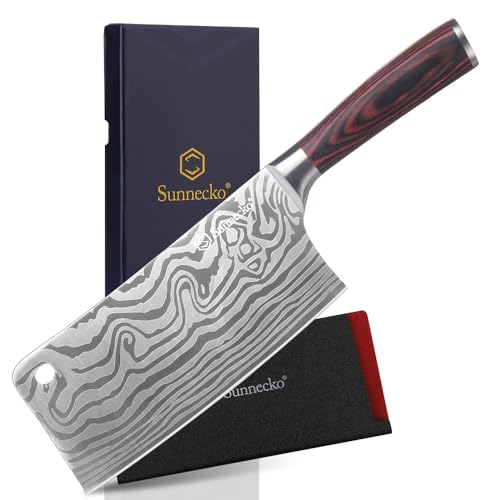
Sunnecko’s 7″ Chinese cleaver uses EN1.4116 high carbon stainless steel, chosen for durability and corrosion resistance. The blade is vacuum heat-treated to reach HRC58 for long-lasting edge retention. It is hand sharpened to about 12-15 degrees per side, resulting in a very sharp edge for chopping, slicing, and dicing with minimal effort.
The 7″ blade is versatile for meat, vegetables, and fruits. The wide blade helps guide pieces away from the surface, while the wooden handle provides a traditional grip. It’s suitable for both home kitchens and professional environments where fast prep is essential. Regular maintenance is recommended to preserve rust resistance.
PAUDIN Cleaver Knife, Ultra Sharp 7 Inch

PAUDIN’s 7″ cleaver uses high-carbon stainless steel, with a Rockwell hardness of 56+, blending edge retention with corrosion resistance. The blade thickness is about 2.3mm with a 16° bevel on each side, enabling clean cuts through cartilage and bone-in portions while still handling vegetables and roots with ease.
The blade resists rust and is easy to re-sharpen and maintain. A wooden handle is designed for a comfortable, secure grip during long prep sessions, making it a reliable workhorse in busy kitchens.
SHI BA ZI ZUO 6.7-Inch Meat Cleaver
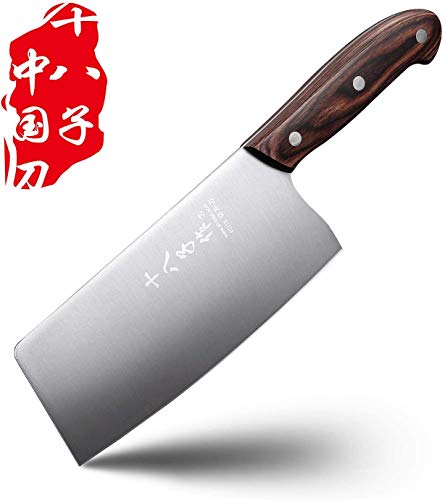
Shiba ZUO’s 6.7″ cleaver emphasizes balance and control with a full tang rosewood handle. The knife is designed for chopping, mincing, and slicing in both home and restaurant settings. The maker emphasizes high-quality steelmaking to ensure reliable performance.
The full tang and robust heft provide a balanced feel, while the rosewood handle offers an anti-slip, comfortable grip. This cleaver is built to withstand frequent use and maintain its edge through routine maintenance.
Dalstrong Gladiator 9-Inch Chinese Cleaver

Dalstrong’s Gladiator 9″ cleaver is a premium tool with a thinner profile than many cleavers, optimized for push cuts and precise work. The blade is forged from high-carbon 7CR17MOV steel, heat treated to around 56 Rockwell, and designed for versatility in mincing and chopping vegetables, boneless cuts, and more.
The ultra-premium G-10 handle provides a durable, secure grip, and the knife is NSF certified for professional use. The broad rectangular blade enables efficient transfer of cut pieces, while the finish resists corrosion and wear. It suits both home chefs seeking a premium tool and professionals needing robust performance.
Buying Guide
When selecting a Chinese meat cleaver, consider blade material, hardness, edge geometry, and handle design. The right combination depends on your cooking style and kitchen setup. Here are key factors and how they vary across the options above.
- Blade Material and Hardness: Look for high-carbon stainless steels such as SUS440A, EN1.4116, and 7CR17MOV for a balance of edge retention and corrosion resistance. Higher Rockwell numbers typically translate to sharper edges but may require careful maintenance.
- Edge Geometry and Thickness: Blade thickness around 2.3mm and bevels near 16–18 degrees per side yield clean cuts through meat and cartilage while remaining versatile for vegetables. A wider blade adds stability for large pieces.
- Handle Design and Balance: A full-tang construction and an ergonomic handle (wood, resin, or G-10) improve control and reduce fatigue. Non-slip grips are crucial in wet kitchen conditions.
- Size and Weight: Cleavers range from about 6.7″ to 9″. Heavier blades are favorable for bone work, while lighter models suit delicate tasks and long prep sessions.
- Maintenance and Care: Stainless steels resist rust better, but wooden handles require drying and occasional oiling. Hand washing is recommended to extend blade life and preserve finishes.
- Safety and Hygiene: NSF-certified options meet professional standards, and a sharp blade minimizes slippage. Proper storage and handling reduce accidents during busy periods.
- Budget Versus Value: Premium brands offer refined steels and handles with enhanced durability, but many mid-range cleavers deliver strong performance for everyday use and occasional heavy tasks.
For home cooks, prioritize a comfortable handle, manageable weight, and straightforward maintenance. For professional kitchens, consider NSF certification, edge retention under heavy use, and a robust, full-tang build. If possible, test balance by holding the knife and simulate a few cutting motions with typical ingredients to gauge comfort and control.