Best Caulk for Expansion Joints: Top Picks for Durable Sealing
Choosing the right caulk for expansion joints is essential for long-lasting protection against water intrusion and movement in concrete, masonry, and related surfaces. Options range from self-leveling polyurethane sealants to backer rods that prepare joints for caulking. This guide highlights five top picks suitable for driveways, sidewalks, foundations, and other expansion joints. It covers fast-curing, paintable, and waterproof sealants, as well as backer rods that simplify filler work and improve performance. Read on for concise product summaries, a quick comparison, and a practical buying guide.
| Product | Brand | Key Feature | Size / Type |
|---|---|---|---|
| SIKA Sikaflex Self-Leveling Sealant | SIKA | Self-leveling, waterproof, paintable; fast curing | 10.1 fl oz cartridge |
| Akonaflex Pro Self-Leveling Expansion Joint | Akona | Self-leveling, water resistant; paintable when dry | 10.1 fl oz |
| DCP Donseal PU440 Polyurethane Sealant | DCP | Non-sag polyurethane; wide temp range; multi-surface | 20.2 fl oz sausage (pack of 2) |
| M-D Versatile Gray Foam Backer Rod | M-D Building Products | Backer rod for gaps; weather resistant; easy to cut | 1/2 in x 20 ft |
| Taikula 1/4 Inch Backer Rod | Taikula | EPDM foam; easy to cut; long length | 1/4 in x 100 ft |
SIKA Sikaflex Self-Leveling Sealant

SIKA Sikaflex Self-Leveling Sealant is a polyurethane-based solution designed for concrete expansion joints. Its self-leveling formula flows into irregular joints to create a smooth fill across driveways, garages, sidewalks, and pavements. The compound cures quickly to a tack-free state within a few hours, with full cure in less than a week, enabling painting, sanding, or staining after curing. It remains waterproof and elastic, resisting moisture while accommodating joint movement. The combination of levelness, durability, and paintability makes this a versatile option for exterior concrete joints.
Akonaflex Pro Self-Leveling Expansion Joint

Akonaflex Pro Self-Leveling Expansion Joint is a versatile concrete caulk designed for horizontal surfaces. Suitable for interior and exterior use, it performs well in driveways, sidewalks, patios, steps, and garage floors, delivering a durable, watertight seal after curing. The formula is self-leveling for easy application on uneven joints; after two hours it becomes water resistant, and once dry, it is paintable. It provides a flexible, long-lasting seal that accommodates expansion and contraction of concrete without cracking. This product suits both DIY projects and professional installations.
DCP Donseal PU440 Polyurethane Sealant

Donseal PU440 is a polyurethane expansion joint filler designed for concrete and other surfaces. This non-sag sealant cures by reacting with ambient humidity to form a highly elastic material capable of withstanding joint movement. It covers a wide service temperature range from -22°F to 175°F, and works on multiple base materials—including concrete, wood, gypsum boards, aluminum, steel, and ceramic—making it suitable for both horizontal and vertical joints. Ideal for DIY projects and professional use, it delivers durable sealing and moisture resistance in demanding environments.
M-D Versatile Gray Foam Backer Rod

M-D Building Products offers a gray foam backer rod designed to fill gaps before caulking. This weather-resistant filler provides a stable base for sealants, reducing crackling and improving adhesion. Suitable for indoor and outdoor joints, it is particularly effective in expansion joints on driveways and sidewalks. The backer rod is easy to cut to length and can be twisted to fit larger gaps, creating a reliable foundation that helps caulking perform as intended and resist environmental wear.
Taikula 1/4 Inch Backer Rod
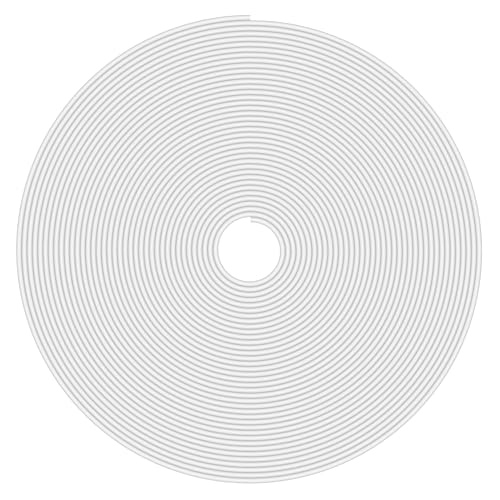
Taikula offers a white EPDM foam backer rod measuring 1/4 inch by 100 feet. The material resists dirt, has low water absorption, and provides flexibility for precise joint sizing. It is easy to cut with scissors to fit gaps and joints, then used as a backing for caulk to achieve a smooth, professional finish. The long length reduces the need for frequent replacements on large projects, making it a practical choice for extensive expansion joints in outdoor surfaces.
Buying Guide
When choosing caulk for expansion joints, consider the following factors to ensure a durable, effective seal across different applications.
- Joint Type and Movement: Self-leveling sealants work best for horizontal, irregular joints and surfaces that experience movement, while non-sag formulas help horizontal applications that require precise control. For large gaps, combine with a suitable backer rod for better performance.
- Material Compatibility: Polyurethane sealants (like Sikaflex and Donseal) handle concrete, masonry, metal, and wood well, offering elasticity and moisture resistance. Silicone-based options may excel in high-temperature or outdoor exposure but can be harder to paint. Backer rods (EPDM or foam) provide the proper bond line for caulking.
- Cure Time and Weather Tolerance: Fast-curing formulas enable quicker readiness for finish work. Check recommended cure times and temperature/humidity conditions to avoid improper curing or joint damage.
- Waterproofing and Moisture Management: For exterior joints exposed to weather, choose products with proven waterproof seals and good moisture resistance after cure to prevent water infiltration and freeze-thaw damage.
- Surface Preparation and Paintability: If the joint will be visible or painted, select paintable sealants. Some sealants accept painting or staining after curing, while others are only suitable for finishing surfaces.
- Backer Rod Size and Material: Backer rods establish a correct bond line and can reduce sealant use. EPDM backer rods offer durability and resistance to water absorption, while foam rods are easier to cut and shape for irregular gaps.
- Application Area: Horizontal joints (driveways, sidewalks) favor self-leveling or sloped formulations; vertical joints (basements, foundation walls) often need non-sag, flexible formulations with robust adhesion.
- Maintenance and Longevity: Consider expected joint movement, weather exposure, and load conditions. Some products are better for residential projects, while others are suited for industrial or commercial installations.
In practice, a common approach is to use a backer rod to fill larger gaps and then apply a compatible self-leveling sealant for horizontal joints, ensuring an even fill and long-lasting seal. For vertical joints or areas with extreme movement, select non-sag polyurethane or silicone-based systems designed to maintain elasticity under stress. Always follow manufacturer instructions for surface preparation, curing, and environmental conditions to maximize performance and durability.