Best Brush for Cutting in Ceilings: Precise Edges
Cutting in ceilings requires a brush that can reach high, squeeze into tight corners, and deliver clean lines without splatter. The following picks focus on edge control, compact sizing, and extender compatibility to help you achieve sharp, professional-looking ceiling edges. This guide compares options designed for crown molding, door frames, stairwells, and other hard-to-reach spots, including traditional angled brushes and innovative extenders.
| Product | Brand | Key Benefit |
|---|---|---|
| Wooster 2-Inch Shortcut Angle Sash Brush | Wooster | Compact size for tight spots and precise cuts |
| Multi-Angle Paint Brush Extender | Paint Contractor Life | Extends reach and improves edge control |
| Colbent Multi-Angle Brush Extender | Colbent | 160° rotation for flexible cutting angles |
| RollingDog 2.5-Inch Paint Edger | ROLLINGDOG | Adjustable angle with six locking positions |
| PinStone 2-Inch Angled Brush Set | PinStone | Three angled brushes for varied edging tasks |
Wooster 2-Inch Shortcut Angle Sash Brush

The Wooster Q3211-2 Shortcut Angle Sash Brush provides a compact 2-inch head paired with a flexible purple Shergrip handle designed for maneuverability in tight spaces. The white nylon and gold polyester blend bristles are suitable for many paints, delivering smooth pickup and release, while the brass-plated steel ferrule helps keep bristles aligned for consistent edging. The short profile reduces splash risk when cutting in near crown molding and along ceiling edges, making it a practical tool for quick, precise work in cramped areas.
For ceiling edging, this brush excels when used with a steady hand and a light touch. It pairs well with an extension pole to reach higher work without overreaching or ladder dependence. Cleaning is straightforward with synthetic fibers, and the brush’s durability supports repeated use on various projects. If your ceilings feature intricate trim or tight corners, this compact angled brush is a reliable option to maintain crisp lines without large brush marks.
Paint Edger Extender For Ceilings
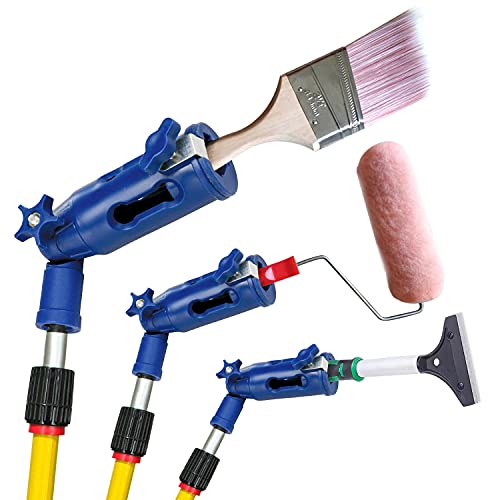
The Multi-Angle Paint Brush Extender from Paint Contractor Life is designed to extend reach and enhance edge control for high ceilings, walls, trims, corners, and other hard-to-reach areas. Its primary benefit is reducing fatigue by letting you angle the brush with a longer handle, enabling cleaner lines along edges that are hard to access from the ground. The extender is described as compatible with most brush sizes and intended for use in tight spaces, stairwells, and around frames. It is especially helpful for those who frequently work above shoulder height or on tall walls.
In practice, this tool offers versatility when cutting in along ceilings and door frames. While it increases reach, it does depend on a suitable brush and an appropriate pole length for best results. Users should consider their typical brush head size and whether the extender’s rotation and grip will align with their preferred technique. It is a strong choice for crews that prioritize consistent edge quality across tall walls and ceilings.
Colbent Multi-Angle Brush Extender
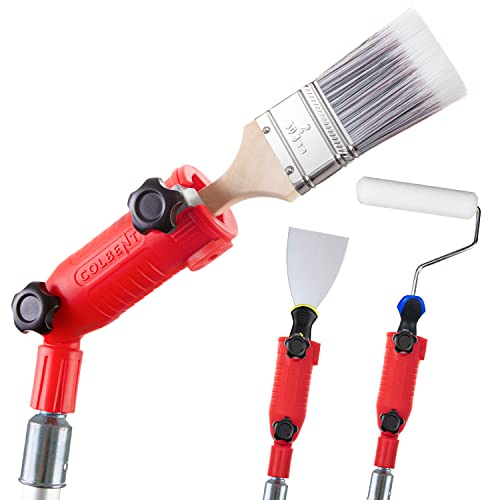
Colbent’s Multi-Angle Brush Extender features a 160-degree rotation and two brush directions, enabling precise painting at the angle you need. This makes it easier to cut in along ceilings, corners, and frames from a comfortable distance, reducing the need to reposition and stretch. When used with a compatible pole extension (pole not included), it accommodates many brush sizes and styles, offering a flexible solution for varied edging tasks. The detachable brush adapter adds to its no-nonsense versatility for different projects over time.
The extender’s design emphasizes control, allowing you to align your stroke with the ceiling edge or trim line without overreaching. This is especially useful for drywall joints, crown molding, or door frames where precision matters more than aggressive coverage. If your work frequently involves odd angles or tight corners, Colbent’s extender provides dependable angle options and easy adaptability.
RollingDog 2.5-Inch Edger Brush

The RollingDog 2.5-Inch Paint Edger combines a 2.5-inch angled head with an adjustable joint in the rubber handle, offering six locking positions to match various ceiling contours and wall angles. This flexibility helps maintain a clean edge when edging along high ceilings, stairwells, or crown molding without constant brush rotation. The brush uses premium synthetic filament designed for smooth application and quick cleaning, while the push-button angle adjustments enable you to navigate around obstacles without moving your stance. It is a practical choice for edge work where angle control is key.
For ceilings with complex geometry, the RollingDog edger provides a balance of reach and control. Its ergonomic design reduces hand fatigue during extended edging sessions, and the 2.5-inch head size offers a broader line without sacrificing precision. This tool is particularly suitable for layout work and for painters who need reliable performance across multiple vertical planes in a room.
PinStone 2-Inch Angled Brush Set

The PinStone 3-pack features three 2-inch angled brushes designed for cutting-in tasks on walls, cabinets, sash, trim, and ceilings. Each brush is equipped with synthetic bristles, a stainless steel ferrule, and a rubber grip with a hanging hole for storage. The short handle enhances control in tight spaces, enabling steady edging along lines near doors, windows, and crown molding. The synthetic bristles are shed-resistant, delivering smooth finishes with minimal brush marks, making this set a versatile option for ongoing ceiling work and detail work around fixtures.
With multiple brushes in the set, you can designate one for edging near fragile surfaces and another for close-in lines around fixtures. The compact 2-inch head size is ideal for cramped spaces, while the angled design supports better alignment with ceilings and trim. If you frequently switch between edge work and larger coverage, PinStone’s set offers a practical balance of versatility and precision for cutting in ceilings and adjacent surfaces.
Buying Guide
Key purchase considerations
- Brush size and angle: For ceilings, a 2-inch angled brush or a 2.5-inch edge brush helps you control edge lines without overspread. Consider a set with multiple sizes for different rooms.
- Angled versus extender tools: Angled brushes deliver precise cuts along ceiling lines, while extenders and edgers improve reach on tall walls without ladders.
- Bristle material: Synthetic bristles offer easy cleaning and durability for latex and oil-based paints. Natural bristles are softer but may shed with certain finishes.
- Durability and build: Look for a brass ferrule or reinforced metal components to prevent bristles from loosening under repeated use.
- Comfort and grip: A rubber or cushioned handle reduces hand fatigue during long edging sessions and improves control in tight corners.
- Compatibility with extension poles: If you frequently work above eye level, ensure the brush or extender is compatible with standard poles and battery-powered or manual extensions as needed.
- Maintenance: Synthetic brushes rinse clean and dry quickly; avoid soaking wood-handled tools for long periods to preserve grip integrity.
- Budget and value: A compact angled brush paired with a versatile extender can cover many projects, offering better value for frequent ceiling work.
Practical comparisons
- Best for tight corners and trim lines: 2-inch angled sash brushes (like the Wooster option) and compact sets (such as PinStone) provide precise control with minimal overspray.
- Best for high ceilings: Extenders and edgers (Paint Contractor Life, Colbent, RollingDog) maximize reach and keep edges sharp without ladders.
- Best overall value for edging: A 3-pack set with multiple 2-inch angled brushes (PinStone) offers flexibility for different surfaces and quick swaps during a project.
Usage tips
- Angle the brush slightly toward the edge and use a light, even pressure to prevent paint from flaring beyond the line.
- Use a consistent stroke direction along the edge to maintain uniform coverage and avoid gaps.
- Keep the brush clean during use to prevent bristle splay and ensure a crisp edge on subsequent passes.
- When working on ceilings, test your edge on a small area first to calibrate pressure and angle before proceeding.