Best Brush Cutter Blade: Top Picks for Fast, Clean Cuts
Choosing the right brush cutter blade can dramatically improve yard work efficiency. The selections below represent popular, carbide-backed and carbon-steel options that fit most straight-shaft trimmers. This guide breaks down fit, durability, and installation considerations to help homeowners and professionals select a blade that balances speed, safety, and control. A quick table below highlights each option so you can compare essentials at a glance.
| Product | Brand | Diameter | Teeth | Arbor Options |
|---|---|---|---|---|
| Forester 9in Brush Cutter Blade + File Set | FORESTER | 9 in | 20 | 1 in with 20 mm bushing |
| Renegade Blade 8-Inch 56T | Renegade Blade | 8 in | 56 | 25.4 mm or 20 mm (with reducer) |
| Vidica 10-Inch Carbon Steel Brush Cutter Blades | vidica | 10 in | 3 per blade | 1 in or 20 mm (with adapter) |
| HK 9-Inch 36T Carbide Tip Blades | HK | 9 in | 36 | 25.4 mm or 20 mm (with washer) |
| AR-PRO 10-Inch 80T Carbide Brush Blades | AR-PRO | 10 in | 80 | 25.4 mm or 20 mm |
The five selections below were chosen for broad compatibility with common straight-shaft trimmers, durable materials, and a range of cutting tasks—from dense brush to saplings. Each entry includes a concise overview of fit, wear characteristics, and installation considerations to aid in a practical, no-nonsense buying decision.
Forester 9in Brush Cutter Blade + File Set

Forester’s 9-inch brush cutter blade is designed for heavy-duty straight-shaft trimmers. It features a 1-inch arbor hole and includes a 20mm bushing to broaden compatibility across different mounting configurations. A conversion kit is sold separately for setups that require a specific head configuration, while some trimmers can operate as a brush cutter without an extra kit. The blade is built for toughness, delivering chainsaw-like performance through saplings and thick brush. It can handle vegetation up to about 2.5 inches in diameter, with speeds up to 10,000 RPM providing fast, aggressive cutting. A sharpening file is included to help maintain edge geometry between uses, supporting consistent results over time.
- Diameter: 9 inches; Teeth: 20
- Arbor: 1″ with 20mm bushing
- Materials: Steel blade; designed for straight-shaft trimmers
- Usage: Heavy brush, saplings, light trees; up to ~2.5″ diameter
- Maintenance: Includes file for edge maintenance
Renegade Blade 8-Inch 56T Carbide Blade

Renegade Blade’s 8-inch carbide-tipped blade offers a blend of durability and performance for routine trimming. With 56 teeth, it provides a balance between fast cutting and clean deburring, making it suitable for brush and light woody growth. The blade is marketed as universal-fit, but mounting requires the appropriate Blade Kit parts for your trimmer model. Two arbor sizes are available—25.4 mm and 20 mm—with a reducer washer to accommodate different spindles. Carbide teeth typically last longer than standard steel, translating to fewer replacements in busy seasons. Installation notes emphasize verifying compatibility and securing all mounting hardware for safe operation.
- Diameter: 8 inches; Teeth: 56
- Arbor: 25.4 mm or 20 mm (with reducer)
- Material: Carbide-tipped for extended life
- Compatibility: Requires appropriate blade mounting parts
- Best for: Dense brush, weeds, and light trees
Vidica 10-Inch Carbon Steel Brush Cutter Blades
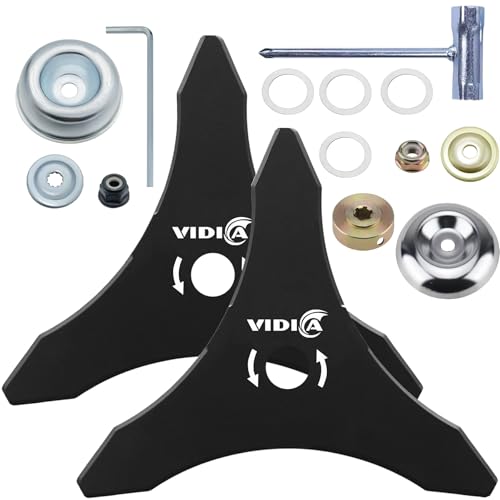
Vidica offers a 2-pack set of 10-inch carbon steel blades designed for broad compatibility with straight-shaft trimmers. Each blade provides robust durability suitable for heavy-duty yard work, while the 2-pack format gives users spare blades for extended jobs. These blades accommodate 1″ or 20 mm arbor setups, with an included blade adapter kit and washer to simplify secure installation. They are advertised as compatible with multiple popular brands, including Husqvarna, Stihl, Ego, Oregon, Hitachi, and Makita, making them a versatile choice for homeowners with mixed tools. The blades are engineered to sustain performance at high RPMs while resisting common wear patterns.
- Diameter: 10 inches; Teeth: 3 per blade
- Arbor: 1″ or 20 mm
- Materials: Carbon steel; durable and rust-resistant options
- Package: 2 blades + adapter kit
- Compatibility: Husqvarna, Stihl, Ego, Oregon, Hitachi, Makita, and more
HK 9-Inch 36T Carbide Tip Blades

HK’s 9-inch blades with 36 teeth deliver a balance of aggressive cutting power and control for brush clearing. The carbide-tipped teeth are designed to stay sharp longer than standard steel, reducing downtime for replacements during demanding yard tasks. The blade can fit straight-shaft gas trimmers with a 1-inch or 0.79-inch gear case, and it is also compatible with 20 mm arbor setups when used with the accompanying washer. This broad compatibility makes the HK blades a practical option for users who own multiple brands or models of trimmers. Proper mounting and safety checks are essential for optimal performance.
- Diameter: 9 inches; Teeth: 36
- Arbor: 25.4 mm or 20 mm (with washer)
- Material: Carbide-tipped for durability
- Compatibility: Straight-shaft gas trimmers; multiple arbor configurations
- Use case: Thick brush, weeds, and light woody growth
AR-PRO 10-Inch 80T Carbide Brush Blades

AR-PRO’s 10-inch blades bring high-teeth performance with carbide-tipped edges for extended wear resistance. The 80-tooth design offers a fine cutting action that helps produce cleaner edges in dense growth conditions. These blades are compatible with straight-shaft trimmers and come in two arbor options: 25.4 mm (1 inch) or 20 mm, enabling broad compatibility with a wide range of trimmer brands such as Husqvarna, Stihl, Ego, Oregon, Hitachi, and Makita. The blades are marketed as durable with a longer lifecycle compared to standard steel, making them a strong choice for frequent trimming tasks.
- Diameter: 10 inches; Teeth: 80
- Arbor: 25.4 mm or 20 mm
- Material: Carbide-tipped for long wear
- Compatibility: Straight-shaft trimmers; multiple brands
- Performance: Sustained cutting efficiency over time
Buying Guide
When choosing a brush cutter blade, key factors include material, fit, teeth count, and the trimming tasks you face most often. Carbide-tipped blades excel in longevity and cutting efficiency under heavy use, while carbon-steel blades can provide a cost-effective option for general maintenance. Arbor compatibility is critical for safe, secure mounting, and many blades offer multiple arbor options or adapters to fit a range of trimmer models. Teeth count influences cutting speed and debris clearance; more teeth can deliver smoother cuts but may cut slightly slower through very dense material. Weight, balance, and the ability to resharpen will also affect long-term performance.
Material And Durability
Carbide-tipped blades typically outlast plain carbon steel by a substantial margin, especially during frequent use on tough brush and saplings. They maintain a sharp edge longer, reducing downtime for replacements. Carbon steel blades provide a budget-friendly choice for light to moderate trimming tasks and less frequent use. For homeowners who frequently clear thick brush or manage landscapes with woody growth, carbide blades can be a prudent investment.
Arbor Size And Fit
Arbor compatibility determines whether a blade can be mounted safely on your trimmer. Common sizes are 1 inch (25.4 mm) and 20 mm, with some blades offering adapters to fit multiple arbors. Always verify your trimmer’s head configuration and ensure you have the proper mounting parts, such as spacers, washers, and nuts, to securely attach the blade. Improper mounting can lead to vibration, noise, or dangerous kickback during operation.
Teeth Count And Cutting Style
Teeth counts vary from 3 to 80 across the listed blades. Higher tooth counts often provide a smoother cut and better debris control, while fewer teeth can remove material more quickly at the cost of a rougher finish. For heavy brush and saplings, blades in the 36–80 tooth range typically deliver balanced performance with acceptable cutting speed and control.
Diameter And Application
Blade diameter determines the width of cut and compatibility with your trimmer guard and debris shield. Larger blades remove more material per pass but require adequate clearance and a sturdy, balanced setup. Choose a diameter that aligns with the typical vegetation in your yard and the clearance available around obstacles and fences.
Safety And Maintenance
Always follow the manufacturer’s installation instructions and wear protective gear, including eye and hand protection. Regular inspection of the blade edge and mounting hardware helps prevent accidents. Keep blades clean and dry; sharpen or replace as needed to maintain cutting efficiency. For carbide blades, periodic checks for glazing or chipping will help preserve performance over time.
Quick Comparison Of The Five Picks
| Blade | Diameter | Teeth | Arbor | Notes |
|---|---|---|---|---|
| Forester 9in Brush Cutter Blade + File Set | 9″ | 20 | 1″ / 20 mm | |
| Renegade Blade 8-Inch 56T | 8″ | 56 | 25.4 mm or 20 mm | |
| Vidica 10-Inch Blades | 10″ | 3 per blade | 1″ / 20 mm | |
| HK 9-Inch 36T Carbide Tip | 9″ | 36 | 25.4 mm or 20 mm | |
| AR-PRO 10-Inch 80T Carbide | 10″ | 80 | 25.4 mm or 20 mm |