Best Box Jig for Router: Top Picks for Precise Finger Joints and Box Joints
Box joints and finger joints are a cornerstone of durable drawers, boxes, and cabinetry. A reliable box jig for your router table or saw helps you achieve flawless joints with repeatable accuracy. Below you will find five top options that balance precision, ease of use, and versatility. Each section highlights how the jig performs, what it includes, and how it fits different project needs.
Summary of chosen products:
| Product | Brand | Key Strengths | Ideal For |
|---|---|---|---|
| Precision Box Joint Jig | JessEm | Aluminum indexing keys, smooth bearing glide, adjustable travel | Professional box joints on drawers and cabinetry |
| Router Table Box Joint Jig | ROCKLER | Interchangeable indexing keys, smooth sled, secure miter slot locking | Small to medium boxes with tight tolerances |
| INCRA I-BOX Jig | INCRA | Advanced setup, enhanced safety, versatile for multiple machines | Complex joints and high-precision needs |
| POWERTEC Box Joints Jig | POWERTEC | Complete hardware set, adjustable stops, dual compatibility | Table saws and router tables with flexible use |
| Original INCRA Jig | INCRA | Joint templates, instructional materials, multi-machine compatibility | Expanded joint types beyond basic boxes |
JessEm 06300 Precision Box Joint Jig

The JessEm 06300 Precision Box Joint Jig is designed to produce flawless box joints for drawers, boxes, and cabinetry with consistent professional results. It ships with multiple indexing keys in 1/4″, 3/8″, and 1/2″ sizes, plus Baltic birch fences to expand versatility. Four R4 bearings enable smooth, low-friction travel with a 4-1/4″ travel distance, ensuring clean, repeatable cuts. This jig is well-suited for woodworkers seeking reliable performance and easy setup on router tables.
Key features to consider: precise joinery by using multiple indexing keys, stable movement via bearing glide, and compatible fences for repeatable alignment. The combination makes it a strong choice for hobbyists progressing toward professional box joints, particularly when drawer construction or small to mid-size cabinetry is involved. Users should verify compatibility with their router table’s slot and fence system to maximize performance.
ROCKLER Router Table Box Joint Jig

ROCKLER’s Router Table Box Joint Jig uses interchangeable indexing keys lasting for ¼”, ⅜”, and ½” finger widths. The jig is designed for stable, accurate routing with precision brass indexing keys and a smooth sliding sled. The long “skis” on the sled help maintain squareness to the router bit, while the end tabs aid in stopping the sled reliably at the cut’s end. Easy-to-grip knobs secure the jig to the miter slot, encouraging repeatable results across multiple projects.
Why it matters: interchangeable finger widths let you tailor joints to project requirements without buying separate jigs. The locking mechanism and smooth sled surface reduce chatter and inaccuracies, making it a dependable option for small-to-medium boxes and drawers that demand tidy, tight joints. Potential buyers should confirm compatibility with their specific router table and fence setup for optimal operation.
INCRA I-BOX Jig
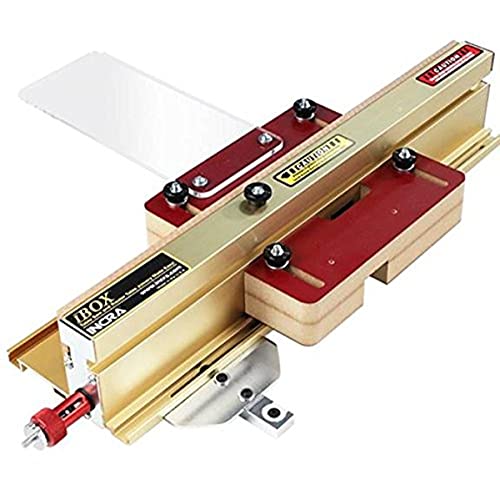
The INCRA I-BOX Jig is presented as one of the most advanced box-joint tools. It emphasizes faster setup, greater versatility, and improved safety compared to traditional jigs. The package includes a one-hour instructional DVD covering basic setup to advanced decorative joinery, making it suitable for ambitious woodworkers who want a comprehensive learning path. The I-BOX aims to be adaptable across different machines beyond router work, enhancing project scope and efficiency.
Key considerations: setup speed and versatility are major advantages. The instructional materials support learning and proper usage, which is valuable for newcomers and seasoned woodworkers alike. As with any high-precision jig, ensuring compatibility with your router table, fence system, and included accessories is essential for achieving repeatable results.
POWERTEC Adjustable Box Joints Jig

POWERTEC’s Adjustable Box Joints Jig is designed for both table saws and router tables, catering to wooden box making and various woodworking projects. It includes a complete hardware set: MDF sub fence, guide bar, adjustable and fixed stop plates, safety blade guard, clamp guard, and more. The wide fence helps clamp workpieces securely, while the small adjustment knob controls the distance between pin plates. Its flexible pin plates are designed to avoid impacting cut quality, enabling symmetrical or traditional finger joints with a straightforward setup.
Consider this jig if you value a broad compatibility footprint and a robust hardware package. It supports both routing and sawing workflows, enabling a broader range of joint patterns. When using it with a router, ensure the setup remains square and secure to maintain consistent results across multiple joints.
TANYO Router Corner Radius Template

The TANYO Router Corner Radius Template offers a plastic box router jig with eight radius options and aluminum alloy templates. It is crafted to provide precise positioning with screw-fix compatibility to prevent sliding during routing, reducing sanding deviation. CNC-machined aluminum templates deliver strong performance and durability, making this kit a cost-effective option for radius and corner work on cutting boards, boxes, or other wooden pieces.
Use-case insights: this template set is best for projects requiring consistent radii across multiple pieces. It’s not a full jig in itself but complements a router setup by delivering precise radius templates that can be used with jigs or fences. Always verify template thickness and compatibility with your router’s bit and fence configuration to preserve accuracy.
Plano EDGE Master Jig/Bladed Jig Box

The Plano EDGE Master Jig and Bladed Jig tackle box focuses on improving tackle organization with waterproof sealing and rust protection. While not a traditional woodworking box-joint jig, it demonstrates the broader concept of precision organization and protection for boxed items. This product is included to illustrate how jigs and organizers can intersect with woodworking projects, especially when transporting or storing jigs and templates used for routing and joint-making.
Buying guide: key purchase considerations
Joint Type and Size
Identify whether you primarily need ¼”, ⅜”, or ½” finger joints, and whether your projects require traditional box joints or decorative patterns. Look for a jig that supports the joint width you use most and offers adjustable keys or multiple sizing options.
Compatibility
Check compatibility with your router table or saw, including miter slots, fence systems, and the ability to lock the jig securely. Some jigs work across multiple machines, while others are router-table specific. Confirm mounting and alignment features before purchase.
Smoothness and Repeatability
Bearing systems, sled design, and low-friction components contribute to repeatable results. Prioritize systems with high-quality bearings, durable fences, and precise locking mechanisms to minimize deviations during repeated cuts.
Ease of Setup and Learning Curve
Instructional materials, user manuals, and included DVDs or online guides can shorten the learning curve. Jigs with clear setup steps, alignment references, and quick-change indexing keys are preferable for faster project turnaround.
Durability and Build Quality
Look for alloy indexing keys, robust fences, and quality finishes that resist wear. Aluminum or brass components tend to offer long-term stability, while sturdy MDF or plywood fences should be well-sealed to prevent warping.
Value and Support
Consider the breadth of included accessories, replacement parts, and warranty. A jig with a broader accessory kit and reputable customer support can save time and money over the long term.
The selections above provide a spectrum of options—from compact, precise systems ideal for small boxes to comprehensive setups for complex joints. When choosing, align the jig’s capabilities with your typical project size, available workspace, and how often you plan to fabricate joints. Consistency in results is the aim, supported by reliable hardware, precise indexing, and a setup that fits your router or saw configuration.