Best Miter Saw Blades for Precise, Clean Cuts in 2026
Choosing the right miter saw blade can dramatically improve cut quality, reduce tear-out, and extend blade life. This guide reviews top-performing blades commonly used with 10-inch miter saws and table saws, helping American woodworkers select options for finish work, crosscuts, and specialty materials. Below is a quick overview of five standout blades and how they differ in tooth design, coating, and kerf. A concise buying table follows the introduction for fast comparison.
Product Overview
- WEN BL1080: Ultra-fine finish with 80 carbide teeth for smooth, precise cuts.
- Diablo D1260X: 60 teeth with TiCo carbide for versatility in ripping and crosscutting, with a non-stick coating.
- Diablo D1280X: 80-teeth finish blade designed for fine finish work.
- WEN BL1040: 40-tooth finish blade optimized for clean crosscuts on soft/hardwoods.
- DEWALT DWA112100: 100-tooth fine finish blade aimed at ultra-smooth cuts and low vibration.
WEN BL1080 10-Inch Ultra-Fine Finish Blade

The WEN BL1080 is a 10-inch carbide-tipped blade engineered for ultra-fine finishing. It features an 80-tooth configuration with a 5/8-inch arbor and a kerf of 0.1 inches, facilitating precise, glass-smooth cuts through both hard and softwoods. The blade is rated for up to 6,000 RPM, making it suitable for standard miter saws and table saws. Its fine-tooth pattern minimizes tear-out on delicate face boards and veneered panels, providing predictable results for cabinet work, trim, and finish carpentry.
Key features include carbide-tipped teeth for durability, a thin kerf to remove less material, and a positive hook angle that supports controlled advancement through wood. The combination of teeth count and kerf makes it a strong choice for finish carpentry where clean edges are essential. Users seeking minimal sanding and a crisp edge will find this blade particularly effective for long, straight cuts and miter joints.
Performance notes: The blade performs best on well-supported stock and requires consistent feed pressure to maintain clean edges. For projects that demand multiple miters, the blade’s finish orientation helps reduce post-cut refinishing. It is compatible with standard 10-inch saws and pairs well with light-duty cabinetmaking tasks and decorative trim work.
Diablo D1260X 12-Inch 60-Tooth Combo Blade
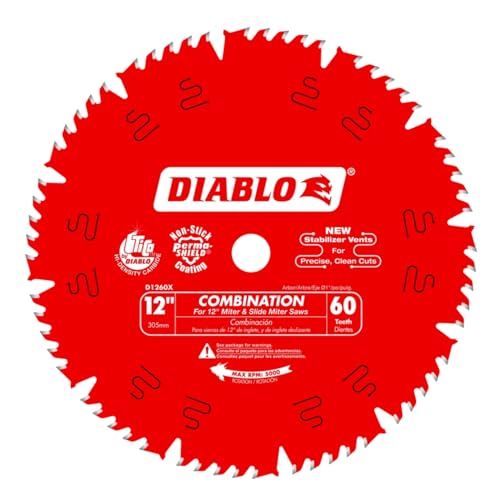
The Diablo D1260X is a versatile 12-inch blade designed for both ripping and crosscutting. With 60 teeth and a 1-inch arbor, it’s built to handle a wide range of wood types. The TiCo hi-density carbide teeth offer improved wear resistance, while the Perma-Shield non-stick coating reduces heat buildup, resin, and pitch buildup during heavy cuts. The laser-cut, ultra-thin kerf minimizes material removal and reduces torque, aiding smoother cuts and less tool strain.
Recommended use includes framing, shelving, and general-purpose woodworking where both speed and finish quality matter. The blade’s balance of tooth count and kerf supports efficient crosscuts without sacrificing edge quality. For best results, feed stock steadily and keep blades sharp to maintain the high performance promised by Diablo’s engineering.
Users should note that 12-inch blades require compatible machines with a larger cutting capacity. Alignment and consistent clamping of workpieces help maximize the blade’s efficiency. The D1260X is a practical option for hobbyists and professionals seeking a robust all-around blade with durable coatings and reliable finish quality.
Diablo D1280X 12-Inch Fine Finish Blade
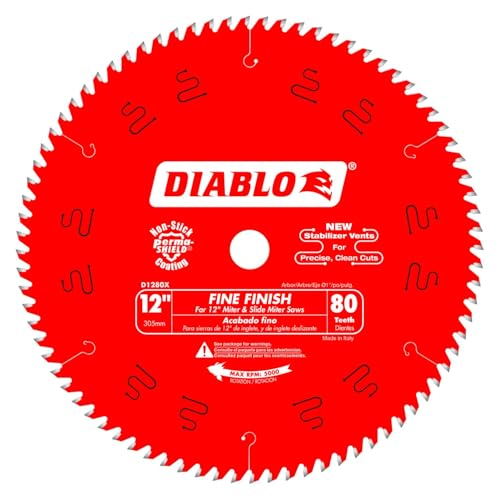
The Diablo D1280X combines 80 fine-finish teeth with a high-performance TiCo carbide design. This blade emphasizes precision and quality finish for both miter and table saw applications. The Perma-Shield non-stick coating helps reduce gum buildup and heat generation, contributing to longer blade life and fewer resharpening cycles. The laser-cut kerf is ultra-thin, ensuring minimal material removal while delivering clean, smooth cuts across softwoods, hardwoods, and veneers.
Best used on cabinet-grade stock, finish panels, and decorative molding, the D1280X aims for a crisp surface with minimal sanding. The blade’s geometry supports accurate crosscuts and miters with predictable results, making it a dependable choice for finish carpentry and millwork projects where attention to edge quality is paramount.
As with all 12-inch blades, ensure your saw’s arbor and rotation match the blade’s specifications, secure the workpiece, and monitor blade alignment for consistent results.
WEN BL1040 10-Inch 40-Tooth Finish Blade
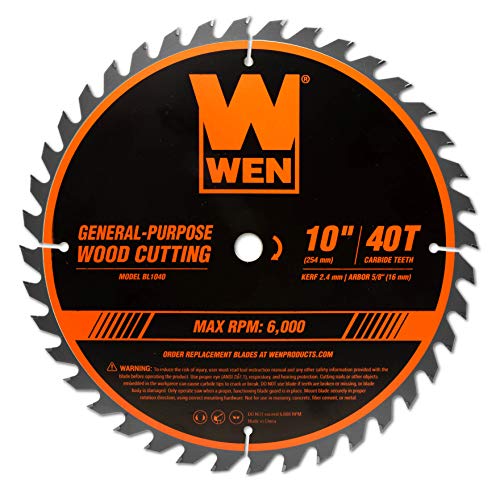
The WEN BL1040 offers a 10-inch blade with 40 teeth optimized for efficient, clean crosscuts on both hard and softwoods. The 5/8-inch arbor and a spindle speed rating up to 6,000 RPM align with common miter and table saw configurations. The blade’s wide-tooth pattern supports smoother finishes on finished boards and panels, while its carbide-tipped construction provides durability for repeated cuts in shop use.
Applications include cabinet making, shelving, and interior trim where fine finish is preferred without excessive tear-out. Its kerf is tuned to balance material removal with edge quality, helping to minimize subsequent sanding. This blade is a practical choice for shops focusing on finish work, especially when paired with well-supported stock and precise clamping.
Care tips include keeping the blade clean, avoiding overheating with steady feed pressure, and regularly inspecting the teeth for wear. The WEN BL1040 provides a cost-effective option for finishing tasks that require reliable, clean cuts without the highest tooth count.
DEWALT 12-Inch 100-Tooth Fine Finish Blade

The DEWALT DWA112100 is a 12-inch, 100-tooth blade designed for ultra-fine finishes. Its high tooth count yields exceptionally smooth surfaces ideal for cabinetry, plywood panels, and finish-grade boards. The blade uses ultra-sharp carbide and a carefully engineered tooth geometry to maximize finish quality while maintaining reasonable cut speed. The body slot design minimizes vibration, contributing to improved accuracy over extended saw runs.
When precision matters more than aggressive stock removal, the DWA112100 excels in tasks like door skins, veneer sheets, and fine millwork. The blade’s coating and tooth shape work together to reduce heat and gum buildup, preserving edge quality and blade life. For best results, operate at recommended speeds and secure the workpiece with dust-free, stable support to prevent chatter during cuts.
As with other fine-finish blades, matching the blade to your stock type—hardwood, plywood, or softwood—will optimize outcomes. The DEWALT blade provides a reliable, professional finish for critical joinery where a pristine edge is essential.
Buying Guide: Key Considerations For Miter Saw Blades
- Tooth count and finish needs: Higher tooth counts (60–100) yield smoother finishes but may cut slower. For finish work and veneered panels, prefer 80–100 teeth. For rough framing, a lower tooth count (40–60) can be advantageous.
- Kerf width: Thinner kerfs remove less material, reduce waste, and require less power, but can be less forgiving on dull blades. Ultra-thin kerfs are ideal for fine finish work and clean crosscuts.
- Material compatibility: Carbide-tipped blades perform well on hardwoods, softwoods, plywood, and composites. For non-wood materials like aluminum or plastic, select blades designed for those substrates (or those with non-stick coatings and alternate tooth geometry).
- Coatings and coatings life: Perma-Shield and similar coatings minimize heat, gumming, and corrosion, extending blade life in dense stock or high-speed cuts.
- Arbor size and compatibility: Most 10-inch blades use a 5/8-inch arbor, but confirm your saw’s arbor before purchasing. Larger blades (12 inches) require compatible saws with sufficient cutting capacity.
- Vibration and finishing quality: Blade design, coating, and tooth geometry influence vibration. Blades with optimized body slot designs and balanced teeth help achieve smoother finishes and reduce saw noise.
- Maintenance: Regularly clean teeth and remove built-up resin. Sharpening or replacing blades when teeth become dull preserves cut quality and safety.
- Stock selection: For finish work, pair blades with stable, firmly clamped stock. Avoid cutting warped or poorly supported material that can lead to tear-out or chipping.
In summary, selecting the right miter saw blade depends on your primary task—finish work, crosscutting, or general-purpose cutting. For ultra-smooth finishes, blades with 80–100 teeth and a fine kerf are preferred. For fast, rough cuts, blades with fewer teeth and a robust carbide design perform better. Consider your saw’s compatibility, the stock you work with, and the desired edge quality when choosing a blade.