Best Benchtop Belt Sander: Top Picks for 2025
Choosing the right benchtop belt sander involves balancing power, versatility, and stability. The five models below cover a range of needs—from compact, budget-friendly machines to heavier, direct-drive units designed for metals and woods alike. The selection emphasizes belt and disc combinations, solid bases to minimize vibration, and features that help with precision and dust management. Use this guide to compare cores specs and decide which sander best fits a small shop or hobbyist workspace.
Summary Table of Chosen Models (at a glance)
| Product | Brand | Type | Notable Features |
|---|---|---|---|
| WEN 6502T Belt And Disc Sander | WEN | Belt+Disc | 4×36 belt, 6×6 disc; belt tilts 0–90 degrees; cast iron base to reduce vibrations |
| WEN 6515T Belt And Disc Sander | WEN | Belt+Disc | 1×30 belt, 5 disc; 2.3A motor; up to 3160 FPM belt and 3450 RPM disc; sturdy base |
| BUCKTOOL Pro 1HP BD4801-M | Bucktool | Belt+Disc | 1HP direct-drive motor; 4×36 belt and 8″ disc; adjustable belt tension; dust port |
| BUCKTOOL Direct Drive 4×36 Belt Sander | Bucktool | Belt+Disc | Direct-drive 3/4HP motor; 4×36 belt; 8″ disc; tilt 0–90 degrees; cast aluminum table |
| SKIL BB9504-00 | Skil | Belt+Disc | Two-in-one sanding station; miter gauge; belt angle adjustment 0–90 degrees |
WEN 6502T Belt And Disc Sander
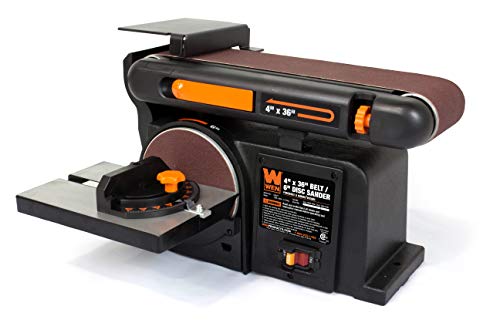
The WEN 6502T combines a 4-by-36 inch belt with a 6-by-6 inch disc in a single compact unit, offering a two-in-one sanding solution for small shops. The belt tilts from 0 to 90 degrees, enabling bevel sanding and flush work on angled stock. The sturdy cast iron base helps dampen heavy vibrations, which is important for maintaining control during long sessions. This model emphasizes versatility and stability, making it suitable for hobbyist woodworkers tackling trim, furniture components, and hobby metal pieces that require fine edge finishing.
In practice, the dual sanding surfaces allow quick transitions between material removal and precise finishing without moving parts to a separate machine. The belt’s 0–90 degree tilt broadens the range of projects, from squaring end grains to beveling edges. The 6×6 inch disc adds control for curved profiles and circular stock, making it a practical choice for shop tasks that demand both materials in one station. The combination of belt speed, disc RPM, and a robust base helps maintain consistent results across multiple passes.
WEN 6515T Belt And Disc Sander
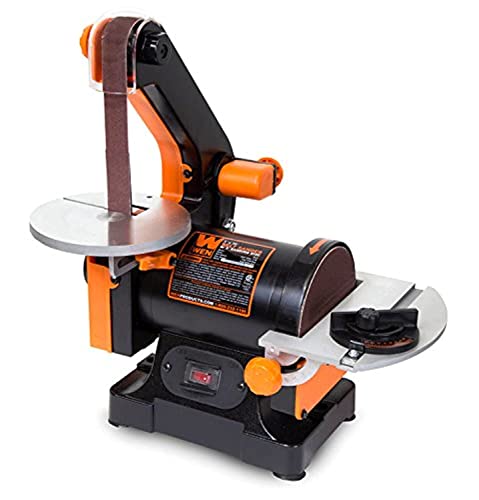
The WEN 6515T offers a compact two-in-one design with a 1-by-30 inch belt and a 5 inch sanding disc. The motor delivers up to 2.3A, capable of reaching belt speeds up to 3160 feet per minute and disc speeds up to 3450 RPM. A key benefit is the sturdy heavy-duty base that minimizes walking and wobbling during operation, which helps preserve accuracy during detail sanding and edge work. This model suits smaller projects or spaces where a larger floor-standing sander would be impractical, yet users still need both belt and disc capabilities for shaping and finishing.
Users can take advantage of the belt’s speed to aggressively reduce stock, followed by the disc for finer finishes. The combination reduces tool switching and helps keep workpieces square as edges and faces meet. The design emphasizes stability and control, making it a reliable option for hobbyists and light-duty professional projects where space is a constraint but precision remains essential.
BUCKTOOL Pro 1HP BD4801-M

The Bucktool BD4801-M is a robust 1HP direct-drive bench sander featuring a 4×36 inch belt and an 8 inch disc. The direct-drive motor delivers steady, high torque with improved efficiency, noted as approximately 25% more efficient than traditional belt-drive designs. The top-mounted switch box enhances usability, while adjustable belt tension and a sturdy cast aluminum base with rubber feet help minimize vibrations and shift during long sessions. A dust port supports cleaner workspaces, and included knife grinding accessories provide versatility when sharpening edged tools and blades.
This model positions itself as a higher-performance option for metalworking and woodworking alike, enabling aggressive stock removal on metal parts and controlled shaping on wood. The combination of direct-drive power, an ample disc, and a stable base makes it suitable for shop environments where users push the sander to the limit without sacrificing control or safety during operation.
BUCKTOOL Direct Drive 4×36 Belt Sander

The Bucktool Direct Drive model provides a straightforward 4×36 inch belt and an 8 inch disc with a 3/4HP motor. The belt paper is described as 80-grit and the belt can be oriented horizontally or vertically, which broadens its application across a range of projects. A tilting cast aluminum worktable accommodates bevel cuts and angled stock, with the table’s tilt range listed at 0–45 degrees. The design emphasizes stability and convenience, with a focus on efficient material removal and finishing for woodworking tasks, along with a chambered dust port to manage debris during use.
This sander targets users who want a reliable balance of power and versatility in a compact footprint. The direct-drive setup provides consistent torque for longer sessions, while the adjustable tilt and sturdy base support more complex finishes and profiles without requiring a larger machine.
SKIL BB9504-00
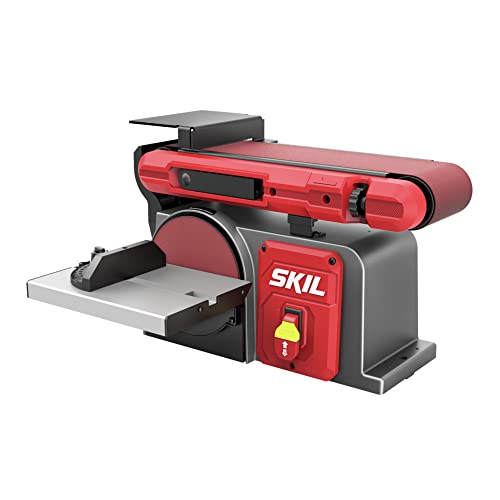
The SKIL BB9504-00 is a two-in-one sanding station with a belt and disc configuration and added features such as a miter gauge for guiding crosscuts. It includes belt angle adjustment from 0 to 90 degrees, enabling precise sanding at various bevels and stock orientations. The combination of belt and disc improves workflow efficiency by reducing the need to switch machines during different phases of a project. This model is well-suited for projects that require both structural removal and fine finishing on flat, angled, and contoured surfaces, making it a solid choice for workshop versatility.
As with other two-in-one units, the SKIL selection emphasizes flexibility, with the ability to handle edge work, bevels, and flat areas in a single station. The included gauge and adjustable angles help maintain accuracy when working with multiple pieces, and the built-in design supports a stable platform for extended sanding sessions. This makes it a practical option for hobbyists who need a capable, space-conscious sander that can manage a variety of tasks.
Buying Guide
Key Purchase Considerations
- Workpiece type: Wood-focused projects benefit from a reliable belt speed and tilting table, while light metal shaping benefits from a more powerful, direct-drive motor and robust dust control.
- Motor power and speed: Higher horsepower and belt speed improve stock removal, but require sturdier bases to control vibration. For casual use, 3/4HP to 1HP motors are common; professional tasks may demand more.
- Bed and base stability: Cast iron bases dampen vibration better than cast aluminum or plastic. A heavy base with adjustable feet reduces walking and wobble on uneven floors.
- Belt vs. disc balance: Models with both belt and disc offer versatility for shaping, smoothing edges, and finishing surfaces. Consider whether you’ll rely more on belts or discs for your typical tasks.
- Tilting range: A 0–90 degree tilt enables bevel work and angled edge sanding, expanding the range of projects you can tackle in a single station.
- Dust management: A dust port or integrated collection system helps maintain a clean workspace and prolongs belt life by reducing material buildup on surfaces.
- Maintenance and replacements: Availability of replacement belts and discs, and ease of changing accessories, influence long-term usage and downtime.
Woodworking vs Metalworking Considerations
For woodworking, focus on belt efficiency, table stability, and the ability to shape edges smoothly. A 4×36 inch belt with a stable 8 inch disc is a common sweet spot for hobby shops. For metals or mixed use, prioritize higher torque, direct-drive configurations, and a robust dust port that can connect to a shop vacuum. In metalwork, the capability to maintain consistent speeds under load is important, especially with aluminum or steel stock.
Practical Setup Tips
- Mount the sander on a solid workbench or pedestal to reduce vibration transfer.
- Keep belts and discs clean and free of chips; a light brush-down after use prevents wear.
- When changing belts, align tracks carefully to avoid skewing the edge of workpieces.
- Use a miter gauge where applicable to ensure consistent bevels and crosscuts with the belt.
Comparative Snapshot
- Best for space-limited workshops: WEN 6515T and SKIL BB9504-00 offer compact two-in-one solutions with tilting capabilities.
- Best for power users and metalworking: BUCKTOOL BD4801-M and BUCKTOOL Direct Drive Sander provide direct-drive motors and larger discs for robust stock removal.
- Best overall stability: Models with cast iron bases tend to dampen vibrations better, improving finish consistency on longer runs.