Best Belt Sander for Grinders: Top Picks and Buying Guide
Finding the right belt sander that complements a grinder setup can boost metalworking and woodworking projects alike. This article highlights five reliable belt sander options that pair well with grinders, offering versatile speed, power, and tilting features to handle shaping, deburring, and finishing tasks. Each option incorporates practical design elements for stability, efficiency, and precise control.
Summary of selected products
| Product | Brand | Key Benefit | Best For |
|---|---|---|---|
| WEN Benchtop Belt and Disc Sander | WEN | Two-in-one belt and disc, cast iron base | General purpose sanding and shaping |
| Bucktool Combo 2″ x 42″ Belt Sander & 6″ Bench Grinder | Bucktool | Multi-function with tilting belt | Knife making, metal and wood finishing |
| VEVOR Belt Grinder Sander 72″ x 2″ | VEVOR | High power with VFD and variable speed | Heavy metal grinding and knife making |
| Bucktool Low Speed Bench Belt Grinder Combo | Bucktool | Low-speed precision for sharpening | Knife making and detailed sharpening |
| Bucktool 2.3A Belt Sander 1×30″ | Bucktool | Low-speed, stable belt tracking | Knife making and metalworking |
WEN Benchtop Belt and Disc Sander (6502T)
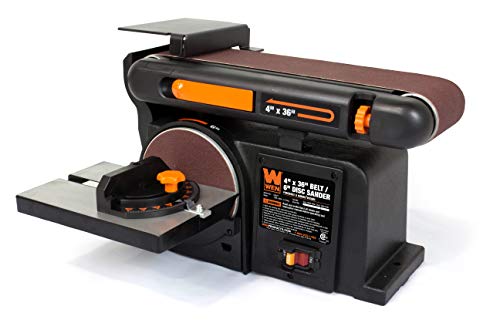
The WEN 6502T combines a 4-by-36 inch belt with a 6-by-6 inch disc, offering two sanding options in one unit. The belt tilts from 0 to 90 degrees, enabling precise angled work, while the sturdy cast iron base helps dampen vibrations during heavy tasks. This makes it a versatile addition to grinders for deburring, shaping, and finishing metal or wood pieces with stable operation.
Bucktool Combo 2″ x 42″ Belt Sander & 6″ Bench Grinder (BG2600)
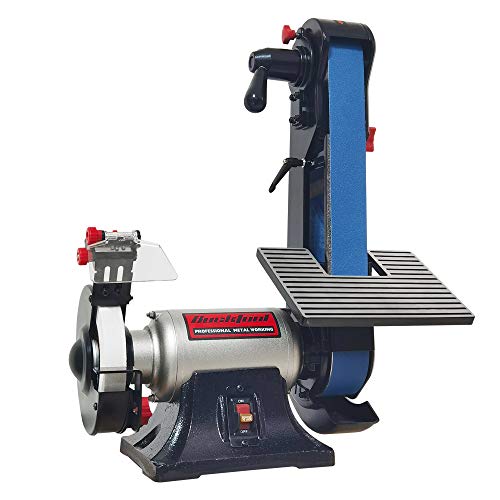
The Bucktool BG2600 combo is designed for efficiency with a 2″ x 42″ belt and a 6″ bench grinder. It features a robust induction motor and a belt capable of tilting up to 90 degrees, enabling flexible sanding angles for metal, wood, and plastics. The setup supports multi-angle work and can handle long pieces by swiveling the belt housing for horizontal-to-vertical positioning, making it a solid choice for knife making and finishing tasks when paired with a grinder.
VEVOR Belt Grinder Sander (72 x 2-Inch)

The VEVOR 72 x 2-Inch belt grinder is built for serious metalwork, featuring a 1500W motor and a VFD for stepless speed control. A 2-inch by 72-inch belt provides extended reach for long workpieces, while the machine’s robust construction supports knife making, metal finishing, and deburring tasks. The included belts offer varied grit options, enabling both heavy material removal and fine finishing when paired with a compatible grinder setup.
Bucktool Low Speed Bench Belt Grinder Combo

This Bucktool combo emphasizes low-speed control with a 1/3 HP, 2.1A motor running at 1790 RPM. It’s designed for precise sharpening, knife making, woodworking, and metalworking. The direct-drive motor helps maximize sanding efficiency, while the quick belt change and belt tracking features simplify setup and operation for detailed shaping tasks that require steady, controlled power.
Bucktool 2.3A Belt Sander (1×30″)
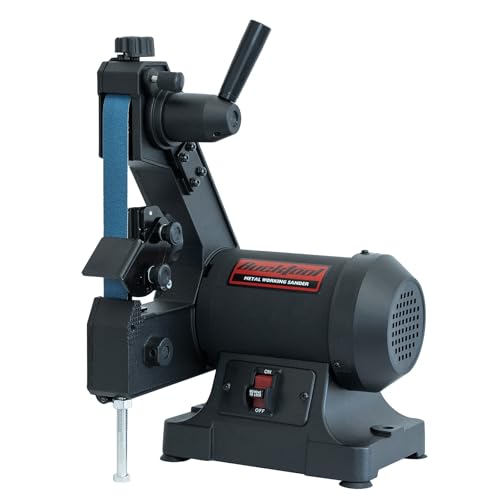
The Bucktool 2.3A belt sander is a compact, low-speed unit designed for knife making and metalworking. It features a 1×30 inch belt and a 2.3A motor suitable for precise sharpening and controlled material removal. Quick belt changes and reliable belt tracking help maintain consistent performance, especially when used in conjunction with grinders for finishing work on metal projects.
Buying Guide: Key Considerations For Belt Sanders And Grinders
- Belt size and configuration: Longer belts handle large workpieces; 2″ x 42″ or 2″ x 72″ belts offer versatile options for metal and knife making, while 1″ x 30″ belts suit compact benches.
- Motor power and speed: Higher wattage and RPM boost material removal, but low-speed belts reduce heat buildup and are preferable for knife making and fine finishing. Look for machines with adjustable speed or variable frequency drives (VFD).
- Tilting and orientation: A belt that tilts 0–90 degrees and allows horizontal-to-vertical orientation supports diverse tasks, from contouring to long piece sanding.
- Stability and vibration control: Cast iron bases and solid frames minimize movement during heavy sanding, improving precision when used with a grinder.
- Dust management: Integrated dust ports or compatible dust collection systems help keep the work area clean and extend belt life.
- Ease of belt changes and tracking: Quick-release mechanisms or simple tracking adjustments save time during multi-step projects, especially when switching grits.
- Compatibility with grinders: When attaching or pairing with a grinder, ensure compatible mounting and alignment to avoid misfeeds or wobble that can affect safety and results.
- Safety features: Overload protection, guards, and proper workholding options reduce risk while working near rotating belts and grinding wheels.
In practice, the best belt sander for a grinder combines power, flexibility, and stability. For metal-focused work, prefer models with longer belts and a strong motor, plus adjustable speed. For knife making and fine finishing, prioritize low to mid speeds, precise tracking, and tilting capabilities. A benchtop unit with a solid base can help mitigate vibration when used alongside a grinder, delivering better control and cleaner finishes across materials.