Best Belt Sander for Deck: Top Picks for Smoothing Outdoor Wood
Picking the right belt sander for deck work can speed up prep, remove old finishes, and deliver a smooth, ready-to-stain surface. The following five models balance power, dust control, and maneuverability for outdoor boards and planks. This guide highlights each tool’s strengths and what to consider when choosing the right sander for your deck project.
| Product | Brand | Belt Size | Key Features |
|---|---|---|---|
| SKIL 6 Amp 3″x18″ Belt Sander | Skil | 3″ x 18″ | Pressure control, fast material removal, dust filtration |
| Makita 9403 4″ x 24″ Belt Sander | Makita | 4″ x 24″ | Low noise, high removal rate, dust sealing labyrinth |
| BLACK+DECKER 7-Amp Belt Sander | BLACK+DECKER | 3″ x 21″ | Angled belt for edges, adjustable handle, dust bag |
| WEN 6321 7-Amp Belt Sander | WEN | 3″ x 21″ | Detachable dust bag, lightweight, quick belt release |
| DEWALT 20V MAX Belt Sander | DEWALT | 3″ x 18″ | Cordless, brushless motor, efficient dust collection |
Each model below is chosen for deck work—durability, dust management, and the ability to reach between boards and along edges. Read through the sections to compare capabilities and determine which sander best fits your deck renovation plan.
Skil 6 Amp 3×18 Belt Sander With Pressure Control

The Skil 7510-01 combines a 6.0-amp motor with pressure control that warns when excessive pressure is applied, helping protect the deck surface. Its 3″ x 18″ belt size is well-suited for flatter deck boards and edges. Micro-filtration helps reduce dust while sanding, keeping the workspace cleaner. This model emphasizes control and efficient material removal, making it suitable for mid-sized deck prep tasks.
Makita 9403 4×24 Belt Sander

The Makita 9403 model balances power and comfort, featuring a 4″ x 24″ belt and a relatively low 84 dB operating level for smoother workouts. Protective labyrinth construction helps keep dust and debris away from the motor and bearings, extending tool life. It’s a strong choice for decks with larger surface areas and requires steady handling to maintain consistent flatness across boards.
BLACK+DECKER Belt Sander With Dust Bag

The BLACK+DECKER DS321 provides a 7-amp motor and a 3″ x 21″ belt, designed to approach corners and edges more closely. The 3-position handle allows comfortable use in different user orientations, reducing fatigue during longer deck preparation sessions. A dust bag helps manage debris, though some users may opt for a vacuum-assisted setup for dust control on larger jobs.
WEN 6321 7-Amp Belt Sander
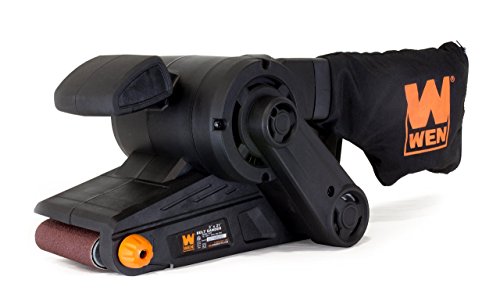
The WEN 6321 operates with a 7-amp motor and a belt speed over 13 feet per second, balancing power and control. It weighs about six pounds to reduce user fatigue during deck resurfacing. A detachable dust bag minimizes cleanup, while the compact design helps access tight spaces between deck boards and around posts or railings.
DEWALT 20V MAX Belt Sander (Tool Only)

DEWALT’s 20V MAX belt sander is cordless and brushless, designed for high efficiency and mobile use on a deck. The tool can tackle larger sanding sessions without a power cord, and the kit typically offers compatibility with an upgraded dust collection system. Its 3″ x 18″ belt size suits deck boards, enabling thorough edge work and mid-surface refinishing, though it may require battery management on big jobs.
Buying Guide
Key considerations for choosing a belt sander for decks include belt size, power, and control. A wider belt (4″ x 24″) can remove material faster on large, flat surfaces, while a narrower belt (3″ x 21″ or 3″ x 18″) helps reach edges and between boards. Look for dust control features such as dust bags, vac-ready ports, and sealed motors to extend tool life in dusty outdoor environments. Weight matters for lengthy sessions, so a lighter model reduces fatigue without sacrificing performance. If you prefer mobility, cordless brushless models offer freedom but require battery planning and runtime consideration. For edges and corners, models with angled belts or adjustable handles improve maneuverability. Compare models on noise level, ease of belt change, and overall durability to match your deck’s material type and thickness.
Other practical considerations include stability on uneven surfaces, the availability of compatible sanding belts, and the ability to convert a belt sander into a bench or stationary setup if needed. When possible, choose a model with a reputable dust collection solution and a proven track record of long tool life in outdoor environments. Finally, assess whether you need extra features like pressure sensors, vibration reduction, or integrated vacuum adapters for cleaner work sites.