Best Belt Attachment Options for Bench Grinders: 2×36 and 2×48 Attachments Reviewed
Finding the right belt attachment for a bench grinder can expand your shop’s capabilities—from precision sanding to shaping and deburring. This guide highlights five popular belt grinder attachments designed for 5/8″ shafts and common bench grinders, focusing on versatility, compatibility, and adjustability. Each product converts a standard bench grinder into a multi-surface sander and grinder, with belt and disc configurations to cover rough material removal and fine finishing tasks. The list below includes succinct specs and what buyers typically seek: power compatibility, belt size, disc options, and ease of adjustment.
| Product | Brand | Key Feature |
|---|---|---|
| KFMK 2×36″ Belt Sander Attachment | KFMK | 2×36 belt, 7″ disc, adjustable angles |
| KFMK 2×48″ Belt Grinder Attachment | KFMK | 2×48 belt, 7″ disc, flexible mounting |
| Original Multitool 2×36″ Belt Grinder Attachment | MULTITOOL GRINDERS | 2×36 belt, 7″ disc, horizontal/vertical mounting |
| Multitool MT362-Deluxe (2×36″ Belt Tool) | MULTITOOL GRINDERS | 2×36 belt, miter table, versatile mounting |
| Eastwood Versa-Grind 2×36 Belt Grinder Attachment | Eastwood | Versatile belt/disc, tool-less adjustments |
KFMK 2×36 Inch Belt Sander Attachment for Bench Grinder
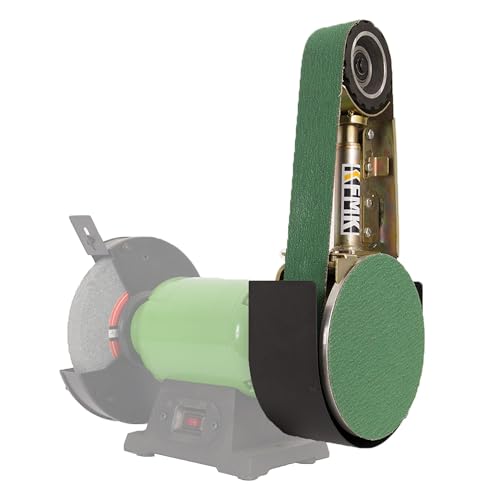
The KFMK 2×36 belt sander attachment adds a compact sanding surface to compatible bench grinders with a 5/8-inch arbor. It combines a 2×36-inch belt with a 7-inch disc, enabling both belt sanding and disc finishing in one tool. The setup is designed for users who want a straightforward, versatile conversion without major modifications. For optimal results, ensure your grinder has at least 1/2 HP and a 5/8″ arbor. Adjusting belt angles is simple—loosen three nuts and position the belt to suit your task, whether you’re deburring small parts or shaping curves.
Pros: flexible belt and disc configuration, straightforward angle adjustments, compact footprint for small shops. Cons: may require a stronger motor for tougher tasks; attachment alignment can depend on the base grinder’s design. This model is suitable for hobbyists and light to medium-duty work, offering a solid balance of versatility and ease of use.
KFMK 2×48 Inch Belt Grinder Attachment for Bench Grinders

This KFMK attachment expands to a 2×48-inch belt along with a 7-inch disc for bench grinders with a 5/8″ arbor. It’s designed to satisfy a broader range of sanding tasks—from aggressive material removal to finer detailing. The unit emphasizes adjustable belt tracking and position, using three loosened nuts to tailor the belt angle for different projects. Most users pair this with a grinder rated at least 1 HP for stable performance and consistent belt speed. This attachment suits metalworking and woodworking tasks where longer belt lengths improve material removal efficiency and surface finish quality.
Advantages include a larger belt surface for faster stock removal on flat or contoured pieces and reliable disc finishing. Potential drawbacks involve the need for adequate motor power to drive the longer belt at stable RPM, and ensuring the base grinder can physically accommodate the larger assembly. Overall, the 2×48 option is ideal for users who regularly work on bigger pieces or need extended belt life between changes.
Original Multitool 2×36 Belt Grinder Attachment

The Multitool 2×36 belt attachment provides a straightforward option for adding belt sanding to a bench grinder. It supports 1/2″ or 5/8″ shafts and offers a belt surface plus a 7″ disc, with mounting flexibility to horizontal, vertical, or intermediate orientations. This design emphasizes compatibility with a wide range of bench grinders and simple installation. It is a good choice for shops seeking compatibility and ease of use, especially when users frequently reconfigure their machines for different tasks.
Key strengths include wide shaft compatibility and multi-surface capability. A potential limitation is that belt length at 2×36″ may be less efficient for large-scale stock removal compared with longer belts. The unit remains appealing for users prioritizing universal fit and convenient mounting options in compact shop setups.
Multitool MT362-Deluxe (2×36″ Belt Tool) with Miter Table
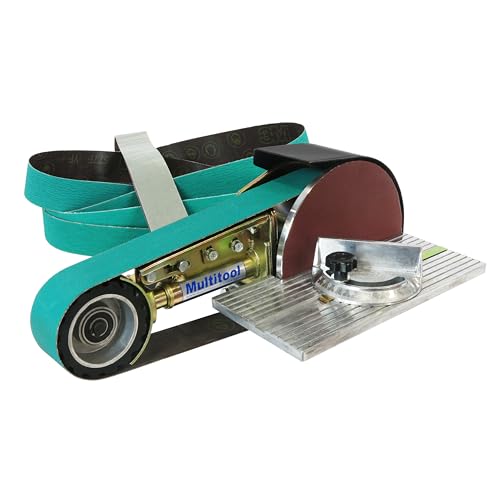
The MT362-Deluxe provides a 2×36″ belt with a 7″ disc, plus a built-in miter table for angle sanding and miters. It’s designed for bench grinders with a 1/2″ or 5/8″ shaft. The Deluxe kit emphasizes mount versatility—horizontal, vertical, or intermediate placement—allowing for precise control over work angles. The included miter table expands capabilities for bevels and angled corners, making it useful for metalworking and woodworking applications that require controlled edge finishing.
Considerations: this model’s strength lies in its integrated mitering capability and flexible mounting; however, some users may prefer a dedicated stand-alone disc sander for very large parts. For those needing precise edge work and consistent belt tracking, MT362-Deluxe offers a compelling all-in-one approach.
Multitool MT362-Kit 2×36 Belt Grinder Attachment

The MT362-Kit combines the 2×36 belt with a 7″ disc, designed for bench grinders with 1/2″ or 5/8″ shafts and bolt-on wheel guards. The kit-style configuration often includes extra components or accessories for expanded functionality, and it supports horizontal or vertical mounting flexibility. It’s a practical option for shop owners who want a full-feature kit with mounting versatility and reliable belt tracking. As with similar attachments, users should verify motor power (preferably at least 1 HP) to maintain belt speed and performance under load.
Eastwood Versa-Grind 2×36 Belt Grinder Attachment

Eastwood’s Versa-Grind attachment is designed to turn a standard bench grinder into a flexible belt and disc sander, featuring tool-less swivel adjustment and belt tracking control. The setup supports quick belt changes and tensioning, a must for users who switch between belts and discs often. The attachment targets grinders around 1 HP and up to 3600 RPM, aiming for consistent performance across different materials. A notable benefit is the inside-radius grinding capability via a front rubber tread contact wheel and a 7″ disc with an adjustable table.
Limitations may include the need for precise base grinder alignment and sufficient horsepower to prevent belt slip under heavy loads. The Versa-Grind is well-suited for users seeking fast setup, versatile grinding options, and minimal downtime between belt changes.
Buying Guide: How To Choose The Right Belt Attachment
Key factors to consider when selecting a belt attachment for a bench grinder include shaft size, horsepower, and mounting compatibility. Most attachments in this category require a 1/2″ or 5/8″ arbor and a motor of at least 1/2 HP, with higher power recommended for larger belts (2×48″) and aggressive stock removal. Belt length affects throughput; longer belts cover more area but may demand sturdier mounting and higher RPM stability.
Other considerations:
- Versatility: Look for attachments that offer both belt and disc sanding and, if needed, an integrated miter table or adjustable arm for bevels and complex shapes.
- Adjustment and tracking: Tool-less adjustment and secure belt tracking features save setup time and reduce belt wear.
- Size and footprint: Ensure the attachment fits your workspace and your grinder’s footprint, especially for 2×48″ belts which require more clearance.
- Compatibility: Verify the attachment’s stated arbor size and compatibility with your grinder’s brand and model. Some units work best on popular brands with standard bolt-on guards.
- Maintenance and replacement parts: Availability of replacement belts and discs, plus simple maintenance, can impact long-term usability.
From a performance perspective, users weighing 2×36″ vs 2×48″ belts should consider typical tasks. 2×36″ belts are excellent for small to mid-sized parts and detailed work, offering quick setup and versatility. 2×48″ belts move more material per pass, ideal for larger pieces and faster stock removal, but may require a more powerful grinder and sturdier mounting. For hobbyist workshops, a 2×36″ setup like the KFMK or Multitool attachments often provides the best balance of cost, flexibility, and space.
For professional settings, evaluating the availability of a miter table (as seen in the MT362-Deluxe) and the ease of belt changes can influence productivity. Angle-adjustable and tool-less belt tracking designs minimize downtime and maximize uptime for continuous workflow. Finally, check whether the attachment supports horizontal and vertical mounting to suit both grinding and shaping tasks across projects.