Best Band Saw Blades for Stainless Steel: Durable M42 and Bi-Metal Options
When cutting stainless steel, choosing the right band saw blade can dramatically improve accuracy, edge quality, and blade life. This guide highlights five highly capable blades designed for stainless steel and other ferrous metals, with an emphasis on bi-metal M42 options and variable-to-fixed tooth configurations. Each pick offers durable construction, appropriate tooth geometry, and compatibility with standard metal-cutting band saws. Use the summary table below to compare key specs at a glance.
| Product | Length | Width | Thickness | TPI/Teeth | Material |
|---|---|---|---|---|---|
| Imachinist S6412121418SS | 64-1/2″ | 1/2″ | 0.025″ | 14/18 TPI (variable) | Bi-metal M42 |
| Imachinist S64121214SS | 64-1/2″ | 1/2″ | 0.025″ | 14TPI | Bi-metal M42 |
| Imachinist S93341014SS | 93″ | 3/4″ | 0.035″ | 10/14 TPI (variable) | Bi-metal |
| Imachinist S801214SS | 80″ | 1/2″ | 0.025″ | 14TPI | Bi-metal |
| Milwaukee 48-39-0631 | 30-9/16″ | 1/2″ | 0.02″ | 12/14 TPI (extreme) | Bi-metal |
Imachinist S6412121418SS Bi-Metal Blade

The Imachinist S6412121418SS is a bi-metal M42 blade designed for stainless steel and other ferrous metals. Its 64-1/2″ length and 1/2″ width provide strength for demanding cuts, while the 0.025″ thickness balances rigidity and flexibility. The teeth profile blends 14/18 TPI for stainless work, allowing smoother finishes on hard metals while maintaining efficient material removal. This blade’s variable tooth arrangement supports clean cuts across varying thicknesses, making it suitable for stainless steel tubes, bars, and plate. It’s recommended for stainless steel applications with hardness under 30 HRC and is not advised for non-ferrous metals. The blade is engineered to resist impact and heat buildup, helping extend blade life in repeated cuts through stainless stock.
Imachinist S64121214SS 64-1/2″ Bi-Metal Blade
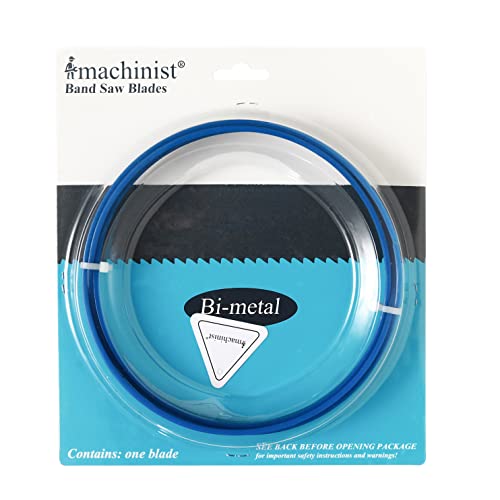
This 64-1/2″ Imachinist blade features a bi-metal M42 construction with a 0.025″ thickness and 1/2″ width, specifically oriented for stainless steel cuts. The 14TPI fixed tooth profile supports consistent travel through stainless stock and provides predictable chip formation for pipe and tube work. While designed for stainless steel and ferrous metals, it is not recommended for non-ferrous materials. The blade geometry prioritizes rigidity and heat resistance to maintain straight cuts on demanding profiles, including thick-walled sections. Use on machines compatible with a 64-1/2″ blade length and 1/2″ width to maximize performance in stainless steel projects.
ONIGUARD Extreme Thick Metal Blade Set

The ONIGUARD Extreme Thick Metal Blade set targets thick stainless sections and other ferrous metals. With a 35-3/8″ length and 1/2″ width, it uses 8/10 TPI teeth for robust, aggressive cuts on tough materials. The bi-metal blade construction offers durability and heat resistance for prolonged use, and the 0.02″ thickness supports faster cutting in thicker stock. These blades are designed for portable band saws and are marketed as compatible with various makes and models. The 3-pack provides versatility for ongoing fabrication tasks that involve stainless steel and heavy metal sections.
Imachinist S93341014SS M42 Bi-Metal Blade

The Imachinist S93341014SS is a long 93″ bi-metal blade with a 3/4″ width and 0.035″ thickness, optimized for stainless steel cuts. The 10/14 TPI combination is a variable teeth configuration that handles stainless grades such as 304, 310, 410, 316L, and 420. Its extended length suits tall stock and longer cuts, while the wide blade maintains stability in heavy-duty operations. The blade’s variable spacing and tooth geometry aim to balance speed with cut quality, reducing chatter on thick stainless sections. It is intended for ferrous metals and is not recommended for non-ferrous metals.
Imachinist S801214SS Bi-Metal Blade

The S801214SS blade from Imachinist offers an 80″ length, 1/2″ width, and 0.025″ thickness with 14TPI teeth. Built on a bi-metal M42 foundation, this blade targets stainless steel and other ferrous materials. The fixed 14TPI tooth profile is well-suited for cutting thin-walled profiles such as tubes and pipes, delivering steady performance with controlled chip removal. The blade is intended for stainless steel applications with hardness under 30 HRC and for other ferrous metals, not recommended for non-ferrous metals. Its length and rigidity support longer, consistent cuts in demanding workshops.
Milwaukee 48-39-0631 Compact Extreme Thick Metal Blade

The Milwaukee 48-39-0631 is a 30-9/16″ blade designed for compact, thick-metal cutting tasks. It features a 1/2″ width and 0.02″ thickness with 12/14 TPI, optimized for intensified material removal in steel, stainless, and alloy cuts. The blade set promises extended blade life and faster cuts in thin-to-mid-thickness metals, aided by Milwaukee’s known durability standards. It’s compatible with common compact band saws and aims to minimize blade changes during metal fabrication, making it a practical option for workshop use where stainless steel and tougher metals are routinely processed.
Buying Guide: Key Considerations for Stainless Steel Band Saw Blades
When selecting a blade for stainless steel work, evaluate material composition, tooth geometry, and blade dimensions in relation to your equipment and stock. Bi-metal M42 blades typically offer superior life in hard metals thanks to a tough tooth edge and a flexible backing. Variable tooth patterns help balance fast removal with finished edge quality on thicker sections, while fixed patterns can excel in precise, straight cuts on thinner sections. For longer cuts, ensure blade length matches your machine’s throat depth and wheel diameter. Consider the following:
- Stock hardness: Stainless grades vary; harder materials may benefit from thicker blades and aggressive tooth profiles.
- Blade length and width: Longer, wider blades resist deflection and maintain stability on large sections.
- Tooth design: Variable teeth reduce heat buildup and chatter; fixed teeth can improve finish on thinner profiles.
- Compatibility: Confirm your saw’s arbor size, blade width, and drive speed are compatible with the blade’s specifications.
- Cut types: For tubes, bars, and plate, select blades with tooth geometries suited to the stock geometry.
Blade life can be extended by proper feed rate, ample lubrication or coolant where allowed, and avoiding cutting non-ferrous metals that the blade isn’t designed to handle. Different brands offer blades optimized for stainless steel, ferrous metals, and mixed-metal projects. Users should balance cost, blade life, and cutting speed to meet specific fabrication needs.