Best Angle Tool for Trim: Top Picks for Precise Miter Work
Finding the right angle tool for trim work can make DIY projects faster and cleaner. This guide highlights five top-rated options that help you cut, copy, and transfer angles with accuracy. Whether you’re fitting molding, trim, or quarter rounds, these tools cover adjustable angles, protractor precision, and contour duplication to ensure tight joints and professional-looking results.
Summary of chosen products
| Product | Brand | Key Benefit |
|---|---|---|
| GARTOL Miter Shears | GARTOL | Adjustable 45°–135° miter cuts for trim and molding |
| LEXIVON Aluminum Miter Saw Protractor | LEXIVON | Precision scales with smooth internal mechanism for accurate readings |
| BORA MiteriX Angle Duplicator | BORA | Measure, lock, and transfer exact angles to miter saws |
| Contour Gauge 10 Inch (Lambor Studios) | Lambor Studios | Instantly duplicates irregular profiles for perfect fits |
| JOREST Connectable Contour Gauge | Jorest | Expandable sizing with locking and multi-size options |
GARTOL Miter Shears: Adjustable 45°–135° Cutting

GARTOL Miter Shears are engineered for precision cutting on lightweight materials such as PVC, trim, quarter round, and softwood. The tool features a clear, high-contrast miter scale and an adjustable slider that supports 45°–135° cuts, enabling exact joints and clean profiles. It’s designed for DIY and craft projects where accurate angular alignment matters. Important usage notes indicate the tool is not intended for metal, hardwood, or heavy-duty plastics, which helps protect the blades during typical trim work.
Key features include a high-precision engraving scale for accurate angle setting and a versatile cutting range that accommodates molding, trim, weatherstripping, shoe molding, and similar materials. For best results, position the workpiece securely and use gentle, steady strokes to maintain a clean edge. The included guidance helps users place the molding at the desired angle before making a cut, reducing misalignment and waste.
LEXIVON Aluminum Miter Saw Protractor
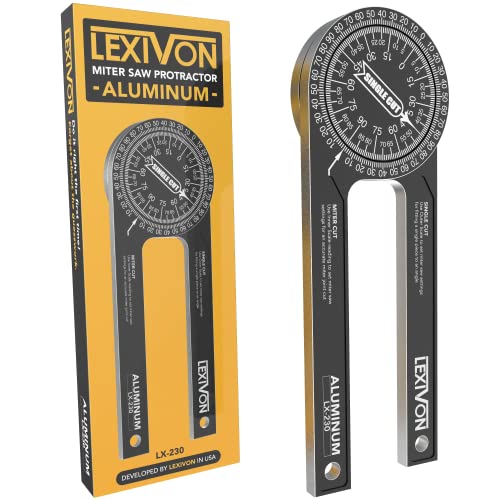
LEXIVON’s 7-inch protractor combines CNC-machined anodized aluminum with precise laser-engraved scales for reliable angle measurement. The internal Teflon O-ring reduces binding, enabling smooth turning and accurate readings on both interior and exterior corners. It’s designed to minimize guesswork by transferring the measured angle directly to the miter saw, helping ensure that cuts reflect the exact geometry of the project. This tool is well-suited for users who value repeatable accuracy across multiple joints and angles.
The design prioritizes durability and clarity: readable scales, smooth operation, and straightforward angle transfer. It’s a practical choice for connecting measurements to a miter saw setup, whether you’re working on crown molding, picture frames, or trim installations around corners. For best results, calibrate against known angles and verify alignment before making cuts.
BORA MiteriX Angle Duplicator

The BORA MiteriX provides a precise angle measurement system designed to transfer exact miter angles to a saw. It simplifies corner profiling by letting users measure, lock, and copy angles directly onto the saw fence. Its ability to handle a wide range of angles from 0 to 180 degrees (with emphasis on 0–90 degrees for miters) makes it ideal for complex corner work in trim, molding, and cabinetry projects. The aluminum arms provide rigidity and repeatable performance during repeated cuts.
Users benefit from a streamlined workflow: measure the target angle on the workpiece, lock the setting, and copy the angle to the saw for accurate repeat cuts. This reduces material waste and ensures consistent joints across multiple pieces, which is particularly valuable for longer run trim installations or framed structures where accuracy is critical.
Contour Gauge 10 Inch: Widen Profile Duplicator
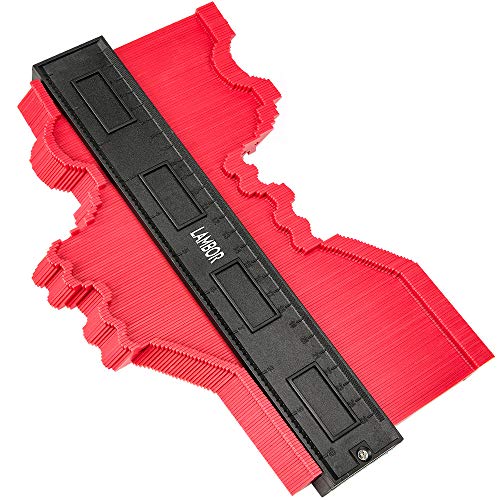
The 10-inch contour gauge from Lambor Studios is designed to duplicate irregular shapes quickly. By pressing the gauge onto a shape, you capture the exact profile and transfer it to the workpiece for precise cutting. It’s made from durable ABS plastic with both inch and centimeter measurements, facilitating quick measurements in various units. This tool shines when molding, tile work, or fitting curved profiles around pipes, frames, or archways.
Its dual-scale design improves readability, and the robust plastic body resists bending under typical workshop use. While not a cutter itself, this gauge dramatically reduces guesswork for trim and molding projects, allowing for fast, repeatable transfers of odd shapes into cut lines. It pairs well with other angle tools to ensure a seamless fit for custom profiles.
JOREST Connectable Contour Gauge

The JOREST contour gauge offers a flexible, connectable design with three size configurations (5, 10, and 15 inches when joined). The gauges feature a double-sided metric scale (inches and centimeters) and a slim blade thickness for precise copying. The locking mechanism ensures the profile remains stable during transfer and cutting. It’s a multi-use tool for tile, flooring, molding, and drywall edge work, especially where contour matching is essential.
Designed with ease of use in mind, the tool accommodates tight spaces and larger shapes by modularly extending the gauge. The included adjustability and locking provide reliability when profiling irregular surfaces, and compatibility with common carpentry tasks makes it a versatile addition to trim-focused toolkits.
Buying Guide: Key Considerations For Angle Tools And Contour Gauges
When selecting angle tools for trim work, consider how you plan to use the device, the materials involved, and the desired accuracy level. Here are essential factors to review:
- Angle range and adjustability: Tools that offer wide ranges (e.g., 45°–135°) reduce the need for multiple devices. A protractor with smooth adjustment helps transfer angles to the saw accurately.
- Measurement clarity: Clear scales with high contrast and laser-engraved markings improve readability. Internal mechanisms should operate smoothly to avoid drift during use.
- Contour duplication capability: Contour gauges are invaluable for irregular shapes. Look for multi-size options and locking features to secure profiles during transfer.
- Material compatibility: Ensure blades and frames are rated for the materials you cut (trim, PVC, softwood, molding) and avoid materials that may dull blades prematurely.
- Durability and build quality: Aluminum and high-strength plastics offer rigidity and longevity for repeated use in a workshop setting.
- Ease of transfer to saws: Some tools are designed to transfer angles directly to miter saw or fence settings, reducing measurement errors.
- Maintenance: Look for replaceable blades or blades included with the tool, and check whether sharpening is practical for longer-term use.
Comparative considerations across five selected products show a balance between direct angle cutters (GARTOL, LEXIVON), angle duplicators (BORA), and contour gauges (Lambor Studios, JOREST). For projects emphasizing fast, repeatable joints, BORA and LEXIVON offer reliable angle transfer and readouts. For irregular shapes or complex mouldings, contour gauges from Lambor Studios and JOREST provide efficient copying capabilities. GARTOL adds versatility with adjustable 45°–135° cutting within a single tool, while cautioning proper material use to avoid damage.
Usage patterns vary: use angle duplicators to set saw fences or marks, contour gauges to trace profiles before cutting, and dedicated miter shears to perform the actual trim cuts with cleaner edges. A practical approach often combines two or more tools to achieve precise joints and consistent results across a room or project.