Best Air Compressor for Painting: Quiet, Powerful Options for Home Projects
Choosing the right air compressor for spray painting means balancing air volume, pressure, noise, and portability. The following selections focus on reliability, lower noise levels, and adequate CFM at usable PSI to power spray guns and DIY painting jobs. This guide compares five well-regarded models to help you pick a unit that fits your workshop, garage, or mobile setup.
| Product | Brand | Tank Size | Max PSI | Notes |
|---|---|---|---|---|
| VEVOR 13-Gallon Air Compressor | VEVOR | 13 gallons | 125 PSI | Quiet, fast air buildup; ideal for spray painting and light automotive work |
| Nessxa 8 Gallon Ultra Quiet | Nessxa | 8 gallons | 115 PSI | 70 dB operation; portable with good airflow for small to mid projects |
| Baotree 8 Gallon Portable | Baotree | 8 gallons | 150 PSI | Strong throughput; lightweight and easy to move |
| Stark USA 10 Gallon | Stark USA | 10 gallons | 8.37 CFM at 90 PSI; 62 dB | Quiet, suitable for a wide range of painting and auto tasks |
| DEWALT Pancake Air Compressor | DEWALT | 6 gallons | 165 PSI | Compact, high PSI for quick spray sessions; relatively quiet |
VEVOR 13-Gallon Air Compressor

The VEVOR unit combines a 13-gallon tank with a 2HP motor to deliver rapid air buildup—typically under three minutes—for spray painting and other demanding tasks. It features an oil-free design and a reinforced valve system to maintain stable output during long sessions. Operating quietly at around 66 dB, it lowers noise-related fatigue and reduces maintenance requirements, supporting home and small shop use. Two 7-inch reinforced wheels aid portability, facilitating easy movement between indoor and outdoor setups.
Nessxa 8 Gallon Ultra Quiet

This Nessxa model offers an 8-gallon tank with a 1.5HP motor, delivering 4.52 CFM at 115 PSI. It emphasizes fast, efficient inflation and a compact footprint for small studios or garages. The unit is designed for quiet operation, with two silencers to keep noise around 70 dB, making it suitable for spray painting and light automotive tasks in neighborhoods or shared spaces. The design includes a durable intake system resistant to heat and corrosion, supporting longer sessions without overheating concerns.
Baotree 8 Gallon Portable

The Baotree 8-gallon unit operates up to 150 PSI with a 2HP motor, delivering 2.8 CFM at 90 PSI and 3.8 CFM at 40 PSI. It emphasizes a balance of power and portability, suitable for spray painting, woodworking, and car maintenance. The design highlights energy efficiency and a straightforward, oil-free operation to minimize maintenance. Its portability and robust pressure range are helpful for on-site painting or mobile projects where power and space are limited.
Stark USA 10 Gallon
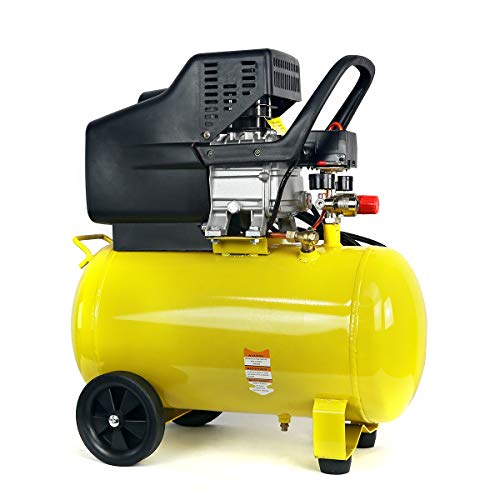
The Stark USA model provides a larger 10-gallon tank with a 3.5HP motor producing up to 8.37 CFM at 90 PSI, while maintaining a quiet operation at approximately 62 dB. This makes it suitable for spray painting, nail guns, and larger painting projects in workshops. Its balance of capacity, airflow, and noise makes it a strong candidate for serious DIY painters who need more runtime between recharges.
DEWALT Pancake Air Compressor

The DEWALT pancake model is compact with a 6-gallon tank and a high 165 PSI maximum. It delivers about 2.6 CFM at 90 PSI, providing quick recovery for spray painting sessions in tighter spaces. The motor is designed for reliable starts in cold weather and with shorter extension cords to support small workshops or mobile setups. It is noted for its relatively low noise for a small, portable compressor, making it a practical option for casual painting projects and hobby work.
Buying Guide
- Tank size and airflow: For spray painting, target a unit with at least 4–8 CFM at 90 PSI on average, and a tank large enough to avoid frequent stops for recharges.
- Max PSI vs. actual use: A higher max PSI (e.g., 150–165) can help with quick refill and diverse spray guns, but ensure the compressor maintains adequate CFM at the required working pressure.
- Portability vs. capacity: Large tanks reduce cycling but are heavier. Consider wheeled units for easy movement if you work in multiple rooms or outdoors.
- Noise level: Oil-free designs generally run quieter, but check dB ratings. For shared spaces, aim for 65–70 dB or lower if possible.
- Maintenance: Oil-free compressors reduce maintenance, but verify filter/separator quality and ease of drain/oil change (if applicable).
- Power source and runtime: Ensure electrical requirements match your setup (120V typical in the US). Consider compressor run time between fills if painting long sessions are expected.
- Durability and warranty: Look for reinforced valves, rust-resistant tanks, and manufacturer warranties to protect your investment.
- Suitability for spray guns: Check compatibility with common spray guns (HVLP, LVLP, or conventional HVLP systems) and consider a model with stable output to prevent pulsation during painting.
When selecting, consider your typical projects: small furniture finishing may be well-served by compact, quiet units, while larger automotive or woodworking projects may benefit from a 10–13 gallon tank with higher CFM. The models listed offer a range of options to balance power, noise, and portability for painting tasks.