Best Adaptive Knives for Arthritis: Easy, One-Handed Tools for Safer Cooking
Shopping for adaptive kitchen tools can help anyone manage arthritis, limited grip strength, or reduced dexterity. This article highlights five top-rated adaptive knives and utensils designed to reduce strain, improve control, and support independent cooking. Each product features ergonomic handles, safety-focused designs, and lightweight construction to make meal prep easier and safer for arthritic hands and other motor challenges.
Summary of Selected Products:
| Product | Brand | Key Benefit |
|---|---|---|
| Right Angle Knife 2-Pack | Ergonotic | Ergonomic L-shaped design with two blades for versatility |
| Weighted Rocker Knife for One Handed Cutting | PKPKAUT | Weighted handle reduces tremors; built for one-handed use |
| One-Handed Adaptive Kitchen Knife (2 Pack) | IMPRESA | Extra wide blade with safety ledge and textured grip |
| Ergonomic Kitchen Knife with Multi-Grip | NULU | Four grip positions and triple-edge blade geometry |
| BUNMO Adaptive Utensils (4 Piece Set) | BUNMO | Lightweight, foam handles; easy everyday use |
Right Angle Knife 2-Pack — Ergonomic L Shaped Knives

The Right Angle Knife from Ergonotic uses an ergonomic L-shaped design created by a certified occupational therapist. The angled handle minimizes wrist strain and encourages a natural, comfortable grip. The set includes two blades: a serrated blade for breads, steak, and tomatoes, and a flat chopping blade for fruits and tender foods. This kit is well-suited for arthritis sufferers who need stable, one-handed control during cutting tasks, and it supports independent cooking as part of a broader adaptive kitchen tool collection.
Two blades provide versatility without switching tools often, and the design aims to reduce fatigue during longer prep sessions. While the focus is on comfort and safety, it also emphasizes practical functionality for daily meal prep, including vegetables, fruits, and specialty foods. The kit’s ergonomic principles align with common recommendations for minimizing wrist torque during cutting motions.
PKPKAUT Weighted Rocker Knife for One Handed Cutting

This rocking knife is designed to aid those with hand tremors, arthritis, or stroke-related limitations. The 4.0 oz weighted handle helps stabilize the cutting motion, reducing tremor impact and promoting smoother, one-handed cuts. The blade is crafted from German stainless steel and features an ultra-thin edge for quick slicing. A rounded knife tip enhances safety, while a universal cuff and adjustable Velcro strap offer secure, adaptable use for various hand sizes and strength levels.
Its built-in safety considerations make it suitable for users who need reliable control with minimal wrist twist. The design emphasizes ease of cleaning and maintenance, ensuring the knife remains a durable part of an adaptive kitchen toolkit. This model aims to balance cutting efficiency with safety, particularly for those who rely on one-handed operation.
IMPRESA One-Handed Adaptive Kitchen Knife — Extra Wide Blade

The IMPRESA One-Handed Adaptive Kitchen Knife features an extra-wide blade and an ergonomic safety ledge with a textured grip. Designed to support one-handed cutting and adaptive culinary tasks, this knife is positioned as a practical solution for disabled or elderly users. The design emphasizes safety and ease of use, aiming to reduce the effort required for common kitchen tasks while maintaining precise control. This makes it a practical option for routine chopping and slicing in home kitchens.
Key safety features include the safety ledge and a secure grip, which help prevent slips during use. The ergonomic design is intended to lower the risk of repetitive strain injuries while enabling longer, independent cooking sessions. The 2-pack option can be useful for users who want different blade widths for various foods.
NULU Ergonomic Kitchen Knife — Multi-Grip Universal

The NULU knife focuses on ergonomic comfort with a center-arc design that directs force through the forearm, reducing twisting and wrist torque. It offers four grip positions to accommodate different tasks, making it suitable for arthritis, carpal tunnel, and limited grip strength. The triple-edge blade geometry expands cutting options, enabling slicing, chopping, carving, and mincing in one tool. The design targets both safety and efficiency for a broad range of users—and for different cooking styles.
Its versatility is complemented by a balanced weight distribution and an adaptable handle, which supports consistent cuts with less strain. The knife is positioned as an all-around option for users who want a single tool that can cover multiple tasks in the kitchen, reducing the need to switch between knives during meal prep.
BUNMO Adaptive Utensils for Elderly and Disabled
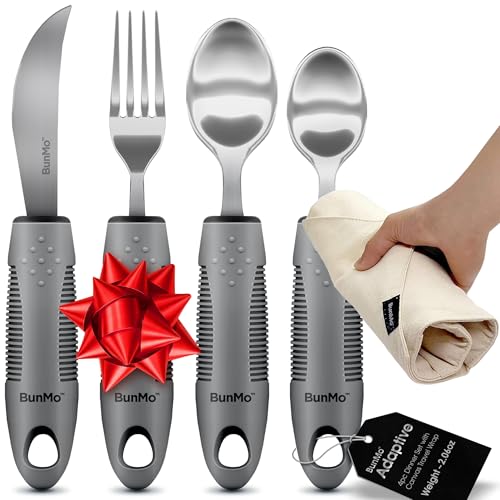
The BUNMO four-piece adaptive utensil set is designed for ease of use by seniors and people with weak hand grip. The lightweight utensils feature large foam handles that are cushioned, non-slip, and gentle on the hands. This set aims to restore confidence during meals, both at home and when dining out. The anti-slip design helps stabilize hand movements, supporting independence during everyday eating tasks and reducing fatigue during longer meals.
The lightweight construction and ergonomic handles reflect a broader trend toward accessible dining tools. The kit is suitable as a gift for seniors or adults with mobility challenges, and it complements other adaptive kitchen equipment by providing stable, comfortable utensils for common dining activities.
Buying Guide: Key Considerations For Choosing Adaptive Knives
- Grip style and customization — Look for grip options (single-handed, multi-grip, or universal cuffs) that fit your hand size and strength. Some models offer adjustable straps or multiple grip positions to reduce fatigue and increase control.
- Blade type and application — Serrated vs. straight blades affect how you cut different foods. Consider whether you need a single tool with multiple blades or a set with specific blade functions for bread, meat, and vegetables.
- Weight and momentum — Heavier handles can stabilize tremors and reduce shaky cuts, but too much weight may be tiring for prolonged prep. Balance weight with comfort and control.
- Safety features — Ledges, non-slip grips, rounded tips, and built-in guards can prevent slips and accidental cuts, which is especially important for arthritic or limited-mobility users.
- Maintenance and durability — Stainless steel blades and rust-resistant materials offer durability and easier cleaning, which matters for daily kitchen use.
- Versatility — If space or budget is limited, prioritize tools that support multiple tasks (rocker, curved, and one-handed knives) to cover a wide range of foods and cooking styles.
- Fit with lifestyle — Consider whether the product suits your cooking frequency, preferred meals, and whether you often cook for others or yourself, as this influences tool selection.
- Care for arthritis-specific needs — Ergonomic design, reduced wrist torque, and protective safety features are especially important for arthritic users or those recovering from injuries.
Across these options, the aim is to provide safer, more controlled cutting and prepping experiences. When evaluating products, test grip comfort, blade width, and ease of use, while noting how easily the item cleans and stores. This approach helps ensure the selected tools align with daily cooking routines and independence goals.