Best 9 Inch Circular Saw Blades for Wood Cutting
Choose reliable 9-inch blades designed for wood and light metal work. This guide highlights five top options, covering general purpose, crosscutting, and mild steel tasks. Each blade balances durability, clean cuts, and compatibility with standard 5/8″ arbors. The selections below reflect reputable brands and widely available replacement blades to help you find a versatile, long-lasting option for common project needs.
| Product | Brand | Arbor | Teeth | Kerf | Max RPM | Best For |
|---|---|---|---|---|---|---|
| 9 Inch Table Saw Blade (2 Pack) 40T | Wadoy | 5/8″ | 40 | 0.1″ | 8000 | General wood cutting; durable for table saws |
| 9″ 40 Teeth Carbide Tip Blade | KuangBBBTools | 5/8″ | 40 | 0.1″ | 10000 | Ripping and crosscutting; hardwood and softwood |
| 230BLADEST 9-Inch 48-Tooth | EVOLUTION | 1″ | 48 | — | — | Metal cutting (mild steel); low heat |
| LU88R009 9″ Crosscut Blade | Freud | 5/8″ | 54 | .090″ | — | Fine finish crosscuts; TiCo carbide |
| 9″ 40T General Purpose Blade | ATIE | 5/8″ | 40 | 0.1″ | 8000 | Ripping and crosscutting; versatile |
Products listed are selected for broad compatibility with common 9-inch saw setups and emphasis on durability, clean cuts, and stable performance. Always verify your saw’s arbor size, RPM rating, and blade thickness before purchase to ensure safe operation.
9 Inch Table Saw Blade, 40T (2 Pack) by Wadoy

The Wadoy 9-inch blade features a 40-tooth carbide-tipped design for general wood cutting. With a 5/8″ arbor and a kerf of 0.1″, its ATB tooth geometry supports efficient ripping and crosscutting. The blade is designed to offer longer service life compared with plain steel alternatives, suitable for common woodworking tasks. Max RPM is listed around 8000, aligning with many standard table saw specifications.
KuangBBBTools 9″ 40T Carbide Tip Blade

KuangBBBTools presents a 9″ blade with 40 carbide-tipped teeth and a 5/8″ arbor. It supports high RPM (up to 10,000) for fast stock removal while maintaining a 0.1″ kerf for precise cuts. Its ATB tooth design favors a balance of ripping and crosscutting in softwood, hardwood, plywood, and laminate. Not recommended for metal cutting, but versatile for general wood projects.
Evolution 230BLADEST 9-Inch 48-Tooth

Evolution’s 230BLADEST is a 9-inch blade designed for cutting mild steel and ferrous metals. It features 48 teeth and is engineered for low heat, producing minimal sparks and burrs. Made from high-quality carbide with heat treatment, this blade is optimized for metal working in addition to light-duty wood tasks when required, providing a unique option among 9-inch blades.
Freud LU88R009: 9″ Crosscut Blade

Freud LU88R009 offers a 9″ crosscut blade with 54 TiCo carbide teeth and a 5/8″ arbor. Its ATB grind and a 15° hook angle provide smoother, faster cuts with a finer finish, ideal for finish work where edge quality matters. Kerf is 0.090″, and plate thickness is 0.071″, delivering a precise cut with reduced tear-out on veneer and laminates.
ATIE 9″ 40T General Purpose Blade

ATIE’s 9″ general purpose blade features 40 carbide-tipped teeth and a 5/8″ arbor. With a kerf of 0.1″ and a 10–15 degree hook angle, it’s suited for a mix of ripping and crosscutting tasks across softwood, hardwood, and plywood. The blade is designed for high precision and durability, supporting reliable performance across common workshop projects.
Xmnbl 9″ 48-Tooth Metal Cutting Blade
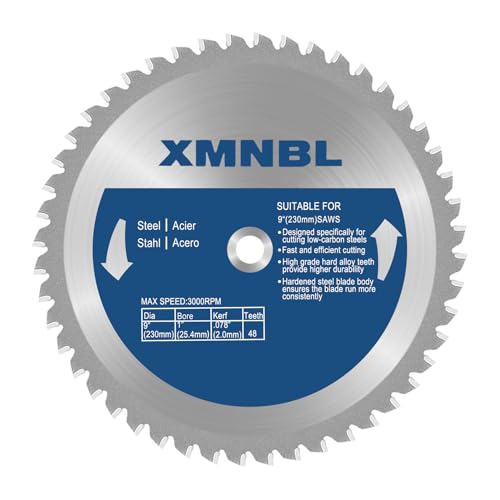
The Xmnbl 9″ blade is a 48-tooth metal-cutting option with a 1″ center bore. It’s designed for compatibility with Evolution EVOSAW230 and similar saws, delivering steady performance on ferrous materials with reduced heat, burrs, or sparks. A strong choice when metal cutting is occasionally required within a primarily wood-focused toolkit.
Utoolmart 9″ 80T Slitting Blade

Utoolmart offers an 80-tooth carbide-tipped blade for precision slitting and fine finishes on wood. With a 1″ arbor and 9″ diameter, this blade provides a high tooth count for smooth cuts in hard and soft woods, reducing tear-out and producing cleaner surfaces for finishing work.
Buying Guide: Key Purchase Considerations
- Blade type and tooth count: Higher tooth counts yield smoother finishes ideal for crosscuts and finishing, while lower tooth counts are better for quick ripping. For general use, a 40T blade provides a balance between speed and finish quality.
- Arbor size and compatibility: Ensure the blade’s arbor (commonly 5/8″ or 1″) matches your saw’s arbor. Mismatched arbors prevent safe operation and can damage equipment.
- Kerf thickness: A thin kerf (around 0.1″) reduces waste and requires less power, but can be more prone to deflection on heavy cuts. Wider kerfs are more durable and robust for denser stock.
- Material and tooth design: Carbide-tipped teeth extend blade life and cut quality. ATB (Alternate Top Bevel) teeth are versatile for crosscutting and ripping, while specific blends (like TiCo) optimize performance for wood or metal tasks.
- RPM rating: Match the blade’s maximum RPM to your saw’s speed. Operating a blade beyond its rated RPM can cause breakage and safety hazards.
- Intended material: Some blades are designed for mild steel or metal cutting, while most 9″ blades excel at wood. Avoid using wood blades on metal and vice versa.
- Durability and maintenance: Look for blades with heat-treated blades or reinforced carbide tips for longer life and better performance in challenging cuts.
- Cost versus performance: While premium blades offer longer life and cleaner cuts, mid-range blades often provide a practical balance for hobbyist and professional use. Consider project volume and types when evaluating price.
These considerations help align blade choices with saw type, material, and project goals. Always follow the tool manufacturer’s safety guidelines when installing or using new blades.