Best 7 1/4 Miter Saw Blades for Fine Woodworking
Choosing the right 7 1/4 inch miter saw blade can dramatically improve cut quality, durability, and speed across a range of projects. This guide highlights top 7 1/4 blades designed for wood and mixed-material work, helping you compare performance, durability, and value. Each option is linked to a trusted Amazon listing for quick shopping, with notes on tooth count, carbide quality, and coatings to match your project needs.
| Product | Brand | Teeth | Best For | Link |
|---|---|---|---|---|
| Diablo Ultra Finish Circular Saw Blade – 7 1/4in. 60 Tooth | Diablo | 60 | Fine finish, cabinetry | Amazon |
| Freud Ultra Finish Carbide 7-1/4″ 60T | Freud | 60 | Crosscuts and rips in wood | Amazon |
| DEWALT Circular Saw Blade, 7 1/4″, 24 Tooth (DWA1714243) | DEWALT | 24 | Ripping through hardwoods | Amazon |
| COMOWARE 7 1/4“ 40T ATB | COMOWARE | 40 | General woodworking, plywood | Amazon |
| Revvstark 3 Pack: 24T/40T/60T 7 1/4″ Blades | Revvstark | 24/40/60 | Combo versatility for framing, crosscuts, finish | Amazon |
Diablo Ultra Finish 60T (D0760X)

The Diablo Ultra Finish 60-tooth blade is optimized for smooth crosscuts and fine finish work on wood, plywood, and melamine. Its carbide teeth and precision grind aim to reduce chipping and produce accurate edges with minimal sanding. The 60-tooth count balances clean cuts with efficient material removal, making it a strong option for cabinetry and detailed trim work.
Freud Ultra Finish 60T Carbide Blade
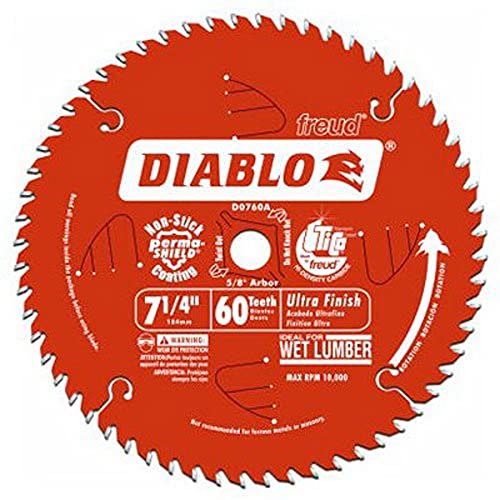
Freud’s Ultra Finish carbide blade features TiCo Hi-Density carbide for extended life and smooth cuts through tough woods like oak and veneer plywood. Its non-stick coating helps minimize gumming and heat buildup during repeated cuts, preserving blade efficiency and reducing required maintenance between jobs.
DEWALT 24-Tooth 7 1/4″ Blade (DWA1714243)
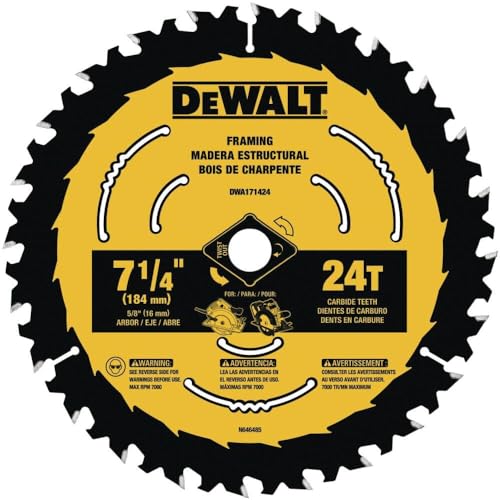
DEWALT’s 24-tooth blade is designed for aggressive ripping, delivering faster stock removal in hardwoods and softwoods. The toughtrack tooth design helps maintain blade tracking, while the coating reduces friction and protects against corrosion, extending blade life in heavy-duty applications.
COMOWARE 40T ATB 7 1/4″

COMOWARE’s ATB (Alternating Top Bevel) tooth design provides cleaner cuts with reduced splintering in wood, plywood, and laminates. The blade’s 5/8″ arbor fits most standard saws, and its anti-vibration construction helps maintain accurate cuts with less wandering during operation.
Revvstark 24T/40T/60T Combo

This Revvstark three-pack offers a versatile set for different tasks: 24T for ripping, 40T for general crosscuts, and 60T for finish work. The combination enables quick transitions between tasks without changing blades, while the carbide teeth and durable alloy steel construction support repeated use in various wood types.
DEWALT 140-Tooth Wood Blade (DW3326)

DEWALT’s 140-tooth blade is designed for ultra-clean crosscuts in wood and plywood, delivering smooth edges with reduced sanding. The high tooth count minimizes tear-out on veneered plywood, making it a strong choice for cabinetry and fine woodworking where edge quality matters.
Buying Guide
Key factors to consider when selecting a 7 1/4 inch miter saw blade include tooth count, blade design, and coating. Higher tooth counts (60T, 140T) yield cleaner crosscuts and smoother edges but remove material more slowly, making them ideal for finish work and veneers. Lower tooth counts (24T–40T) cut faster and are better for ripping and general-purpose framing. ATB (Altering Top Bevel) teeth help reduce splintering on finished faces, while down-cut or up-cut geometries can affect cut direction and edge quality.
Carbide quality and blade coatings influence longevity and heat resistance. TiCo or similar high-density carbides improve edge retention on hardwoods, while non-stick or anti-friction coatings minimize gum buildup during long sessions. The blade’s arbor compatibility (commonly 5/8 inch) should match your saw’s arbor size for secure mounting. Coatings and coatings’ resistance to heat help extend life in demanding environments.
For most DIY and professional wood projects, a balanced selection includes a dedicated finish blade (60T or higher for fine cuts), a general-purpose 40T to 60T blade for framing and trim, and a combination pack for versatility across tasks. When cutting non-wood materials, ensure the blade is explicitly rated for metal, plastic, or composite materials to avoid dulling and binding.
Maintenance tips: keep blades clean, store them dry, and avoid overheating the blade during sustained cuts. Use a blade guard and ensure proper alignment with the miter gauge to maintain true cuts. For best results, match blade type to the material and test cut on scrap before proceeding with a new project.