Best 210mm Circular Saw Blades for Precise Cuts
Choosing the right 210mm circular saw blade can dramatically improve your cutting quality, speed, and tool longevity. This guide reviews five popular options, highlighting their intended materials, tooth configuration, and coatings. Read on to find blades optimized for laminate, metal, wood, and framing tasks, with practical notes on installation, performance, and care.
Summary of Selected Blades
| Blade | Material Focus | Tooth Count | Arbor | |
|---|---|---|---|---|
| SHUZIYU 80T Laminate/Hardwood | Laminates, plywood, hardwood | 80 | 5/8″ | Diamond washer; anti-stick coating |
| SHUZIYU 48T Metal Blade | Metal, steel, iron | 48 | 5/8″ | Metal-cutting design; kerf 2.4mm |
| EVOLUTION M210TCT-50CS | Mild steel | 50 | 5/8″ | Carbide-tipped; low heat generation |
| OSHLUN SBFT-210052 | Wood and melamine; crosscut | 52 | 30mm arbor | Fine-tooth crosscut; C-3 carbide |
| HOJR 52-Tooth Metal Blade | Metal and stainless | 52 | 5/8″ | Anti-heat coating; TA carbide |
SHUZIYU 80T 210mm Diamond-Coated Blade for Laminate

The SHUZIYU 80T circular saw blade is designed for precise cuts in laminate, veneer, plywood, and hardwood. Its 210mm diameter and 5/8″ arbor ensure compatibility with common table and miter saws. The 80 alternating top bevel (ATB) teeth provide smooth, clean edges while reducing chipping on layered materials. The blade includes a diamond washer and a smooth-cut coating to minimize friction and heat buildup during extended cuts. The manufacturer notes that the blade teeth can be reground with appropriate tooling, though professional resurfacing is recommended for best results.
Key considerations include material hardness compatibility and maintenance requirements. The coating minimizes gumming on difficult surfaces, and the ATB tooth geometry supports clean crosscuts and rip cuts with laminate and veneer. If you work with delicate laminates or plywood edges, this blade can help preserve edge quality and reduce tear-out. Always ensure correct feed rate and support to maximize blade life and cut quality.
SHUZIYU 48T Aluminum/Metal Cutting Blade, 210mm

This blade is purpose-built for metal applications, not wood. At 210mm with an 8-1/4″ diameter, it features 48 teeth and a 5/8″ arbor. The kerf measures approximately 2.4mm, aligning with metal-cutting protocols to achieve efficient material removal while minimizing heat buildup. The blade’s design prioritizes rigidity and stable cutting geometry to handle steel and iron workpieces. It is not suitable for wood; for wood tasks, use a blade specifically rated for wood cutting to avoid poor results or tool wear.
When selecting a metal blade, consider workpiece type (mild steel vs. harder alloys), feed speed, and cooling. This SHUZIYU model includes guidance on proper use and safety, but users should rely on their metal-cutting experience to determine the ideal cutting strategy. Regular inspection for wear and tooth integrity helps maintain consistent results across tasks.
EVOLUTION M210TCT-50CS 210mm Metal Cutting Blade

The Evolution M210TCT-50CS is engineered for cutting mild steel with 210mm circular saws and chop saws. Its 50-tooth carbide-tipped design aims to reduce heat, burrs, and sparks, improving edge quality and blade life in metal cutting. Carbide tips promote longer life when cutting harder metals or repetitive cycles. This blade is suitable for shops performing metal framing or structural work where heat generation must be controlled to protect material integrity and the cutting tools.
Considerations include compatibility with your saw’s horsepower, as metal-cutting blades demand adequate drive and cooling. The carbide-tipped teeth and blade geometry also influence cut speed and finish quality. For best results, use proper clamps and avoid binding or overheating during extended cuts. Evolution blades are designed to maximize performance by combining carbide quality with precise manufacturing tolerances.
OSHLUN SBFT-210052 52-Tooth Crosscut Blade

The Oshlun SBFT-210052 is a 210mm crosscut blade with 52 teeth designed for Festool TS 75 EQ setups, though compatible with other 210mm saws depending on arbor fit. Its fine-tooth ATB geometry supports clean cuts in hardwood, softwood, melamine, and plywood, delivering smooth finishes on panels and cabinet components. The blade uses professional-grade C-3 carbide for durability and accuracy in repeated crosscuts, reducing tear-out and splintering on finished edges.
When selecting a crosscut blade, consider tooth count versus cut type. A higher tooth count yields smoother edges but slower material removal. This Oshlun blade balances performance with versatile use across wood products, including melamine-faced boards. Ensure your saw’s arbor compatibility and nut torque specifications align with the 30mm arbor and mounting requirements for safe operation.
HOJR 52-Tooth Metal Cutting Blade with Anti-Heat Coating
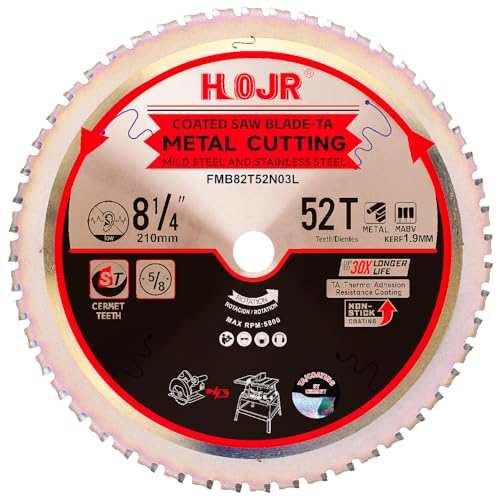
The HOJR blade is designed for metal cutting, featuring 52 teeth and an anti-heat-coated surface to minimize heat buildup and chip adhesion. With a 5/8″ arbor and a kerf around 0.075″, this blade aims to deliver steady cuts in steel and stainless steel, reducing friction and improving efficiency. The negative hook angle and ceramic-tipped tooth design support smoother entry and reduced sticky chips, enabling faster passes and comfortable handling in demanding metalwork tasks.
For users, important considerations include material type, workpiece thickness, and tool speed limits. The anti-heat coating helps sustain blade life under heavy cuts, but operators should still monitor temperature and use appropriate safety measures. This blade suits shop tasks requiring consistent metal removal with controlled heat and reduced burrs.
FOXBC 7-1/4” 24T and 60T ATB Wood Blades
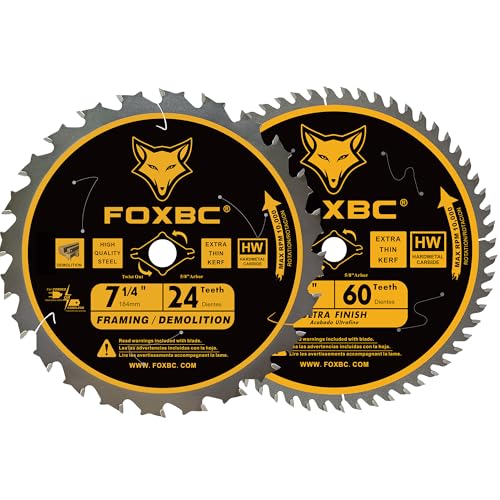
FOXBC offers two blades in one listing: a 24-tooth framing blade and a 60-tooth ultra-finish blade, both 7-1/4″ with a 5/8″ arbor and a 0.059″ kerf. The diamond knockout feature helps with maintenance and blade life. The framing blade is tuned for fast removal of material in framing, roof work, and heavy lumber cuts, while the 60-tooth finish blade targets smoother edges for plywood, hardwoods, and softwoods. The dual availability provides flexibility for mixed-task shops where both rough framing and precise finish cuts occur.
When evaluating these blades, consider the primary task: rough framing versus finish carpentry. A 24T blade excels in aggressive cuts and speed, whereas a 60T blade prioritizes edge quality. The included knockout features aid in reducing arbor-related friction and blade structural stress. Always verify compatibility with your saw model and ensure proper alignment during installation.
Buying Guide: Key Purchase Considerations
What to evaluate when choosing a 210mm blade:
- Material compatibility: Match the blade’s intended workpiece material (wood, laminate, metal, etc.) to your project.
- Tooth count and geometry: Fewer teeth cut faster but rougher; more teeth give cleaner edges but slower cutting. ATB vs. FT geometry affects finish quality on different materials.
- Arbor size and kerf: Ensure a correct arbor (commonly 5/8″) and kerf to fit your saw and desired material removal profile.
- Coatings and wear resistance: Anti-stick or anti-heat coatings help maintain performance on sticky materials or hot cuts.
- Heat management: Metal cutting blades benefit from coatings that minimize heat; avoid charging through metal without cooling if your setup lacks adequate airflow.
- Blade life and resurfacing: Carbide-tipped teeth last longer; some blades can be reground by qualified technicians for extended life.
- Safety and compatibility: Verify saw compatibility with blade diameter, arbor length, and maximum RPM. Secure mounting and use personal protective equipment during operation.
Performance considerations vary by application. For laminate and veneer processing, edge quality and chipping resistance are critical. For metal cutting, heat control and tooth durability dominate. For framing, speed and durability matter most. Compare these perspectives to determine the best blade mix for your workshop.
In sum, selecting a 210mm blade requires aligning material, cut type, and saw compatibility. The featured blades cover a spectrum from laminate finishing to metal cutting and framing, offering options for professional pros and serious DIYers alike. Use this guide to balance cost, quality, and tool life for efficient, precise results.