Best 12-Inch Saw Blades for Composite Decking
Choosing the right 12″ saw blade for composite decking reduces waste, minimizes chipping, and delivers clean, professional finishes on Trex and similar materials. The following blades are specifically designed or frequently recommended for composite decks and related plastics, PVCs, and cellular materials. This guide highlights key features, compatibility, and performance factors to help homeowners and pros pick the best option for renovation or new installs.
Summary of selected products:
| Product | Brand | Key Features | Arbor | Approx. Uses |
|---|---|---|---|---|
| Diablo TrexBlade | Diablo | Recommended by Trex; modified triple chip; non-stick coating; TiCo carbide | 1″ | Composite decking and plastics |
| Bosch DCB1284CD | Bosch | BRUTE carbide; triple chip grind; extra-hard steel body | 1″ | Highly abrasive decking materials |
| Norske NCSBP230 | Norske | MTCG tooth profile; clean, cool cuts; long life | 1″ | Trex and similar decking |
| Revvstark 100T | Revvstark | 100T carbide teeth; very thin kerf; high heat resistance | 1″ | Plastic, decking composites |
| FOXBC 120T Aluminum Blade | FOXBC | TCG design; optimized for thin aluminum; high-density carbide | 1″ | Metal and composite trimming |
Diablo TrexBlade: Premium Composite Decking Blade

The Diablo TrexBlade is a 12-inch blade explicitly designed for cutting composite decking materials and plastics. It features 84 teeth with a 1″ arbor and a .102″ kerf, optimized for smooth finishes with Trex and similar composites. The blade employs a modified triple chip tooth grind, a TiCo Hi-Density carbide formulation, and Perma-SHIELD coating to reduce heat and gumming, delivering cleaner cuts and longer blade life. It is widely regarded as a top choice for professionals and DIYers working on Trex installations.
Key considerations: The blade’s tooth geometry aims to minimize swirl marks and buildup, while the coating helps maintain performance in abrasive decking materials. Users report efficient cuts with minimal tear-out in composite boards and good longevity under repeated use on large decks. This blade is well-suited for finishing narrow, straight cuts along deck boards and railing components.
Bosch DCB1284CD: Durable Edge Blade for Composites

The Bosch DCB1284CD 12″ blade is engineered for heavy-duty composite decking tasks. It uses BRUTE carbide with an upgraded micrograin formulation for resistance to impact and wear. Its triple chip grind geometry is designed to maintain finish quality even in highly abrasive materials, while the extra-hard steel blade body supports accuracy and minimizes bending. This blade is a strong option when deck framing and decking boards require consistent, high-quality cuts through tough composite materials.
Key considerations: The blade’s construction focuses on longevity and precision, which can be advantageous for frequent decking projects or contractors handling bulk boards. For hobbyists, the blade’s robust performance may justify its cost, particularly in demanding environments where heat and resin buildup are concerns.
Norske NCSBP230: Long-Life Composite Decking Blade

The Norske NCSBP230 is a 12-inch blade with 72 teeth designed specifically for composite decking and Trex-like materials. It uses a modified triple chip grind (MTCG) tooth profile to deliver clean, cool, and “melt-free” cuts. The 1″ bore matches standard miter and table saws, and the blade’s design emphasizes longevity in hard decking composites while maintaining a smoother cut with less heat buildup and resin accumulation.
Key considerations: With a focus on life and clean finishes, this blade suits repeated cutting of deck boards, fascia, and beams. It can be a good pairing for homeowners doing complete deck replacements or long-running remodeling jobs where blade life and consistency matter.
Revvstark 100T: High-Tooth Count for Clean Edges

The Revvstark 12-inch blade with 100 carbide-tipped teeth is designed for cutting a variety of plastics and composites, including decking materials. With a 1″ arbor and a max RPM of 6500, this blade emphasizes fast, precise cuts with a very thin kerf to minimize material loss. The high tooth count helps produce cleaner edges, which is valuable when finishing deck boards or trim where visibility matters.
Key considerations: The blade’s carbide teeth and heat resistance support extended life in resistant materials, but tooth count can influence cut speed. It’s a good option for users who prioritize edge quality over ultra-fast rips, particularly on composite decking projects that require neat, straight lines.
FOXBC 120T Aluminum Cutting Blade: Versatile Metal Cutting

Although marketed for aluminum and thin metals, the FOXBC 120T blade uses a 1″ arbor and a kerf designed for clean, clog-free cuts in metal-compatible composites. The 120-tooth arrangement and carbide composition support fine finishes when trimming metal components or decorative features adjacent to composite decking. It’s particularly useful for projects that mix metal hardware with decking materials or require precise cuts on aluminum extrusion frames used in deck builds.
Key considerations: This blade provides precise finishes for metal-and-composite transitions. It’s not a typical decking board blade, but it can be valuable when a deck includes aluminum framing or integrated metal hardware that needs accurate cuts without marring adjacent plastics or composites.
Diablo Combination Blade: Wood and Composite Ready
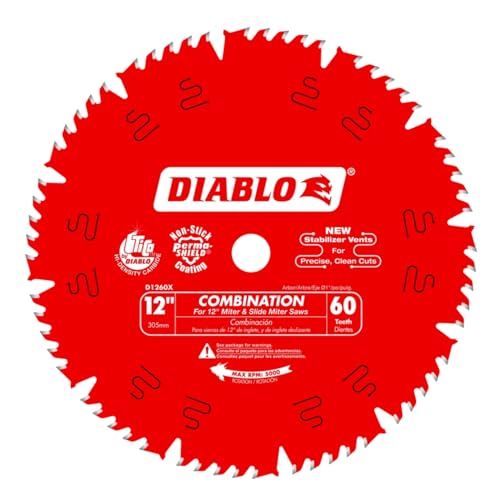
The Diablo D1260X combination blade mixes wood and composite-ready teeth for versatile use. It features TiCo Hi-Density carbide, a Perma-SHIELD non-stick coating, and a thin laser-cut kerf for fast, clean cuts. While not specialized solely for decking, its design supports mixed-material projects around a deck installation, including trim and framing where wood and composite meet.
DEWALT 12-Inch 80T Fine-Finish Blade

DEWALT’s 12-inch 80T blade is designed for fine finishes with optimized tooth geometry to increase cutting accuracy. Its body slot design helps reduce vibration, contributing to smoother cuts when trimming decking boards or finishing panels. The combination of quality carbide and engineering makes it a dependable option for precise, aesthetic deck work where finish quality matters.
WEN BL1280: Fine-Finish 80-Tooth Blade
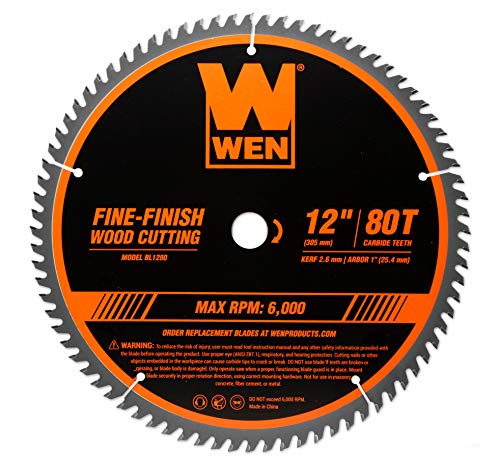
The WEN BL1280 provides an 80-tooth configuration with a 12-inch diameter and a 1″ arbor, rated up to 6000 RPM. It emphasizes ultra-thin kerf for clean, precise cuts through various woods and composites. This blade suits finish work on decking projects where a smooth surface and accurate crosscuts are essential for a professional appearance.
Buying Guide: Key Purchase Considerations for 12-Inch Decking Blades
- Tooth count and tooth grind: Higher tooth counts (60–100T) yield smoother finishes, especially on composite decking. For ripping and heavy material removal, lower tooth counts cut faster but may require more finishing work.
- Tooth geometry: Triple chip and modified chip designs help reduce heat buildup and resin gumming in composites, improving blade life and cut quality.
- Kerf width: A thin kerf minimizes material loss and reduces blade friction. For composite decking, a thin kerf often produces cleaner edges with less chipping.
- Coatings and materials: Perma-SHIELD or similar non-stick coatings decrease heat and buildup. Carbide teeth provide longer life when working with abrasive decking materials.
- Arbor compatibility: Most 12″ blades use a 1″ arbor. Verify arbor size with your saw to ensure proper fit and safe operation.
- Material compatibility: blades marketed for composites, plastic, or aluminum may be best suited for specific sections of a deck project. Always confirm recommended materials from the manufacturer.
- Finish quality vs. speed: Deck projects often balance cut quality with speed. Consider the project scope: a single deck or multiple installations may justify different blade selections.
- Heat management: Decking composites can heat up quickly; choose blades with coatings and grind patterns that minimize heat, to reduce edge damage and discoloration.
- Usage frequency: For contractors handling many decks, investing in durable carbide blades with longer life can save time and costs over the project horizon.
- Maintenance: Keep blades clean and free of resin buildup. Use proper feed rate and avoid forcing the blade through material to preserve edge integrity.