Best 10-Inch Table Saw Blades for Ripping Hardwood
Choosing the right 10-inch ripping blade can dramatically improve both productivity and the quality of finish when working with hardwood. This guide compares five top-performing ripping blades, highlighting kerf width, tooth design, carbide quality, and arbor compatibility. Whether you’re ripping thick stock, plywood, or hardwood boards, these blades are designed to optimize speed, reduce tear-out, and extend blade life. Use the buying tips to match blade characteristics to your saw, wood type, and project needs for cleaner, faster cuts with minimal vibration.
| Product | Brand | Teeth | Kerf | Arbor | Best For |
|---|---|---|---|---|---|
| FOXBC 10-Inch Thin Kerf Ripping Blade | FOXBC | 24 | .094″ | 5/8″ | Hardwoods, smooth finish, reduced vibration |
| CMT Orange Tools 10″ Ripping Blade | CMT | 24 | .102″ | 5/8″ | Soft/Hardwood, plywood, fast ripping |
| Xmnbl 10 Inch 24T Thin Kerf Ripping Blade | Xmnbl | 24 | Thin Kerf | 5/8″ | General hardwood and softwood ripping |
| YullSorom 10 Inch Thin Kerf Ripping Blade | YullSorom | 24 | .094″ | 5/8″ | Hardwoods, smooth, clean edges |
| Freud LU87R010 Thin Kerf Rip Blade | Freud | 24 | Thin Kerf | 5/8″ | Glue-line work, fine finish rip cuts |
FOXBC 10-Inch Thin Kerf Ripping Blade

The FOXBC blade is a 10-inch thin-kerf ripping blade designed for fast, durable cuts in hardwood. It features 24 teeth with a flat-top grind (FTG), a kerf of .094 inches, and a 5/8-inch arbor. The plate thickness is .071 inches, and the hook angle is 20 degrees. Constructed with high-density tungsten carbide, the blade emphasizes wear resistance, toughness, and long life. The combination aims to minimize vibration and noise while delivering a clean finish on tough woods.
- Diameter: 10 inches
- Teeth: 24
- Kerf: .094″
- Arbor: 5/8″
- Tooth grind: FTG; material: tungsten carbide
Designed for high performance on hardwood ripping tasks, this blade aims to balance aggressive stock removal with surface quality. Its relatively thin kerf reduces horsepower demands and helps maintain stock integrity, making it suitable for longer ripping runs on dense hardwoods.
CMT Orange Tools 10″ Ripping Blade

The CMT ripping blade is built for fast cuts through softwood and hardwood, aided by its thin kerf design. It uses a 0.102-inch kerf and a 0.071-inch plate thickness to optimize rigidity and reduce waste. With a 10-degree hook angle and an alternate teeth grind, this blade aims to balance aggressive ripping with better control and smoother edge quality. It’s compatible across table saws, radial arms, and miter saws where 10 inches is standard.
- Diameter: 10 inches
- Teeth: 24
- Kerf: 0.102″
- Arbor: 5/8″
- Grind: Alternate teeth; hook angle 10°
For users who routinely switch between hardwood and plywood, the CMT blade provides a versatile option with reliable edge quality and lower kerf resistance compared to some thicker blades. The design emphasizes a steady feed and clean tear-out control on a variety of stock.
Xmnbl 10 Inch 24 Teeth Thin Kerf Blade
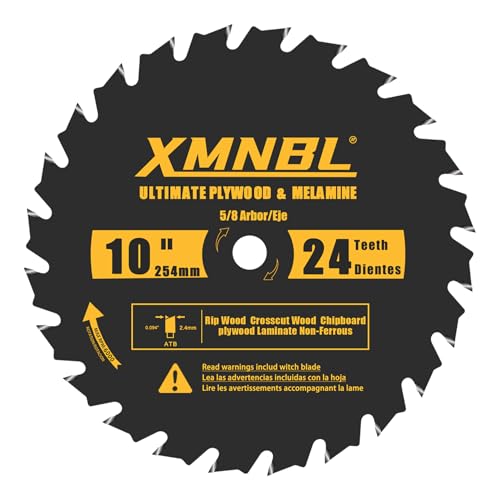
The Xmnbl 10-inch blade offers a 24-tooth configuration with a thin kerf design intended for efficient ripping of hardwoods and softwoods. The blade uses a 5/8-inch arbor and features a tungsten carbide tip for improved wear resistance and blade life. It’s advertised as compatible with popular brands such as Makita and Milwaukee, and it’s suitable for clean cuts on a variety of stock thicknesses when paired with appropriate feed rates and blade speed.
- Diameter: 10 inches
- Teeth: 24
- Arbor: 5/8″
- Kerf: Thin Kerf
- Tip: Tungsten carbide
Users may appreciate the blade’s balance of aggressive stock removal with manageable heat buildup. It’s positioned as a general-purpose ripping blade that performs well across hardwood, softwood, and plywood, especially on projects requiring consistent edge quality without excessive noise or vibration.
Freud LU87R010 Thin Kerf Rip Blade
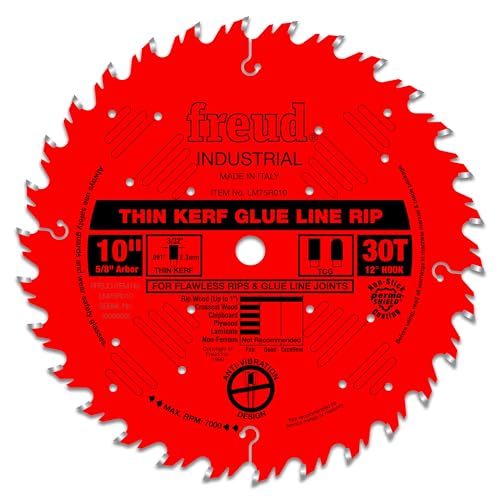
The Freud LU87R010 combines a thin kerf design with a premium TiCo Hi-Density Carbide Ripping Blend and a 0.071-inch plate. It employs a 24-tooth arrangement and a flat grind to deliver precise, glue-ready edges and fine finish work without sanding. The triple chip tooth design supports clean, straight rip cuts and reduces the need for joint preparation on cabinetry and trim projects. It’s compatible with standard 10″ table saws and is particularly suited to demanding ripping tasks with a focus on finish quality.
- Diameter: 10 inches
- Teeth: 24
- Kerf: Thin Kerf
- Arbor: 5/8″
- Coating/Material: TiCo Hi-Density Carbide
Freud emphasizes precision finish and glue-line readiness, making this blade a strong choice when edge quality matters as much as cutting speed. While it excels in ripping, its design also supports good results for finishing passes on cabinetry and furniture components.
Buying Guide
Key considerations when selecting a 10-inch ripping blade for hardwood focus on cut speed, edge quality, and blade life. The right blade balances aggressive stock removal with controllable tear-out and consistent finish. Below are the most important factors to weigh across these five blades and others you may consider.
- Teeth count and design: A 24T blade is a common choice for ripping hardwoods, delivering faster stock removal while maintaining acceptable edge quality. Some blades use 30T for finer finishes or 40T for cross-cuts; choose based on whether you prioritize speed or surface quality on the ripping pass.
- Kerf width: Thin-kerf blades (often around .094″ to .098″) require less cutting power and reduce waste, but can be slightly more aggressive to setup. For low-power saws, a slightly wider kerf can reduce bogging.
- Arbor size: Most 10″ blades use a standard 5/8″ arbor. Confirm your saw’s arbor before purchasing to ensure proper fit and blade stability during heavy ripping.
- Plate thickness and rigidity: A thinner plate (.071″ or similar) improves heat dissipation and reduces deflection, but may be more sensitive to wobble on poorly tuned saws. A stiffer blade maintains straight cuts under heavy feed rates.
- Tooth grind and carbide: TiCo Hi-Density carbide or tungsten carbide blades provide good wear resistance and longer life. Some blades use alternate grind or triple-chip designs to balance rip speed with edge-smoothing performance for glue lines and fine finishes.
- Hook angle: A moderate hook angle (around 10–20°) balances aggressiveness with control. Higher angles cut faster but can increase tear-out on dense hardwoods; lower angles improve finish at the cost of cutting speed.
- Intended material and job type: For dense hardwoods, look for blades with robust carbide and a grind designed for clean edges on glue lines or cabinetry. For plywood or composite stock, consider blades with coatings and anti-gumming features to reduce buildup.
- Vibration and noise: Thin kerf blades typically produce less resistance and can reduce vibration and noise. Proper blade alignment, tension, and saw setup also influence vibration levels during ripping.
- Durability and maintenance: Carburized edges resist wear; coating and finish can aid in heat resistance and cleanliness. Clean the blade after cutting, allow it to cool before handling, and store properly to extend life.
- Compatibility and warranties: Ensure the blade fits your saw’s model and check manufacturer warranties. Some blades perform best with specific saw brands or tuning practices.
When choosing among the five blades highlighted here, consider your typical stock thickness, whether you prioritize raw speed or edge finish, and how often you switch between materials like hardwood, plywood, or softwood. For long rip cuts in hardwood, blades like FOXBC and YullSorom emphasize fast removal with clean edges, while Freud LU87R010 leans toward glue-line readiness and precision finish. The CMT and Xmnbl offerings provide versatile performance across stock types with solid wear resistance. Matching blade design to your saw and wood species yields the best results over time.
Quick Comparison At A Glance
| Blade | Kerf | Teeth | Arbor | Primary Strength |
|---|---|---|---|---|
| FOXBC 10-Inch Thin Kerf | .094″ | 24 | 5/8″ | Low vibration; durable finish |
| CMT Orange Tools 10″ | .102″ | 24 | 5/8″ | Balanced speed and control |
| Xmnbl 10 Inch 24T | Thin Kerf | 24 | 5/8″ | Versatile; good blade life |
| YullSorom 10 Inch | .094″ | 24 | 5/8″ | Smooth ripping; strong carbide |
| Freud LU87R010 | Thin Kerf | 24 | 5/8″ | Glue-line ready; precise finish |
In summary, for aggressive hardwood ripping with clean edges, blades like FOXBC, YullSorom, and CMT offer strong performance with reliable wear-resistance. For projects requiring glue-line quality and smoother finishes, Freud LU87R010 provides a compelling option, while Xmnbl offers a balanced, versatile profile. Always confirm your saw’s compatibility and consider a test cut on scrap stock to fine-tune feed rate and speed before tackling critical workpieces.