Best 10 Inch Chop Saw Blade for Metal: Top Picks for Accurate, Cool Cuts
Choosing the right 10 inch chop saw blade for metal ensures cleaner cuts, less heat, and longer tool life. The blades below are designed for ferrous and non-ferrous metals, with features like carbide teeth, reinforced construction, and torque-friendly coatings. This guide compares popular options to help you select a blade that matches your metalworking needs, from mild steel to aluminum and non-ferrous alloys.
| Product | Brand | Notes |
|---|---|---|
| TOMAX 10-Inch 80 Tooth | TOMAX | All-around metal and non-ferrous use; corrosion-resistant coating |
| IVY Classic 40088 Swift Cut | IVY Classic | Fast cutting with reinforced construction; Type 1 blade |
| Diablo D1050CF | Diablo | Long life, cooler cuts, precise burr-free results |
| Evolution 10BLADEST | EVOLUTION | Designed for mild steel; low heat and sparks |
| GRAFF 10″ Metal Chop Blade | GRAFF | Low heat, no sparks; durable TCT teeth |
When selecting, consider tooth count, material compatibility, kerf, arbor size, and coating. The options below cover a broad range of materials and cutting environments while staying within 10 inches for standard chop saws and table saws.
TOMAX 10-Inch 80 Tooth TCG Blade

TOMAX’s 10-inch blade is built for aluminum and non-ferrous metals, with a construction-grade carbide tooth design that prioritizes wear resistance for longer life. The blade’s electrophoretic coating reduces rust and corrosion, extending performance in humid shop environments. It suits cut-off tasks that require clean edges without excessive heat buildup, and its 5/8-inch arbor ensures compatibility with common chop saws.
IVY Classic 40088 Swift Cut
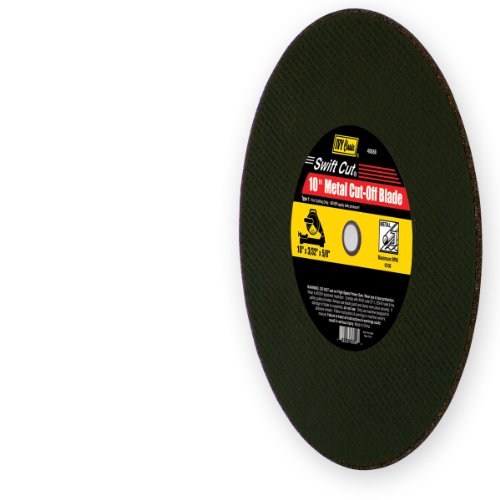
IVY Classic’s Swift Cut blade is designed to cut steel, angle iron, and sheet metal with resin-bonded aluminum-oxide grain for faster cutting. It is a Type 1 blade intended for cutting only and features fiberglass-mesh reinforcement for durability and safety. A note to operators: not recommended for high-speed saws, but its rugged construction suits most standard chop saw tasks involving ferrous metals.
Diablo Steel Demon D1050CF
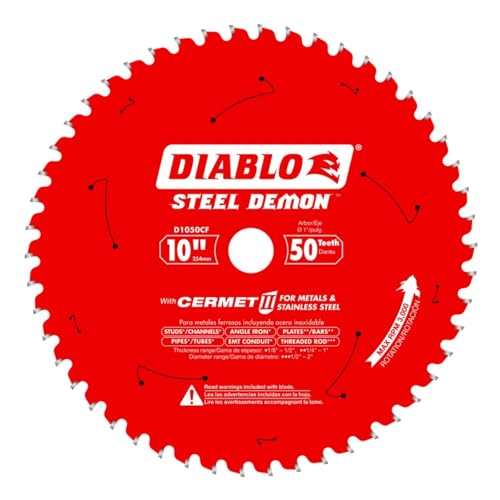
Diablo’s D1050CF blade features Cermet II teeth, delivering up to 25x longer life and significantly cooler cuts compared with standard discs. The blade combines a Triple Chip Grind with a Perma-Shield coating to reduce heat, minimize burrs, and produce precise cuts in metal and stainless steel. The 0-degree hook angle and 3,000 RPM compatibility support efficient metal fabrication work with burr-free results.
Evolution 10BLADEST Blade

Evolution’s 10BLADEST is tailored for cutting mild steel and ferrous metals with 52 teeth. The blade is manufactured from high-quality Japanese carbide and heat-treated for durability, delivering minimal heat transfer and burr-free finishes. It emphasizes safety and efficiency by minimizing sparks and letting operators handle finished cuts quickly, a useful feature in workshop environments dealing with hot metals.
GRAFF 10″ Metal Chop Saw Blade

GRAFF’s 10-inch blade focuses on durable TCT teeth with a mix of flat and trapezoidal tooth geometry designed to maintain sharpness under heavy loads. The blade is engineered to reduce heat generation and produce fewer sparks, making it suitable for metal cutting in constrained workshop spaces. Its design supports smooth, burr-free cuts with consistent results on aluminum and mild steel.
Buying Guide: Key Purchase Considerations
Blade selection depends on metal type, cut quality requirements, and the saw you own. For non-ferrous metals such as aluminum, blades with carbide teeth and corrosion-resistant coatings (like TOMAX) reduce heat buildup and extend life. For ferrous metals like steel, options with reinforced construction and multi-chip grind patterns (such as Diablo and Evolution) deliver cleaner cuts with less burr.
Important factors to compare include:
- Material compatibility: Non-ferrous vs ferrous metals influence tooth design and coating choice.
- Tooth count and geometry: Higher tooth counts yield smoother cuts; ATB and Triple Chip Grind patterns suit different metals.
- Arbor size: Ensure 5/8-inch arbor is compatible with your tool; some blades use 1/2-inch or 1-inch arbors.
- Coatings and heat management: Perma-Shield and similar coatings reduce heat and burr formation.
- Durability features: Fiberglass mesh reinforcement and carbide teeth increase safety and blade life.
Operational considerations include speed compatibility, feed rate, and safety practices. Operators should check for appropriate PPE, ensure the blade is properly mounted, and avoid high-speed saw usage on blades not rated for such speeds. When cutting mixed metals, it may be beneficial to select blades with proven performance across both ferrous and non-ferrous materials to maintain consistency in results.