Best Paint Stripper for Aluminum: Top Options for Metal and Marine Projects
Aluminum surfaces demand careful paint removal to prevent pitting or etching, especially on boats, trailers, or automotive parts. This guide evaluates five effective options designed for aluminum and related metal substrates, featuring gel formulas for vertical applications, citrus-based blends for safer handling, and robust formulations for rugged components. Each product is assessed for ease of use, safety, and performance, with a focus on marine compatibility and metal preservation.
A quick at-a-glance table below highlights the selected products, helping you compare type, best use, and standout benefits at a glance.
| Product | Brand | Best Use | Key Benefit |
|---|---|---|---|
| Dumond Smart Strip Marine Paint Remover | Dumond | Marine aluminum surfaces | Removes up to 15 layers; water-based gel; non-caustic |
| Polar Paint & Varnish Stripper Spray | Polar Specialist Coatings | Metal surfaces and wood | Industrial-strength gel; cling for vertical use; multi-surface |
| Max Strip Citrus Stripper | Max Strip | Multi-surface including aluminum | Citrus-based; no Methylene Chloride or NMP |
| Paint Stripper 100ml Bottle AK Interactive | AK Interactive | Small metal components and hobby parts | High-quality, plastic-friendly; precise spot work |
| 3M Paint and Rust Stripper, 03171 | 3M | Metal prep and light rust tasks | Rust, paint removal with abrasive action |
Below are five product sections with practical considerations for aluminum projects. Each entry links to the product page for quick access and includes a visual reference image.
Dumond Smart Strip Marine Paint Remover

Dumond Smart Strip Marine Paint Remover is a water-based gel designed to lift multiple layers of polyurethane and acrylic coatings from marine surfaces, including aluminum boats and hardware. The formula clings to vertical aluminum surfaces, reducing drips and enabling effective removal inside or outside of hulls. It’s engineered to handle tough marine finishes while protecting underlying substrates when used as directed, which is a notable advantage for delicate aluminum components exposed to the elements. The product is easy to apply and rinse, with broad compatibility for common marine coatings.
Safety and usability are emphasized with a non-caustic profile that avoids methylene chloride and NMP. For best results, perform a small test patch, apply evenly over the coated area, and allow the gel to dwell for the recommended time before rinsing. Dumond advertises the ability to remove up to 15 layers, though actual results depend on coating type, exposure time, and surface prep. After waiting, rinse thoroughly with water and inspect the surface for remaining residue before proceeding with light sanding or re-coating as needed.
Polar Paint & Varnish Stripper Spray
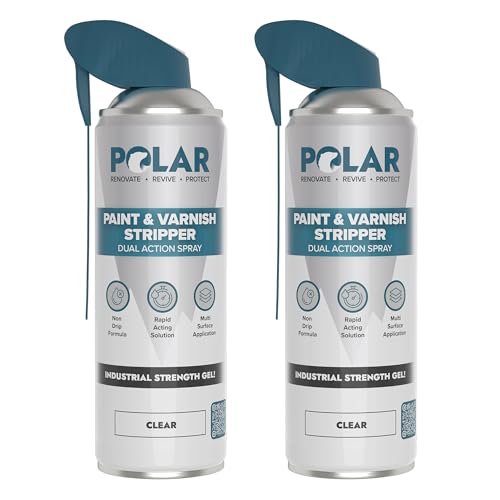
Polar Paint & Varnish Stripper Spray features an industrial-strength gel designed to cling to vertical surfaces, making it effective for aluminum engine components, hull fittings, and other metal parts. The formula excels at dissolving stubborn paints, varnishes, and coatings while staying in place long enough to break the bond, reducing manual scraping. This makes it a practical choice for aluminum surfaces where gravity can cause drips with thinner formulations. Its multi-surface versatility also supports wooden elements and concrete, though its strongest performance is on metal and coated metal references.
The product is a non-drip gel, which helps limit runoff and simplifies cleanup. As with any chemical stripper, it’s important to follow safety precautions and avoid unsuitable substrates. Note that plastic, UPVC, or powder-coated surfaces may respond differently or be unsuitable for this product, so testing on a small area is recommended before broader application on aluminum components or marine hardware.
Max Strip Citrus Paint Stripper

Max Strip Citrus Stripper uses a citrus-based solvent system designed to remove multiple coats of paint, varnish, shellac, and related coatings from a variety of substrates, including aluminum. The quart size provides ample coverage for moderate to larger projects, and the formulation emphasizes a user-friendly approach without caustic chemicals. The citrus blend helps with pleasant workspace smells and can ease the break-down of tough coatings, enabling simpler scraping and cleanup on metal surfaces.
Designed for DIY users and professionals, Max Strip Citrus Stripper requires application to the coated surface and periodic checking every 15 minutes or so until the coating loosens. After dwell time, remove with a scraper and rinse thoroughly. Because results vary with thickness and coating type, testing on a small area first is advised to gauge dwell time and compatibility with your aluminum substrate.
Paint Stripper 100ml Bottle AK Interactive

AK Interactive Paint Stripper comes in a compact 100 ml bottle, designed for precise spot work on metal parts and hobby components. It targets common coatings found on models, armor, and metal fixtures with controlled application. The formula emphasizes fast penetration, reduced fumes, and a lower risk of damaging plastic components, making it suitable for aluminum small parts and trim where precision matters. Its suitability for hobby-grade work makes it particularly useful for detailing aluminum pieces that require careful coating removal without aggressive solvent exposure.
The product is marketed as a high-quality stripping solution for delicate finishes, with recommendations to test on a small area and follow dwell times to avoid over-exposure. Its size and precision appeal to users working on smaller aluminum components or prototype parts, rather than large exterior surfaces. For larger jobs, multiple bottles or alternative products may be more efficient, depending on the scope and coating thickness.
3M Paint and Rust Stripper, 03171
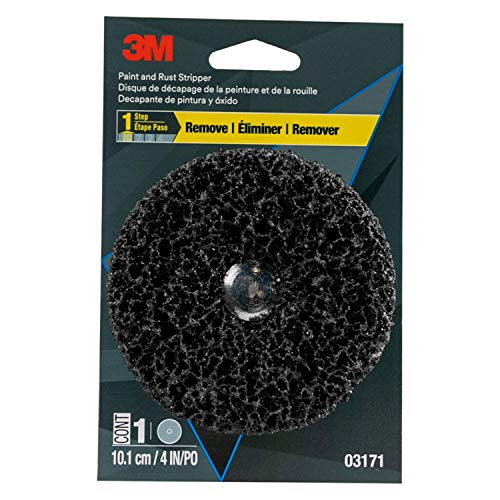
3M Paint and Rust Stripper 03171 is aimed at heavy-duty metal prep, combining abrasive action with a grinding disc to remove rust, scale, and old paint from metal surfaces. It’s a versatile option that can work on metal, wood, fiberboard, and plastics, using a flexible non-woven nylon disc designed to minimize splinters and rust transfer. This approach is beneficial for aluminum hinges, brackets, and structural components where rust or thick coatings have long adhered to the metal.
Because the 3M disc engages physically with the coating, expect more aggressive material removal than gentler chemical-only strippers. It’s effective for severely corroded areas but requires caution on thin aluminum parts to avoid unintended surface damage. Proper protection, steady handling, and testing on inconspicuous sections are recommended to avoid over-sanding or gouging delicate profiles.
Buying Guide
Choosing the right type for aluminum
Gel-based strippers excel on vertical aluminum surfaces and hulls where drips must be minimized, while citrus-based or water-based formulas offer user-friendly handling and lower odor. For stubborn coatings, a gel with stronger bond-breaking action can reduce manual scraping. For intricate or small aluminum parts, a ready-to-use bottle or a spot-treatment option may be ideal.
Surface compatibility and preparation
Aluminum is prone to scratching and pitting if handled aggressively. Always test a small, inconspicuous area first and check dwell times recommended by the manufacturer. If the coating is especially thick or well-adhered, consider a multi-step approach that begins with chemical softening, followed by gentle mechanical removal. Avoid formulations that rely on aggressive chlorinated solvents on thin aluminum sections unless explicitly rated for metal undercoat compatibility.
Safety, VOCs, and environmental considerations
Look for products that are non-caustic and free from methylene chloride (DCM) and NMP when possible. Low-VOC formulas help improve indoor air quality during application. Wear appropriate PPE, ventilate the workspace, and follow disposal guidelines for spent stripper-soaked rags and residue. For marine applications, ensure the product is compatible with gel coats and underlying aluminum substrates to minimize corrosion risk after removal.
Application tips and testing
Set up a small test patch before broader use, apply evenly, and monitor the coating’s response. For vertical surfaces, consider multiple light applications rather than a single heavy layer to reduce runoff. After the recommended dwell time, gently scrape with a plastic scraper to avoid marring the aluminum. Rinse thoroughly and neutralize if the product instructions call for it, then inspect for any remaining coatings and repeat if necessary.
Practical comparisons for aluminum projects
For marine aluminum work and heavy coatings, products designed specifically for aluminum and vertical surfaces tend to perform best, such as marine-grade gels. For small parts or hobby projects, compact bottles that minimize overspray and allow precise application can be advantageous. When rust or heavy corrosion is present on aluminum components, a product with abrasive action or combined mechanical and chemical removal may deliver the fastest results, but requires careful handling to protect thin metal.
At-a-glance comparison
| Feature | Dumond | Polar | Max Strip | AK Interactive | 3M |
|---|---|---|---|---|---|
| Form | Water-based gel | Gel | Citrus-based liquid | Liquid, small bottle | Part abrasive disc |
| Best for | Marine aluminum coatings | Vertical metal surfaces | Multi-surface; citrus ease | Spot work on metal/plastics | Heavily coated metal parts |
| Safety | Non-caustic; avoids DCM/NMP | Non-drip; check substrate | Non-caustic; rinse required | Plastic-friendly | Abrasive, handle with care |
These options cover a range of aluminum applications—from marine hulls and hardware to small hobby parts. When selecting a stripper, consider coating type, project size, surface exposure, and how you plan to rinse and dispose of leftover material. Always follow label directions and perform tests on inconspicuous spots before committing to large areas. The right choice balances effective coating removal with preservation of the aluminum substrate and adjacent finishes.