Best Hand Forged Cleaver Knives for Kitchen and Outdoor Cooking
Choosing a hand-forged cleaver knife means weighing edge retention, balance, weight, and care. The five picks below represent a spectrum from traditional Western forged blades to Japanese-style hand-forged cleavers and versatile outdoor sets. Each knife is designed to handle dense tasks, from bone chopping to vegetables, making it a reliable tool for professional kitchens and home cooks. Use this guide to compare steel types, build quality, and maintenance requirements before buying.
| Product | Brand | Notable Feature |
|---|---|---|
| ENOKING 7.5-Inch Hand Forged Cleaver | ENOKING | High-carbon steel with 16° edge |
| Huusk Hand Forged Cleaver Knife | Huusk | 138-step hand craftsmanship; 58HRC edge |
| HOSHANHO 6-Inch Cleaver | HOSHANHO | Dual-blade with 16° front, 22° back |
| Freelander Hand Forged Meat Cleaver | Freelander | Full tang; non-slip shock-absorbing handle |
| KITNATS 3Pcs Hand Forged Cleaver Set | KITNATS | Three-piece set with cleaver and associated knives |
ENOKING 7.5-Inch Hand Forged Cleaver

The ENOKING cleaver blends high-carbon steel with a hand-polished edge and a full-tang handle for balanced, heavy-duty performance. The blade is ground to about 16° per side, creating a sharp, efficient cutting surface that slices through meats, bones, and dense vegetables with less resistance. The knife is designed for durability and long-term use, while offering a practical, multi-purpose tool for everyday kitchen tasks and outdoor cooking. Care is essential: avoid dishwasher exposure, rinse promptly, dry thoroughly, and apply a light coat of oil to prevent rust. Regular maintenance ensures longevity.
- Blade Material: High-carbon steel with anti-rust treatment
- Edge: Hand-polished 16° per side for reduced cutting resistance
- Construction: Full tang handle for balance and control
- Care: Hand wash, dry immediately, apply oil; store in a dry place
- Versatility: Slices meat, chops vegetables, handles fish and poultry; suitable for outdoor use
Huusk Hand Forged Cleaver Knife
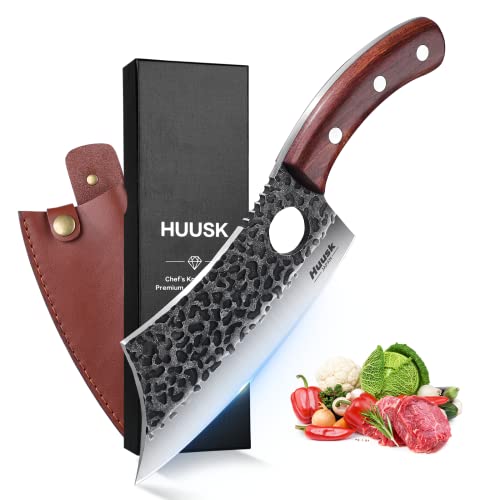
The Huusk cleaver blends traditional Japanese forging with rugged performance and distinctive styling. Each knife is handcrafted through a 138-step process and manually sharpened by blacksmiths, resulting in a sharper edge with lasting durability. The blade’s substantial thickness enhances strength, making it less prone to breaking under heavy use. An ergonomic oak handle fits securely in the palm, reducing fatigue during extended chopping sessions. This design aims to deliver precise cuts across meat, vegetables, and outdoor tasks, offering a balance of artistry and practical performance.
- Edge and Craftsmanship: 58±2HRC with a 138-step hand-forged process
- Durability: Thick blade for strength and reliability
- Handle: Ergonomic oak wood for secure grip
- Use: Suitable for kitchen prep and outdoor cooking
- Care: Hand wash and dry after use to maintain finish
HOSHANHO 6 Inch Cleaver Knife

The HOSHANHO cleaver combines dual-blade geometry with high-carbon stainless steel to address a range of tasks. The front blade is ground to 16° for delicate vegetables and meats, while the back blade sits at 22° to handle bones more easily. The blade’s carbon content (0.12%–0.20%) supports hardness around 58±2HRC, and the knife is hand-forged through more than 30 processes to maximize toughness. This versatility makes it a practical option for tight kitchens, outdoor cooking, and camping scenarios where one knife must cover many roles.
- Dual-blade design: 16° front bevel for precision; 22° back bevel for bones
- Material: High-carbon stainless steel; carbon content 0.12%–0.20%
- Hardness: About 58±2HRC; durable edge retention
- Process: Hand-forged through 30+ steps
- Use: Kitchen prep, bone work, and outdoor applications
Freelander Serbian Hand Forged Cleaver

Freelander emphasizes artisanal craftsmanship and balanced handling. This handmade forged meat cleaver features a full-tang construction for strength and a non-slip shock-absorbing handle, backed by a leather sheath for storage and transport. The design supports a wide range of kitchen tasks, from slicing and dicing to chopping through denser cuts. The emphasis on balance and control makes it suitable for both professional kitchens and home cooks who require consistent, heavy-duty performance. Regular care helps maintain edge retention and routine use in demanding environments.
- Craftsmanship: Hand-forged by skilled artisans
- Construction: Full tang for enhanced strength
- Handle: Non-slip, shock-absorbing design
- Includes: Leather sheath for storage
- Tasks: Slicing, dicing, chopping through meat and bone
KITNATS 3Pcs Hand Forged Cleaver Set

The KITNATS three-piece set centers on hand-forged blades designed for versatile kitchen tasks. It includes a 7-inch meat cleaver, a 6.8-inch Serbian chef knife, and a 6.2-inch boning knife. Each blade features a double-sided 15° V-shaped edge for efficient cutting, while a full-tang construction secured by three rivets ensures durability and stable performance during long sessions. The rosewood handle provides a comfortable, non-slip grip, making this set a practical choice for home cooks, campers, and outdoor chefs seeking a cohesive cleaver lineup.
- All-purpose set: 7″ cleaver, 6.8″ chef knife, 6.2″ boning knife
- Edge: Double-sided 15° V-shaped edge
- Construction: Full tang with three rivets
- Handle: Rosewood, ergonomic and non-slip
- Use: Home cooking, camping, BBQ gifting option
Buying Guide
Blade Material And Edge Geometry
Blade material drives edge retention, corrosion resistance, and sharpening needs. High-carbon steel blades typically offer excellent edge retention and the ability to form very sharp edges but require regular maintenance to prevent rust. Stainless or high-carbon stainless blends improve rust resistance with a trade-off in some cases on edge retention. Edge geometry matters as well: a 15°–16° bevel is common for cleavers intended for precise slicing, while a broader bevel can enhance strength for bone work. Dual-bevel designs, like some models in this list, provide versatility for both fine chopping and heavier tasks.
Full Tang And Handle Design
A full-tang blade extends through the handle, contributing to balance and overall durability, especially under heavy chopping. Handles vary from oak and rosewood to synthetic composites, each offering different comfort, grip security, and maintenance needs. Ergonomic, well-balanced designs reduce hand fatigue during long prep sessions and outdoor use. When shopping, consider how the handle material feels in your hand and whether a sheath or cover is included for safe storage and transport.
Maintenance And Care
Maintenance affects longevity. Carbon-steel blades tend to rust if not cared for properly, so routine washing, thorough drying, and a light oil coat are recommended. Some models advise hand washing only; others tolerate careful cleaning. Always avoid dishwasher exposure, as harsh detergents and high heat can degrade steel and handle materials. Regularly inspect the edge and patina; re-sharpen when needed to preserve performance. Storing in a dry area helps prevent corrosion and warping, especially for outdoor-use cleavers that may be exposed to moisture.
Size, Weight, And Balance
Cleaver size influences chopping leverage and control. Longer blades (around 7–8 inches) provide greater reach for thick cuts, while compact cleavers (6 inches) excel in tight kitchens or camping setups. Weight contributes to cutting ease; heavier blades can crush bones more effectively but may tire the user quicker. A well-balanced knife feels comfortable in the hand and allows precise control during repetitive chopping tasks. If possible, handle several models to judge balance before purchase.
Use Case And Versatility
Consider whether you need a single versatile tool or a set covering multiple tasks. Outdoor use often benefits from robust, weather-resistant finishes and leather sheaths. For kitchen use, a blade that excels at both meat and vegetable work reduces the need for multiple blades. Sets that include a boning knife or a Serbian-style chef knife can expand functionality, but ensure each blade’s edge geometry suits its primary task to avoid compromise.
Value, Maintenance Burden, And Longevity
Investing in hand-forged cleavers often yields long-term value through sharpenability and durability. Price typically reflects materials, craftsmanship, and brand reputation. Expect higher maintenance for carbon-steel blades and more frequent honing. If you want a low-maintenance option with rust resistance, stainless or clad steel variants may suit you, though they can require a different sharpening approach. Balance your budget with your cooking style, storage options, and how much you value craftsmanship and heritage in the blade.