Best Solar Powered Roof Vents for Efficient Attic Cooling
Solar powered roof vents offer an off-grid solution to vent hot air from attics, garages, and workshops by converting sunlight into cooling energy. This guide spotlights five top models, detailing airflow, durability, and installation considerations to help homeowners choose the right venting option. From weather-resistant housings to smart thermostats and remote control availability, these products illustrate how solar attic fans can reduce attic temperatures, lower AC load, and protect roof structures without wiring or high energy costs.
| Product | Brand | Power (W) | Airflow (CFM) | Coverage (sq ft) |
|---|---|---|---|---|
| DC House 32W Solar Attic Fan (1600 CFM) | DC HOUSE | 32 | 1600 | N/A |
| DC House 32W Solar Attic Fan Up To 3000 Sq Ft (2500 CFM) | DC HOUSE | 32 | 2500 | Up to 3000 |
| Hon&Guan Solar Attic Fan With Thermostat, 40W | Hon&Guan | 40 | 2000 | Up to 2500 |
| VEVOR Solar Attic Fan, 42W, 2800 CFM | VEVOR | 42 | 2800 | Varies |
| Krysolad 25W Solar Roof Vent Fan, 240 CFM | Krysolad | 25 | 240 | N/A |
DC House 32W Solar Attic Fan — 1600 CFM
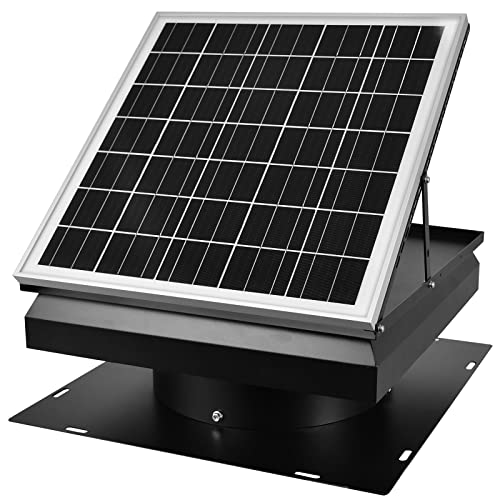
The solar attic fan uses premium monocrystalline panels to provide off-grid cooling, starting at sunrise and turning off at dusk. It operates without wiring or electricity costs and is designed to perform even on cloudy days. Its 1600 CFM airflow helps reduce attic temperatures and lessen AC load, especially in hot climates. The blades are aerodynamically optimized to withstand high winds, and the unit is built for a wide temperature range, enabling installation on home attics, garages, sheds, and other rooftops.
The system emphasizes reliability in extreme weather: it tolerates winds up to 130 mph and temperatures from -40°F to 150°F. Homeowners can pair it with existing vents to maximize whole-house airflow, and the installation is suitable for a variety of structures, including barns and RV rooftops. This model emphasizes a straightforward, energy-free cooling option with low maintenance requirements.
DC House 32W Solar Attic Fan — 3000 Sq Ft
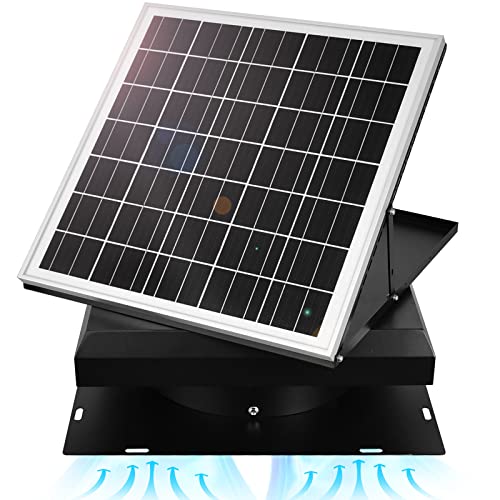
This version delivers robust airflow with up to 2400 CFM and can cover up to about 3000 square feet. The solar-powered operation eliminates electricity bills, with automatic daytime operation independent of wiring. It’s built with a durable metal housing and hail-weather resistance, making it suitable for exposed installations. The 9-inch aluminum blades are designed for quiet operation, and the unit remains fully functional in varied climates, including hot summers and cool mornings.
Easy installation is paired with weatherproof construction to resist rain and debris. The unit is ideal for larger homes with expansive attic spaces or commercial-style garages, offering a reliable off-grid cooling option that reduces peak attic temperatures and helps protect roof sheathing and insulation from heat-related wear.
Hon&Guan Solar Attic Fan With Thermostat — 40W

Hon&Guan pairs solar power with thermostat-based control, offering two modes to balance energy savings and performance. The fan outputs up to 2000 CFM, cooling spaces up to about 2500 square feet by expelling hot air from the attic. A thermostat lets users set thresholds (68–113°F) to auto-start or maintain steady ventilation, and an included AC/DC adapter supports continuous operation when needed. The device supports multi-directional adjustment (0–70°), ensuring optimal solar exposure for varied roof angles.
Durability features include a fully copper brushless motor and a weather-sealed assembly, making it suitable for harsh weather. It is designed for quick installation on a range of structures, from residential attics to sunrooms, while maintaining low noise levels. The option for 24/7 operation provides a practical, climate-controlled environment even when solar input is variable.
VEVOR Solar Attic Fan — 42W, 2800 CFM

VEVOR’s model uses an MPPT solar regulator to maximize sun capture, delivering up to 2800 CFM for rapid attic cooling. It features a smart temperature and humidity controller to maintain comfortable conditions year-round, and it can switch to electric power at sunset for 24/7 operation—even on cloudy days—via a remote control with a range of about 9.75 meters. The system is designed for all-weather performance with weatherproof housing and a brushless DC motor, making it suitable for homes, garages, greenhouses, and RV storage spaces.
Key benefits include enhanced safety with smoke detection that automatically reduces operation if needed, and compatibility with a variety of roof types (metal and masonry). The setup supports continuous monitoring and control, helping reduce energy costs while maintaining a cool attic environment. Remote operation adds convenience for ongoing maintenance and seasonal adjustments.
Krysolad 25W Solar Roof Vent Fan — 8 Inch Vents

The Krysolad model uses a compact 25W solar panel setup to power four high-speed fans, delivering up to 240 CFM of airflow. Two solar panels and four 2688 RPM fans work together to remove heat and moisture efficiently, with a design that accommodates direct sun exposure for continuous operation. The solar panels are vertically adjustable up to 90 degrees and horizontally up to 360 degrees to maximize sun intake, ensuring steady energy for peak venting in varied roof orientations.
Ideal for smaller attics, lofts, shops, and garages, the unit minimizes wiring needs and offers a low-maintenance cooling solution. The aluminum framework and mesh guard protect the system from debris and small animals while maintaining quiet operation. Its compact size makes it a practical choice for retrofit projects on existing structures without extensive renovations.
Buying Guide
- Airflow and area coverage: Match CFM ratings to attic size. Larger spaces typically require higher CFM (2000–2800 CFM and above) for effective cooling, while smaller spaces can be adequately served by lower-CFM models.
- Power source and reliability: Solar panels with MPPT regulators improve energy capture, especially on partly cloudy days. Consider models that automatically switch to electric backup if continuous operation is needed.
- Weather resistance and durability: Look for weatherproof housings, IP ratings, hail resistance, and corrosion-resistant components to withstand seasonal exposure.
- Control features: Thermostats, auto-start temperatures, and remote control options add convenience and precise ventilation control, particularly in climate-controlled spaces.
- Noise and motor type: Brushless DC motors tend to run quieter and with longer lifespans. Consider decibel levels if the unit is installed near living or working spaces.
- Installation considerations: Check roof type compatibility (metal vs. shingle), necessary mounting hardware, and whether the unit is designed for attic, garage, greenhouse, or warehouse installations.
- Maintenance and warranty: Favor systems with accessible service parts and clear warranty terms to ensure long-term value and support.
- Economics and environmental impact: Solar attic fans reduce reliance on grid electricity, lowering energy bills and minimizing carbon footprint, especially in hot southern climates.
- Safety and compatibility: Ensure units have proper wiring guidance, UL/FCC listings where applicable, and protective guards for blades and electrical components.
In sum, the best solar powered roof vent for a given space hinges on balancing airflow needs, roof geometry, and climate. The five products highlighted offer a range of wattages, CFM outputs, and control features to suit different homes, workshops, and garages. When selecting, prioritize the attic size, expected sun exposure, and whether you prefer thermostat-driven auto-start or remote control capabilities for ongoing comfort and energy savings.