Best Table Saw Blades for Woodworking: Clean, Precise Cuts for Any Project
Choosing the right table saw blade dramatically affects cut quality, finish, and overall woodworking efficiency. This guide highlights five top 10-inch blades designed for American woodworkers, balancing finish quality with durability and value. Whether you’re building cabinets, trim, or rough cuts for plywood, the blades below cover ultra-fine finishes to general-purpose performance. The table below summarizes the core specs to help you compare quickly.
| Product | Brand | Teeth | Arbor | Notes |
|---|---|---|---|---|
| WEN BL1080 80-Tooth Ultra-Fine Finish | WEN | 80T | 5/8″ | Ultra-thin kerf, 0.1″ |
| WEN BL1060 60-Tooth Fine-Finish | WEN | 60T | 5/8″ | Fine finish, 0.1″ kerf |
| KENDO 40T ATB Blade | Kendo | 40T | 5/8″ | ATB design for smooth cuts |
| DEWALT DWA11040 40T | DEWALT | 40T | 5/8″ | Fine finish, carbide |
| WEN BL1040 40T Carbide-Tipped | WEN | 40T | 5/8″ | Carbide-tipped, 0.1″ kerf |
WEN 80-Tooth Ultra-Fine Finish Blade

The WEN BL1080 is designed for ultra-fine finishing on both softwoods and hardwoods. With an 80-tooth configuration, the blade offers a refined cut quality ideal for cabinet work, trim, and laminates. The 10-inch diameter pairs with most miter and table saws that accept standard accessories. Its carbide-tipped teeth deliver durability and heat resistance during long finishing passes, while the ultra-thin kerf of 0.1 inches minimizes material waste and reduces power draw. The blade is rated up to 6000 RPM, making it suitable for a wide range of woods when operated within your saw’s limits.
In practice, this blade excels where a clean, smooth surface is essential, such as face machining and panel edges. It is most effective on materials that benefit from reduced splintering and tear-out, including plywood and melamine-faced boards. For enthusiasts prioritizing finish quality over aggressive ripping, the 80T configuration provides a reliable balance between cut quality and chip resistance. Regular maintenance—keeping teeth clean and sharp—will help preserve the blade’s finish performance over time.
WEN 60-Tooth Fine-Finish Blade
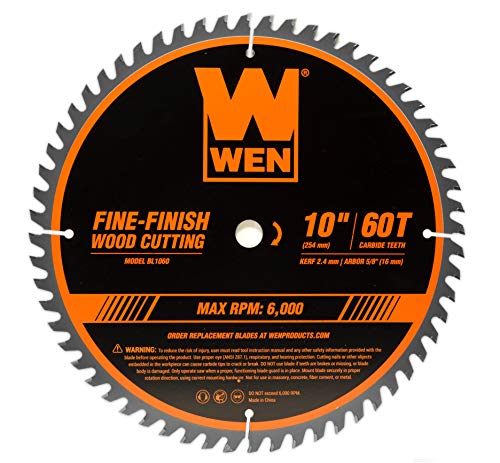
The WEN BL1060 offers a middle ground between finish quality and versatility. With 60 teeth, it’s well-suited to a broad range of woodworking tasks, including cabinetry, shelving, and trim work. The blade uses a 10-inch diameter and a 5/8-inch arbor, compatible with most standard table and miter saws. A 0.1-inch kerf helps minimize waste while providing a stable, smooth cut through both hard and soft woods. This blade is a robust choice for projects that require a refined finish without sacrificing too much feed rate.
The 60-tooth design balances clean cuts with efficient material removal, making it a practical all-purpose option for home workshops. It handles plywood and laminated boards well when used with controlled feed rates and proper blade alignment. For users upgrading from a basic blade, the 60T finish blade can improve edge quality on panels and face frames, especially when paired with a quality saw setup and steady clamping.
KENDO 40-Tooth ATB Blade
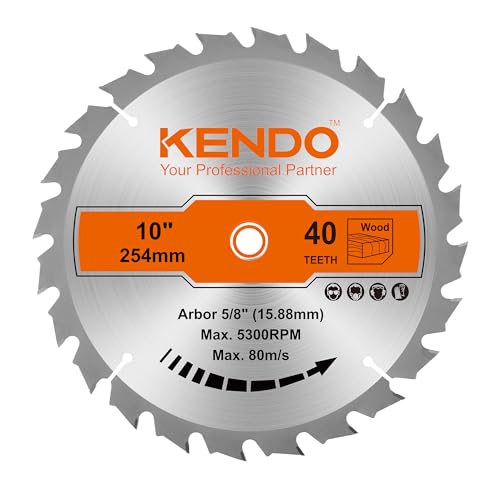
The KENDO 40T ATB blade emphasizes smooth, clean cuts with an Alternating Top Bevel design. With a 10-inch diameter and a 5/8-inch arbor, this blade is built for finishing work on a variety of woods, including plywood and laminates. The 40-tooth configuration prioritizes chip-free edges, particularly useful for face frames and joinery where minimal tear-out is desired. Carbide teeth provide durability and heat resistance, helping the blade maintain sharpness through extended cuts. The ATB geometry scores the wood surface before the final teeth pull away the waste, resulting in a noticeably smoother surface finish.
This blade is especially effective on plywood and hardwood where edge quality matters, though it may cut a bit more slowly than higher-Tooth options. Operators should monitor feed rate and ensure proper alignment to maximize the ATB benefits. Regular inspection of tooth tips and routine cleaning will help sustain performance over time.
DEWALT 40-Tooth Fine Finish Blade

The DEWALT DWA11040 blade emphasizes longevity and precision. With 40 teeth, it’s oriented toward fine finishing tasks while maintaining robust cutting efficiency. The blade’s carbide tips promote extended edge life and stable cuts, making it a strong choice for cabinetry, trim, and molding work where surface quality is critical. While not the most aggressive blade for rough ripping, its tooth geometry is optimized to minimize tear-out on crosscuts and panel edges. Proper clamping and correct saw alignment will help maximize its fine finish capabilities.
This blade is well-suited for woodworkers who want reliable performance without stepping up to higher-tooth, slower-cut blades. Its design supports consistent results in finished surfaces, especially when used with good feed control and blade-care practices. Regular inspection of teeth and micro-chipping is recommended to maintain peak performance.
WEN 40-Tooth Carbide-Tipped Blade
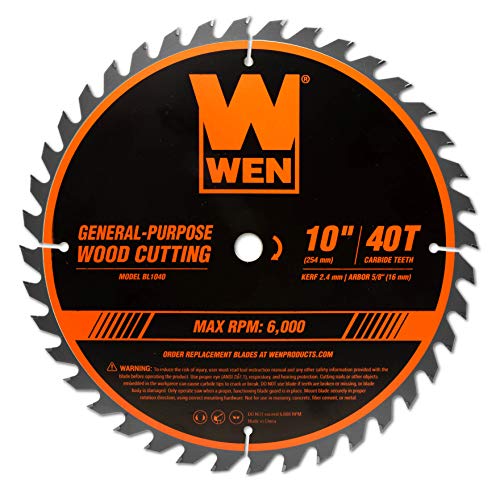
The WEN BL1040 combines carbide-tipped teeth with a 40-tooth configuration for a versatile, all-purpose blade. Its 0.1-inch kerf helps minimize waste and supports cleaner crosscuts and panel cuts across softwoods and hardwoods. The 10-inch blade diameter and 5/8-inch arbor are standard for most contractor-grade table saws, providing a broad compatibility range. This blade is suitable for general woodworking tasks that require reliable finish and robust performance without paying a premium for high-tooth-count blades.
Carbide-tipped teeth deliver durability and heat resistance, reducing the frequency of sharpening and blade replacement during longer projects. For best results, match the blade to the material type and use steady feed pressure to maintain consistent cut quality across different wood species.
Buying Guide
Tooth Count and Finish Type
Tooth count directly influences finish quality. High-tooth blades (like 80T) excel at fine finishing and clean panel cuts, minimizing tear-out on difficult surfaces. Mid-range counts (around 60T) strike a balance between finish and material removal, making them versatile for many shop tasks. Lower tooth counts (40T) prioritize fast, rough cuts and ripping, with less emphasis on surface quality. Choose based on whether your priority is cosmetic finish or cutting speed and versatility.
Kerf Width and Cut Quality
Kerf width affects material waste, cutting resistance, and feed force. A typical 0.1-inch kerf is common for 10-inch blades and provides a good compromise between performance and waste. Slightly narrower kerfs reduce material loss but may demand more careful alignment and stability during heavy cuts. Consider kerf alongside tooth count and desired finish when selecting blades for specific tasks.
ATB vs Flat-Tooth Designs
ATB (Alternating Top Bevel) teeth are designed to reduce tear-out by scoring the wood fibers before the final teeth remove the chips. This design is especially beneficial for plywood, laminates, and veneered stock. Flat-ground or alternate designs can be more aggressive for ripping and rough cuts but may produce harsher edges. For clean finishes, ATB blades are often the preferred choice.
Material, Durability, and Maintenance
Carbide-tipped blades offer durability and heat resistance, extending life and retaining sharpness longer than high-speed steel blades. Regular cleaning and light sharpening extend blade life. Keep blades cool during use, avoid overheating, and store them in a dry, protected environment to prevent corrosion and edge dulling.
Arbor Size and Saw Compatibility
Most 10-inch blades use a 5/8-inch arbor, which matches the majority of household and professional saws. Verify arbor compatibility with your specific machine and ensure proper alignment and clamping before use. Adapters are sometimes available but can affect balance and cutting accuracy if not installed correctly.
Budget, Brand, and Value
Well-known brands often provide consistent performance and longer blade life, translating to value over time. Compare warranty, replacement blade availability, and user reviews when evaluating price. For high-precision finish work, investing in a dedicated finishing blade can reduce rework and improve overall project quality.
Practical Tips for Best Results
- Keep blades sharp and clean; dull teeth cause rough edges and excessive heat.
- Align the blade with the fence and miter gauge before cutting.
- Use the appropriate blade for the task: high tooth counts for finishing, lower counts for ripping.
- Feed stock steadily; avoid forcing the blade through the wood to prevent burns and tear-out.
- Allow the saw to do the work, and select a blade suited to your material type (hardwood, softwood, plywood, laminates).